


Rocky Mountain 2018 Altitude Bottom Bracket Drop: Read the Clearance Tradeoff
The 2018 Altitude bottom bracket drop row describes the crank axle relative to the wheel axles, not its measured height above the ground. That difference matters when discussing pedal strikes on a historical Rocky Mountain. Before any test ride or loaded suspension check, resolve the covered bicycle recall (https://www.cpsc.gov/Recalls/2018/Rocky-Mountain-Bicycles-Recall-Mountain-Bicycles-Due-to-Crash-Hazard): stop use and have an authorized dealer verify the required inspection and repair.
Interpret 2018 Altitude bottom bracket drop correctly
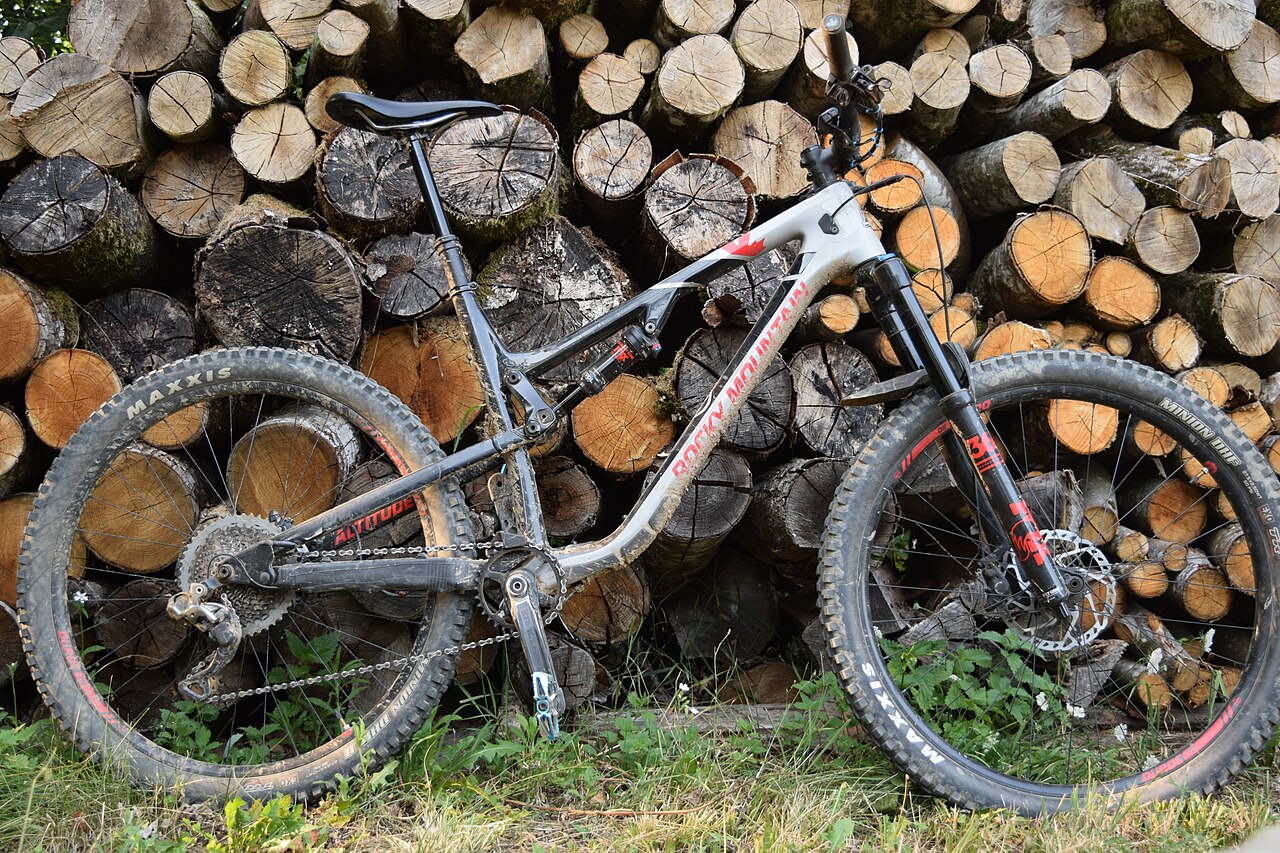
On physical page three of the RIDE-9 guide (https://resources.bikes.com/sites/default/files/resources/2018_Ride9_Altitude_EN.pdf), bottom-bracket drop is the distance the bottom bracket sits below the axle height. The manufacturer explains that more drop places the bottom bracket lower, while less drop places it higher and makes pedal strikes easier to avoid. This is a geometric tradeoff, not an absolute clearance measurement.
The guide's medium-frame position tables provide a concrete comparison. Position 1, labelled slack, lists 14 mm drop. Position 5, neutral, lists 7 mm. Position 9, steep, lists minus 1 mm. By subtraction, the axle-relative difference from position 1 to position 9 is 15 mm. Label that as a comparison of the published geometry, not 15 mm of guaranteed extra pedal clearance in motion.
Keep a clearance enquiry tied to the actual setup
A ground-height claim requires more than that row. The geometry table does not identify every current tyre, crank or suspension condition on an owner bicycle. If someone quotes a bottom-bracket height, ask which measurement and configuration produced it. Do not relabel the archive's drop value as height merely because both are expressed in millimetres.
The 2018 archive (https://resources.bikes.com/en/bikes/altitude/2018) also separates 27.5 Wide Trail geometry from a 26-plus configuration measured with different hardware and tyres. State which group is being discussed. A number copied from the other group would change the enquiry before any real difference in riding style or obstacles is considered.
Choosing a chip position changes more than the bottom-bracket row. The guide also varies head angle, seat angle, reach and suspension characteristics across positions. Raising the chassis therefore should not be described as a free correction with no other consequences. Compare the complete selected configuration with a technician after confirming the bicycle is eligible for use.
There are source differences worth preserving. The online archive and PDF disagree in some geometry cells, including certain XS wheelbase entries. The medium drop values used here are explicitly taken from the PDF's positions 1, 5 and 9. That attribution is more useful than silently combining whichever cells produce a preferred result.
FAQ: Clearance questions
Does 14 mm drop mean 14 mm above the ground?
No. It means the listed bottom bracket is 14 mm below the wheel-axle line in that geometry configuration.
What does the negative value at position 9 mean?
The listed minus 1 mm drop places the bottom bracket 1 mm above the axle line in the guide's geometry convention.
Does moving to the steep position guarantee no pedal strikes?
No. The table describes frame geometry, while actual clearance and contact depend on the complete bicycle and its use.
The wheel-format conditions guide helps identify the relevant table before a clearance discussion. Broader historical information is under Rocky Mountain bicycles.
Photograph credits and permissions
Photograph 1
Original title: Rocky Mountain Altitude C50 2018.jpg
Creator: ThienToons; creator URI: https://commons.wikimedia.org/wiki/user:ThienToons
Original source URI: https://commons.wikimedia.org/wiki/File:Rocky_Mountain_Altitude_C50_2018.jpg
License / permission: CC BY-SA 4.0
License / permission URI: https://creativecommons.org/licenses/by-sa/4.0/
Modification notice: Wikimedia-provided 1280×853 reduced-size version; no additional local changes.