


Rocky Mountain 2018 Altitude 26 Plus: The Geometry Has Hardware Conditions
The 2018 Altitude 26 Plus geometry is not a promise that changing wheels alone reproduces the published figures. Rocky Mountain attaches specific tyre, fork and lower-headset-cup conditions to that table. Before any conversion trial or ride, apply the 2018-model recall instruction (https://www.cpsc.gov/Recalls/2018/Rocky-Mountain-Bicycles-Recall-Mountain-Bicycles-Due-to-Crash-Hazard): stop use and have an authorized dealer verify inspection and repair of the covered bicycle.
Read the 2018 Altitude 26 Plus conditions together
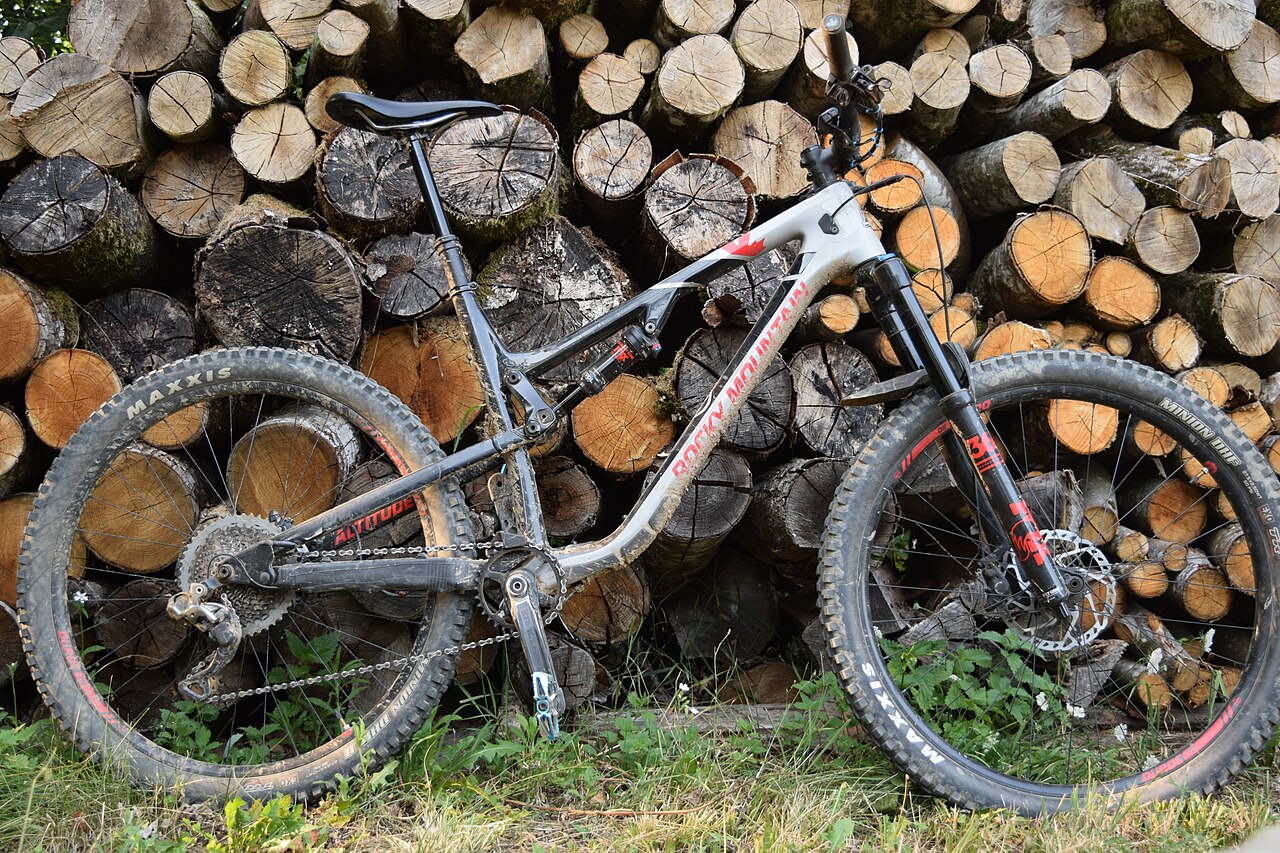
The original archive (https://resources.bikes.com/en/bikes/altitude/2018) separates two geometry groups: 2018 Altitude 27.5 WT and 2018 Altitude 26+. The first is measured with standard 2.5-inch Wide Trail tyres and a 160 mm 27.5 fork. The second is measured using a 10 mm taller lower headset cup, a standard 160 mm 27.5 fork and 26 × 3.0 tyres.
These are linked conditions, not independent suggestions. A discussion that mentions 26 × 3.0 tyres but omits the taller lower cup no longer describes the manufacturer's stated measurement setup. Equally, the fork condition remains a 160 mm 27.5 fork; the table does not say to replace it with any fork carrying a 26-inch label.
Turn the archive into a precise enquiry
Record the actual frame's model year, construction and size before asking a dealer about parts. Then identify the present wheels, tyres, fork and headset components rather than assuming the bicycle still has its archived build. A changed lower cup is a particular question to resolve, not a dimension that can be established from this historical photograph.
The archive includes separate RIDE-9 positions within each wheel group. Keep the wheel group and chip position together when quoting a number. Comparing one group's slack table with another group's neutral table would combine two different changes and obscure the question you are trying to answer.
The RIDE-9 guide (https://resources.bikes.com/sites/default/files/resources/2018_Ride9_Altitude_EN.pdf) helps explain why that matters: the chip configuration changes geometry and suspension characteristics together. Its setup advice is to settle geometry before considering shock variables. That principle does not, however, supply missing wheel, hub, headset or tyre-clearance compatibility for a proposed conversion.
Ask the dealer to confirm the exact compatible parts and inspect the actual bicycle before ordering. The measured archive configuration is stronger evidence than a forum assertion that a tyre looks small enough, but it still is not a complete installation procedure or a guarantee for every product with the same nominal tyre size. No current stock or universal conversion kit is established by the historical page.
FAQ: Wheel-format questions
What lower-cup change is named for 26-plus geometry?
The archive specifies a 10 mm taller lower headset cup as part of that measured configuration.
Does the table use a different fork travel for 26-plus?
Both groups state a 160 mm 27.5 fork; their tyre and lower-cup measurement conditions differ.
What should accompany a quoted geometry figure?
Record the wheel group and RIDE-9 position together, along with that group's stated tyre, fork and lower-cup measurement conditions.
Read the consistent-setting sizing comparison before using a geometry figure for a viewing. Other historical owner questions sit under Rocky Mountain bicycles.
Photograph credits and permissions
Photograph 1
Original title: Rocky Mountain Altitude C50 2018.jpg
Creator: ThienToons; creator URI: https://commons.wikimedia.org/wiki/user:ThienToons
Original source URI: https://commons.wikimedia.org/wiki/File:Rocky_Mountain_Altitude_C50_2018.jpg
License / permission: CC BY-SA 4.0
License / permission URI: https://creativecommons.org/licenses/by-sa/4.0/
Modification notice: Wikimedia-provided 1280×853 reduced-size version; no additional local changes.