


Bike Chain Rust after Storage: Assess Condition Before Trying to Ride
Bike chain rust after storage is a reason to inspect the drivetrain before putting the bicycle back into use. Brown colouring, stiff links and damage to plates or rollers are not interchangeable descriptions. A photograph can help record what was found, but it cannot certify the chain’s remaining condition. Begin with a careful adult assessment and keep fingers away from a moving chain.
Record what is visible without forcing movement
Note where the discolouration appears and whether the bicycle was stored damp or exposed to water. Take photographs before changing the condition. Do not ask a child to pedal while an adult holds a rag around the chain or pushes fingers beside the chainring. If a covered section prevents a clear view, use the applicable service instructions or a repairer rather than removing protective parts through guesswork.
Separate cleaning from a serviceability decision
Cleaning may improve visibility, but a shinier surface does not establish that a chain is suitable for use. Trek’s maintenance guidance identifies rust, kinks and broken chain parts as conditions to check. A repairer may need to assess wear, movement and related drivetrain components together. Do not select a replacement chain by length or colour alone, and do not assume the old joining method suits a new chain.
Protect the surrounding brake and riding equipment
Chain care belongs to the adult’s maintenance task, with products used through their own instructions. Keep lubricants and cleaners away from braking surfaces and other areas where contamination would matter. Adding oil is not a substitute for resolving corrosion or damage, and a ride intended to wear the rust away is not a dependable inspection method. Stop when the correct care process or the condition of a component is uncertain.
Improve storage after resolving the problem
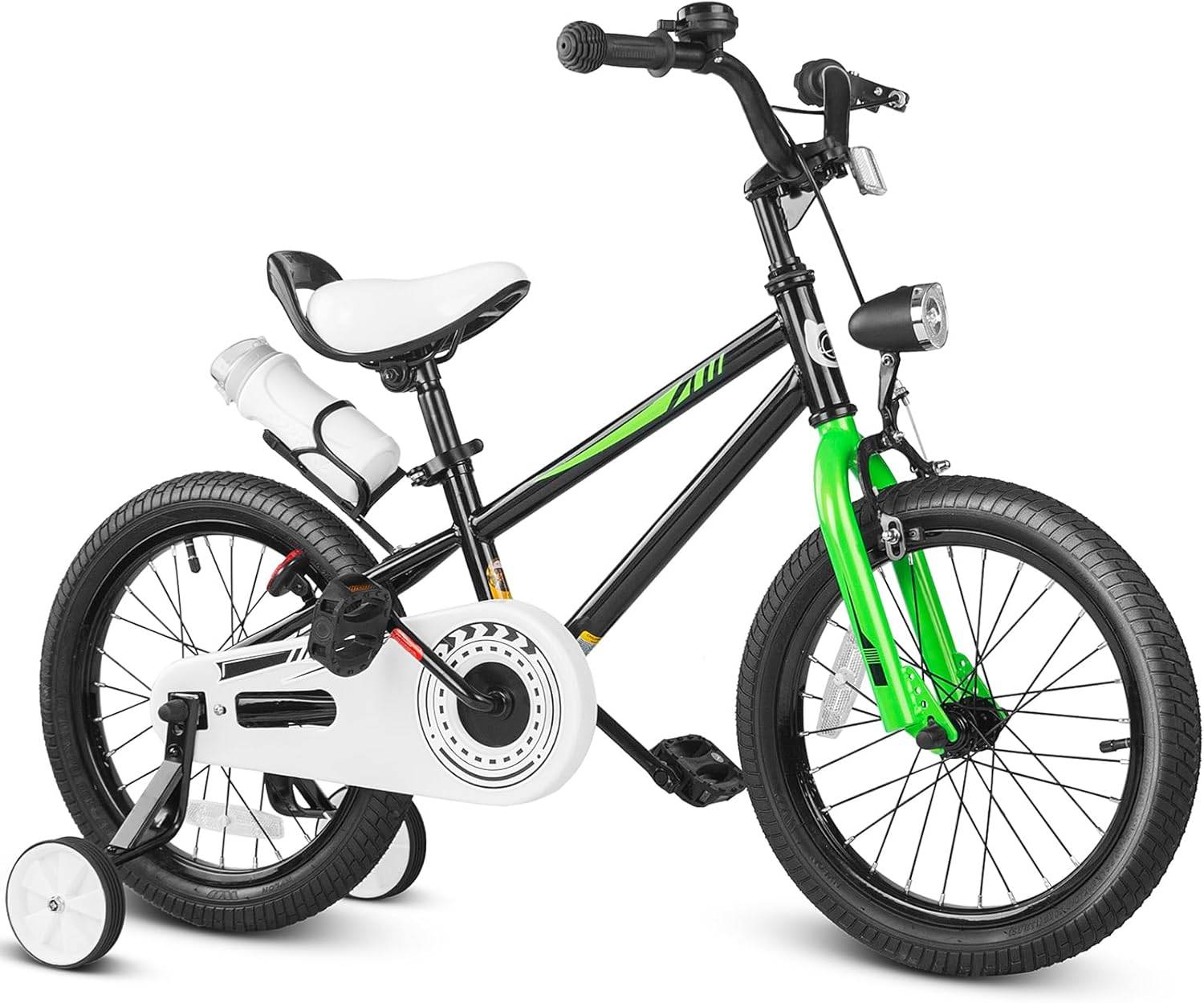
Find and address the damp-storage cause rather than repeating cosmetic cleaning before every outing. Store the bicycle through its instructions, dry it appropriately after permitted cleaning and check it before the next use. The Black XJD learner has a covered chain area and removable supports; that layout still needs a complete readiness check after a break. A guard reduces access to some parts but does not establish the chain’s hidden condition.
Model details relevant to this task
The Black XJD pedal-bike family is a real example of a guarded chain drivetrain across several wheel-size choices. Neither the catalogue nor the photo reports corrosion on the supplied bicycle. No rust-removal chemical, chain specification or repair procedure is recommended for every selection. The linked model details are available for XJD Black Boys' Pedal Bike with Chain Guard and Training Wheels.
Quick checklist
- Photograph the observed condition.
- Avoid fingers near moving parts.
- Separate cleaning from assessment.
- Resolve damp storage before returning.
FAQ
Does oil alone make a rusty chain usable?
No. Lubrication does not certify the condition of the chain or associated components.
Can the chain guard be removed for a quick ride?
Keep required protection in place and use the applicable service process for any inspection.
Should the bicycle be checked beyond the chain?
Yes. A return after storage also requires the normal checks of wheels, brakes, steering and other equipment.
Related collections
The XJD chain-drive learning bicycles and small-wheel configuration options provide further model details. Check the exact selected configuration when planning fit, handling and care.
Before the next outing
Resolve the chain’s condition before the riding plan. Cleaning and improved storage are useful care tasks, while the decision to retain or replace a damaged component needs its own evidence.