


Bicycle Basket Weight Limit: Find What the Rating Actually Covers
A bicycle basket weight limit belongs to an identified basket and its mounting arrangement. The fact that a bag fits inside, or that a rack elsewhere on the bicycle carries a number, does not establish that allowance. Before planning shopping or family supplies, find the applicable instructions for the actual fitted equipment. Keep an unanswered load question unanswered instead of borrowing a familiar number from another basket.
Identify every component in the carrying arrangement
Record whether the basket is mounted at the front or rear and how it attaches. A handlebar attachment, a rack interface and the basket itself can each have requirements. Include the exact bicycle and selected configuration in the enquiry. A photo is useful for identifying the arrangement, but not for measuring its strength. Changes of bracket, fastener or support can make a previously copied instruction inappropriate.
Keep volume and mass in different columns
A basket’s dimensions or capacity in litres describe available space, while a load figure concerns mass under the stated conditions. Those measurements cannot be substituted for one another. A large lightweight parcel may fit yet interfere with steering or visibility; a small dense item may exceed an allowance. Write down both the intended contents and the actual mounting guidance before deciding whether the carrying arrangement suits the trip.
Ask which rating includes which items
Read whether the applicable limit covers contents alone or a complete fitted assembly. Keep any rack limit and whole-bicycle loading requirement alongside the basket information rather than adding the figures together. A missing specification is a question for the supplier, not permission to load until the bicycle feels heavy. Do not interpret a rack or basket as a passenger seat, and keep children off the bicycle while arranging cargo.
Check the packed arrangement before departure
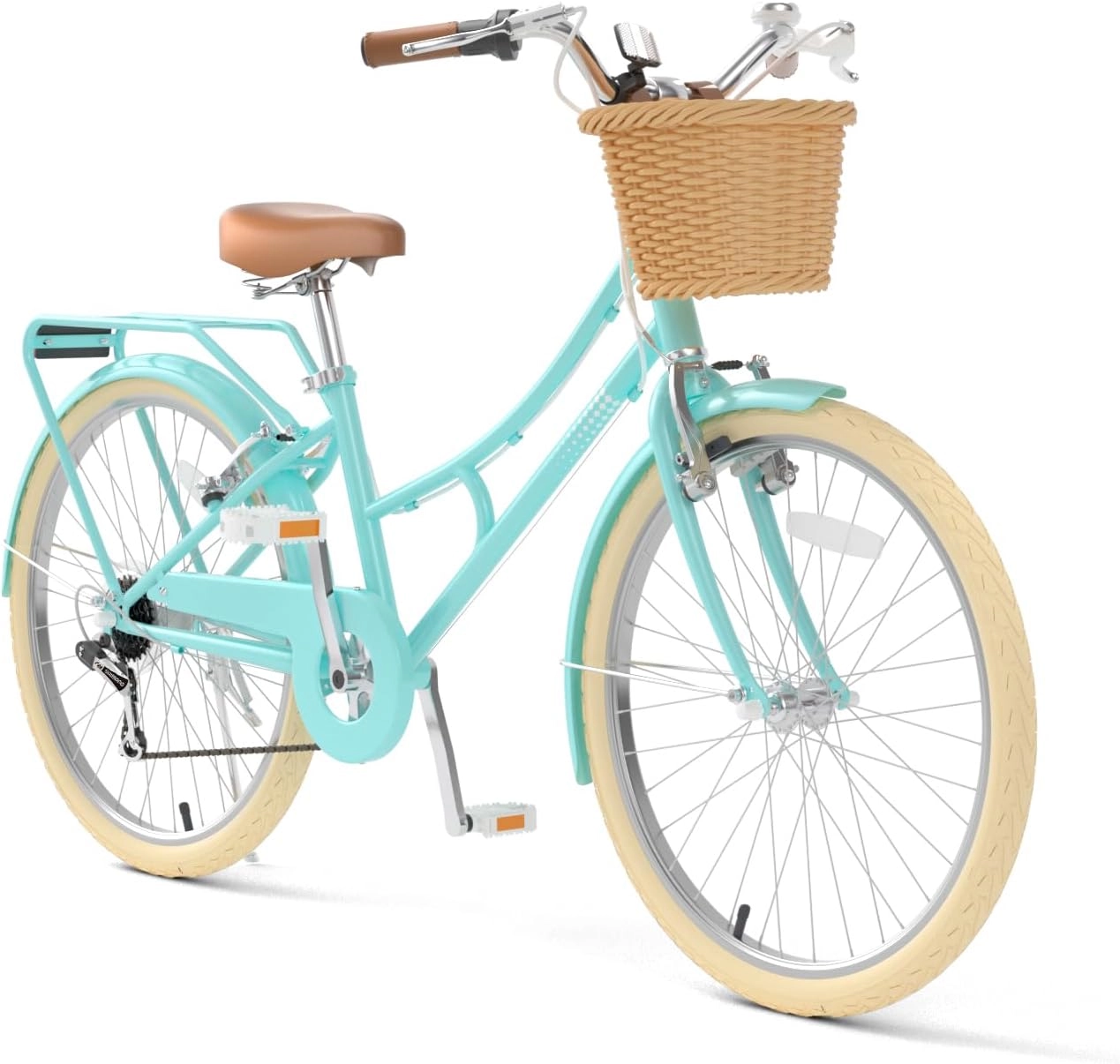
The Mint Green XJD cruiser lists a front basket and rear rack, making the distinction concrete: there are two carrying areas, not one combined allowance. Once the relevant limits and attachments are confirmed, ensure contents remain secure and clear of controls, wheels and the rider. If the packed shape prevents ordinary handling or obscures the route ahead, choose a smaller load or another transport method instead of relying on the nominal rating alone.
Model details relevant to this task
The XJD cruiser page provides equipment and wheel-size choices but no universal basket or rack capacity for every selection. This article therefore supplies no invented kilogram figure. The merchant image illustrates where the carrying areas sit, not their tested strength or passenger approval. The linked model details are available for XJD Mint Green City Cruiser with Basket and Rear Rack.
Quick checklist
- Identify basket and attachment.
- Separate volume from mass.
- Read what each rating includes.
- Check packed clearance and control.
FAQ
Can a rear-rack limit be applied to the front basket?
No. Identify the rating and instructions for each actual component and mounting arrangement.
Does fitting inside prove the load is suitable?
No. Space, mass, attachment, clearance and handling are separate requirements.
What if the basket rating is missing?
Ask the supplier for the exact configuration’s guidance before planning a load.
Related collections
The XJD carrying equipment details and 20-inch model comparisons provide further model details. Check the exact selected configuration when planning fit, handling and care.
Before the next outing
A useful carrying plan starts with a correctly scoped rating and ends with a secure, unobstructed bicycle. Neither a large basket nor an empty rack supplies the missing specifications.