


Bicycle Bell Reach: Check the Rider’s Hand Position Before Moving Controls
Bicycle bell reach is a practical question even when the bell rings normally. The rider needs to find its intended control without losing the hand position needed for steering and braking. Start on a stationary, correctly prepared bicycle with an adult supporting it appropriately. A visible accessory beside a grip does not establish that every child can operate it comfortably or that shifting another control is a suitable solution.
Assess bicycle bell reach in the actual riding position
First establish that the bicycle fits the current rider and that the normal grips and brakes are accessible. Then identify the bell’s real actuator through its instructions and observe an ordinary stationary operation. Notice whether the child must slide the whole hand, look away or stretch awkwardly. Do not ask for a moving demonstration beside another person. A sound that an adult can produce with a larger hand does not settle the child’s reach.
Keep the brake control’s job intact
A bell is a signal, whereas the supplied brakes control stopping. Do not move a brake lever out of comfortable reach, disconnect a cable or tilt the handlebar beyond permitted adjustment to favor the bell. Keep basket straps and decorations outside the working hand space. When the overall arrangement is crowded, have a competent bicycle technician assess it with the actual rider and accessory rather than solving one reach problem by creating another.
Make mounting changes specific to the bell
If adjustment is permitted, obtain the accessory’s own clamp requirements, orientation and complete fitting instructions. Do not infer a mounting diameter, torque or reversible mechanism from its appearance. Trek’s mechanical guidance emphasizes correct knowledge, tools and approved accessory arrangements; it is not an XJD bell fitting sheet. Ask for matching guidance or compatible service when the delivered item cannot be operated properly in a sound overall setup.
Keep communication independent of a successful sound check
Once the complete controls and attachment have been checked, choose an appropriate supervised practice setting without a crowd. Explain that a signal does not grant priority or guarantee that another person will move. Slow, stop or walk when an interaction is uncertain. If the child cannot manage the bell alongside the current riding task, reassess the equipment and activity rather than demanding repeated reaching attempts in motion. A clear verbal exchange may be part of considerate behavior, subject to actual local requirements.
Model details relevant to this task
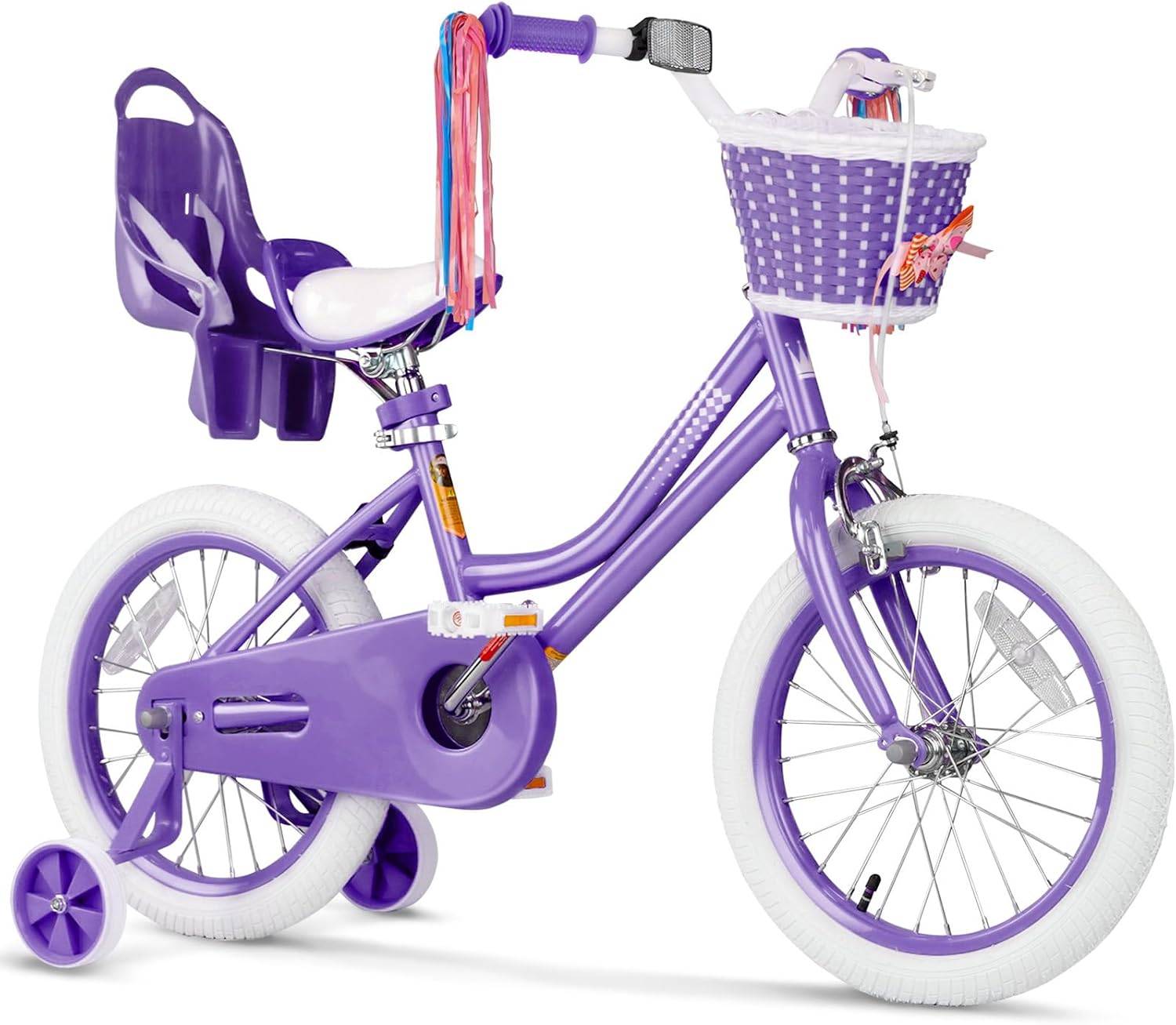
The Purple XJD bicycle lists a basket, bell, front hand caliper brake and rear coaster brake, with 12, 14 and 16-inch choices. The inspected image shows the actual accessory arrangement, but not this child’s hand reach or a measured bell specification. No sound level, clamp size or hands-on fitting test is claimed. The linked model details are available for XJD Purple Girls' Bicycle with Basket, Bell and Dual Braking.
Quick checklist
- Establish whole-bike fit first.
- Identify the actual bell actuator.
- Observe reach while stationary.
- Preserve grip and brake access.
- Use specific competent fitting guidance.
Common questions
Can the brake lever move out of reach to make room?
No. Preserve the complete stopping controls and have the crowded arrangement assessed properly.
Does a loud bell guarantee that someone will yield?
No. Keep control of the interaction and stop or walk when the response is uncertain.
Does a bell beside the grip prove it suits every child?
No. Check the actual rider’s reach on the fitting bicycle without a moving experiment.
Related collections
The XJD bicycle equipment background and XJD product catalog configurations provide further model details. Check the exact selected configuration when planning fit, handling and care.
Before the next outing
Assess bicycle bell reach within the complete control layout while stationary. Comfortable access should preserve grip and braking, while considerate stopping decisions remain separate from whether a signal produces sound.