


Taking a Bicycle on a Ferry: Plan Boarding, Crew Directions and Deck Storage
Taking a bicycle on a ferry adds a boat and port procedure to an ordinary ride. Before choosing the onward cycling route, establish how the actual operator accepts the complete bicycle, where you will wait and where it will travel during the crossing. A cycle-friendly destination does not answer those questions. Keep the booking confirmation and route instructions accessible so the family arrives ready to follow the crew’s directions.
Start taking a bicycle on a ferry with the exact crossing
Check the operator, terminal, sailing and bicycle-booking requirements for both outward and return journeys. Describe any unusual bicycle dimensions or attachments when asking about acceptance. Wightlink’s current bicycle guidance, for example, asks passengers to book bikes ahead because storage is limited, particularly on its FastCats. That example demonstrates why a foot-passenger ticket alone should not be treated as a universal bicycle reservation. Confirm current arrangements directly for the crossing you intend to use.
Prepare a walking handover at the port
Arrive according to the operator’s check-in guidance and ask staff where to wait with the bicycle. Keep riding, wheeling and boarding instructions distinct, following signs and crew directions at the actual terminal. Plan enough adult assistance for the bicycle and any accompanying child without leaving one unattended while handling the other. Keep bags secured and avoid creating a rushed one-handed maneuver at a ramp. If the family cannot manage the advised boarding route, request assistance before boarding begins.
Use the storage location for that vessel
Wightlink describes different arrangements: a dedicated rear bicycle rack on the Portsmouth–Ryde FastCats, a vehicle-deck location on Portsmouth–Fishbourne, and staff direction from the vehicle boarding ramp on Lymington–Yarmouth. The practical lesson is to follow the actual vessel procedure, even when yesterday’s crossing used another route. Ask how the bicycle should be supported or secured and follow that instruction. Do not invent a tie-down point on a brake cable, basket or another passenger’s bicycle.
Make disembarkation the next supervised handling task
Take personal belongings needed during the crossing to the appropriate passenger area, following the operator’s access rules. Keep clear of restricted storage areas and ask the crew when to return for the bicycle. At arrival, follow the directed exit and wait for an appropriate place to resume riding. Check bicycle condition, accessory position and normal control readiness before the onward journey. Allow the child a pause after the handling and travel rather than beginning the destination ride as an automatic continuation.
Model details relevant to this task
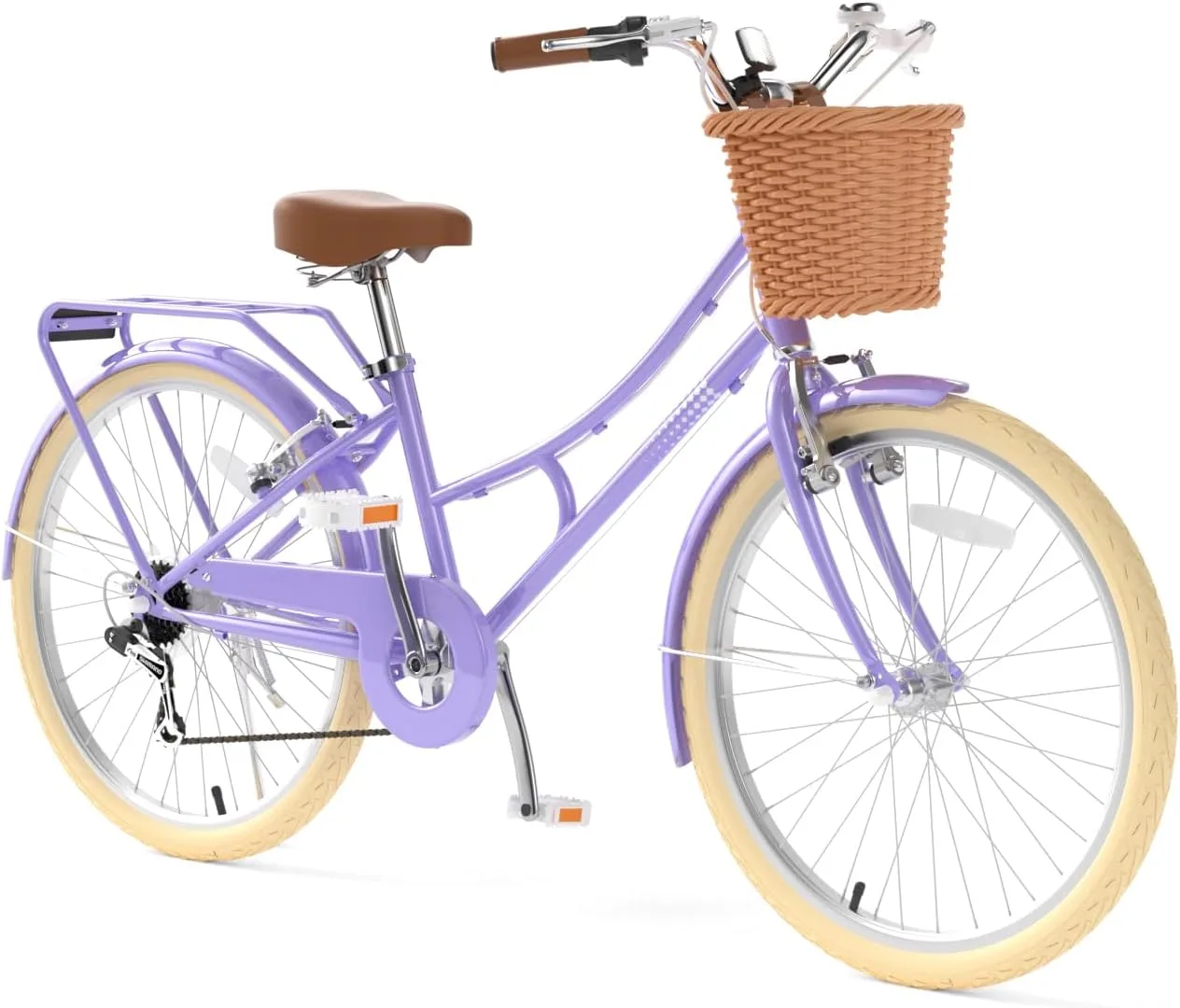
Best Bicycle’s Purple 24-inch XJD cruiser is a non-powered pedal bicycle with a rear rack and a basket visible in the inspected image. Its wheel label does not give the full dimensions of the assembled bicycle or reserve space aboard a vessel. No ferry ticket, securing strap or transport approval is included by the product listing. Confirm the actual complete equipment with the selected operator. The linked model details are available for XJD Purple 24-Inch Cruiser with Shimano 6-Speed Gearing.
Quick checklist
- Confirm both crossing reservations.
- Read the terminal-specific instructions.
- Arrange manageable adult handling.
- Follow the vessel’s storage direction.
- Inspect before the onward ride.
Common questions
Do all ferries use the same bicycle rack?
No. Operators and vessels may use different boarding and storage arrangements.
Does a passenger booking automatically reserve a bicycle place?
Do not assume so. Check the specific operator’s bicycle-booking requirement.
Can a basket serve as an improvised tie-down point?
No transport approval is established by its presence. Follow crew and equipment securing instructions.
Related collections
The XJD pedal bicycle configurations and XJD bicycle range information provide further model details. Check the exact selected configuration when planning fit, handling and care.
Before the next outing
Prepare taking a bicycle on a ferry as a complete port-to-port handling plan. A confirmed bicycle place, clear adult responsibilities and vessel-specific storage instructions leave the onward ride as a separate, freshly checked activity.