


Bicycle Crank Arm Loose: Stop Riding Before Choosing a Tightening Procedure
Bicycle crank arm loose is a reason to stop riding, not a cue to tighten the first visible fastener until it feels firm. The arm connects the pedal area with the drivetrain, and unexpected movement needs proper identification. Keep the bicycle unavailable while an adult records the concern and arranges suitable assessment. Do not ask a child to pedal harder so another person can hear or see the problem more clearly.
Locate bicycle crank arm loose movement without recreating a ride
Describe whether movement appears at the pedal, the arm’s connection toward the frame or the whole crank assembly. These are useful observations for service, not interchangeable diagnoses. Keep hands away from the chain and other moving components. Use only the permitted stationary inspection for the actual equipment, and take accessible pictures. A noise heard on an earlier outing can be reported without repeating the loaded event under a rider.
Identify the system before searching for a torque value
Crank and bottom-bracket designs differ, as Park Tool’s repair guidance illustrates. The bicycle’s wheel size and BMX-style title do not identify its crank interface, bearing arrangement or retaining hardware. Give the technician the actual model, selected size and visible component information. A familiar socket size does not establish a complete installation method. Do not transfer a torque figure or thread-preparation instruction from another crank just because its outside shape looks similar.
Ask for assessment of the complete connection
The June 2023 Trek owner manual treats a loose-feeling or loose-sounding crank as a stop-riding condition and directs bearing work to a bicycle shop. That supports taking the concern seriously without diagnosing this XJD bicycle. Request an assessment of the actual attachment and any related damage, rather than asking only for a quick retightening. Do not glue, shim or hammer a loose arm into place, and do not ride it until it finally comes off.
Keep the repair finish separate from a brief unloaded spin
After competent work, retain the actual component identity and service record. Complete the bicycle’s prescribed checks for attachment, chain clearance, pedals and braking before occupied use. A wheel turning freely on a stand does not prove the repaired connection is ready. Reconfirm the child’s fit and use an appropriate supervised setting once the full equipment assessment is complete. If movement returns, stop again and report the recurrence instead of making repeated tightening part of every outing.
Model details relevant to this task
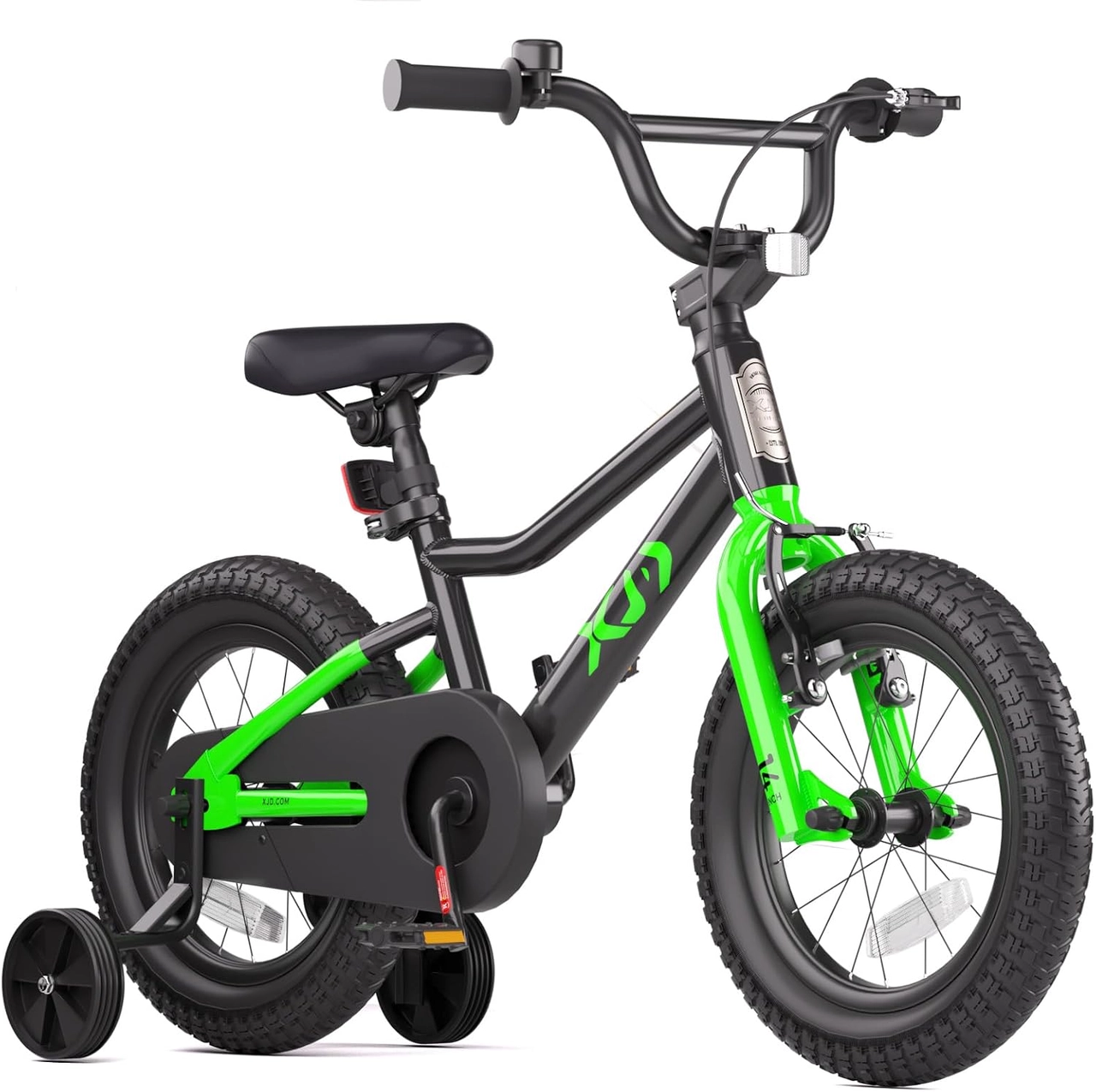
The linked Black XJD BMX-style learning bicycle lists a single-speed layout, front caliper brake, rear coaster brake and chain guard across 12, 14 and 16-inch choices. Its inspected merchant image does not identify hidden crank fittings or an installation torque. No looseness or defect is alleged in the pictured new product. The linked model details are available for XJD Black Kids' BMX-Style Bike with Dual Brakes and Chain Guard.
Quick checklist
- Stop riding for unexpected movement.
- Locate the observed area carefully.
- Identify the actual crank system.
- Request a complete connection assessment.
- Keep the final service record.
Common questions
Does the bicycle’s wheel size choose a crank torque?
No. The actual crank interface, hardware and maker instructions must be identified.
Should the child recreate the noise while pedaling?
No. Report the observation and use appropriate stationary assessment instead of a loaded demonstration.
Does a quiet unloaded spin close the repair?
No. The complete attachment and bicycle checks still need to be resolved before riding.
Related collections
The XJD actual bicycle configurations and XJD bicycle family context provide further model details. Check the exact selected configuration when planning fit, handling and care.
Before the next outing
Finding a bicycle crank arm loose calls for a complete service assessment before riding. Exact identification and a documented remedy are more useful than a borrowed torque number or repeated tightening and trial rides.