


Ibis DV9 tire clearance: keep V1 on its documented 29-inch format
Ibis DV9 tire clearance can be misunderstood when high-volume 29-inch tires are compared with smaller-diameter plus wheels. For the original V1 frame, Ibis gives a specific rear-tire limit and an explicit excluded combination. Read both before buying a second wheelset or accepting a used bicycle’s wheel conversion as an approved configuration.
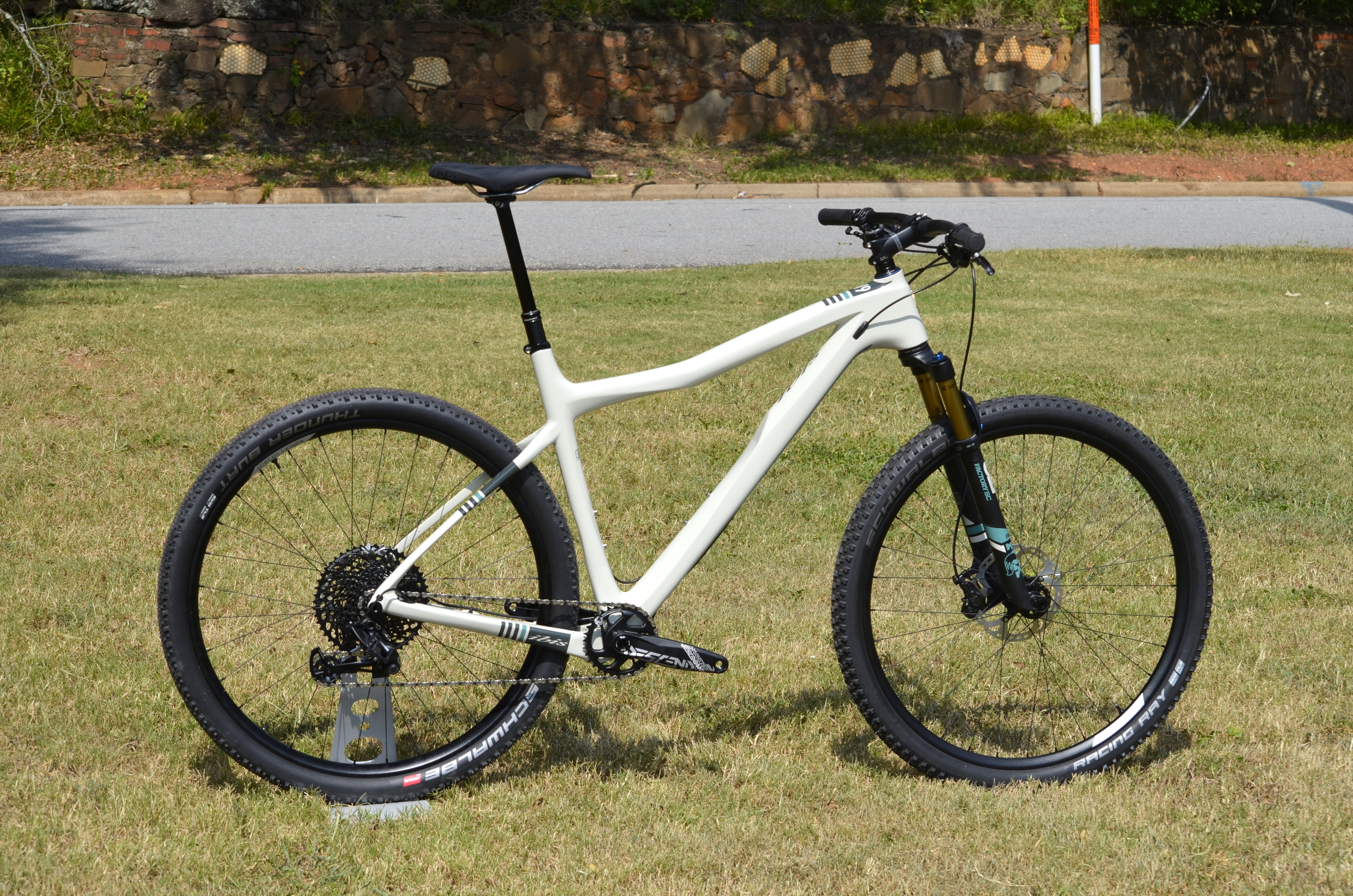
Ibis DV9 tire clearance: use the documented rear-tire limit
The DV9 V1 manufacturer archive (https://www.ibiscycles.com/bikes/past-models/dv9-v1), covering 2018–2020, specifies 29-inch wheels and up to 2.6-inch tires. Its rear-tire FAQ repeats a maximum of 29 x 2.6. Keep that statement attached to V1 and to the rear position; it is not a clearance promise for every frame carrying the DV9 name.
Before buying, record the tire model, stated size and rim used on the actual bicycle. Ask a workshop to check the assembled combination and surrounding clearance. A printed width is useful identification, but a photograph or a tire that turns without a rider does not establish a complete compatibility assessment.
Understand what the plus-wheel FAQ excludes
The same archive expressly says no to 27.5 x 2.8 plus tires. Its explanation concerns lowering the bottom bracket too far and pedal-strike problems. Therefore, looking only at lateral space around a smaller wheel misses the reason Ibis gives for excluding that configuration. Do not treat apparent room between the stays as approval.
The documented alternative is high-volume 29 x 2.6, rather than a smaller wheel chosen to imitate plus-bike tire volume. If a seller advertises a V1 already converted to 27.5 plus, ask about the conversion and seek an assessment against the explicit archive restriction. Prior use does not rewrite the manufacturer’s stated compatibility.
Inspect a used bike before changing its wheel system
Check the wheel and tire markings directly and photograph any rubbing, damage or nonstandard components. Keep a record of both front and rear assemblies. A changed fork adds another identification task: the rear frame limit does not automatically establish that the fork accepts the same tire or that a replacement wheel matches its interface.
Choose replacement tires only after separating wheel diameter, rear-frame clearance, actual rim/tire compatibility and fork requirements. There is no need to invent a smaller-wheel workaround when the archived decision is clear. For the fork’s separate specification and chart conditions, use the DV9 fork-travel explanation before ordering both components together.
FAQ: Ibis DV9 tire clearance
What rear tire size does Ibis list for DV9 V1?
The archive lists up to 29 x 2.6. Check the actual assembled tire and rim rather than extending that specification to an unverified combination.
Why is checking side clearance alone insufficient for 27.5 plus?
Ibis explicitly excludes 27.5 x 2.8 and identifies excessive bottom-bracket lowering and pedal strikes as the concern, not simply lateral tire space.
Does the rear limit approve any replacement fork?
No. A rear-frame tire limit does not establish a fork’s tire clearance or all wheel-interface requirements. Identify and check that component separately.
The Ibis topic keeps platform articles together, while the brand guide outlines the wider range. For V1 wheels, retain both the positive limit and the explicit exclusion.
Photograph credits and permissions
Photograph 1
Original title: Ibis DV9
Creator: Glory Cycles
Original source URI: https://commons.wikimedia.org/wiki/File:Ibis_DV9.jpg
License / permission: CC BY 2.0
License / permission URI: https://creativecommons.org/licenses/by/2.0/
Modification notice: Original JPEG unchanged.
Source disclaimer: Original Flickr photograph: https://www.flickr.com/photos/29558127@N06/48723117663/ Creator profile: https://www.flickr.com/photos/29558127@N06/ Embedded EXIF/IPTC/XMP creator tag: Picasa.