


Cleaning a Muddy Haibike Mountain Bike: Protect the Working Surfaces
Cleaning a muddy Haibike mountain bike starts with choosing a method that does not create another problem. The historical HardSeven 3.0 photograph shows how much dirt can collect around a non-electric hardtail. Haibike's linked historical owner manual gives a restrained cleaning approach, with particular limits on water pressure, cleaning tools and products near braking surfaces.
Prepare for cleaning a muddy Haibike mountain bike
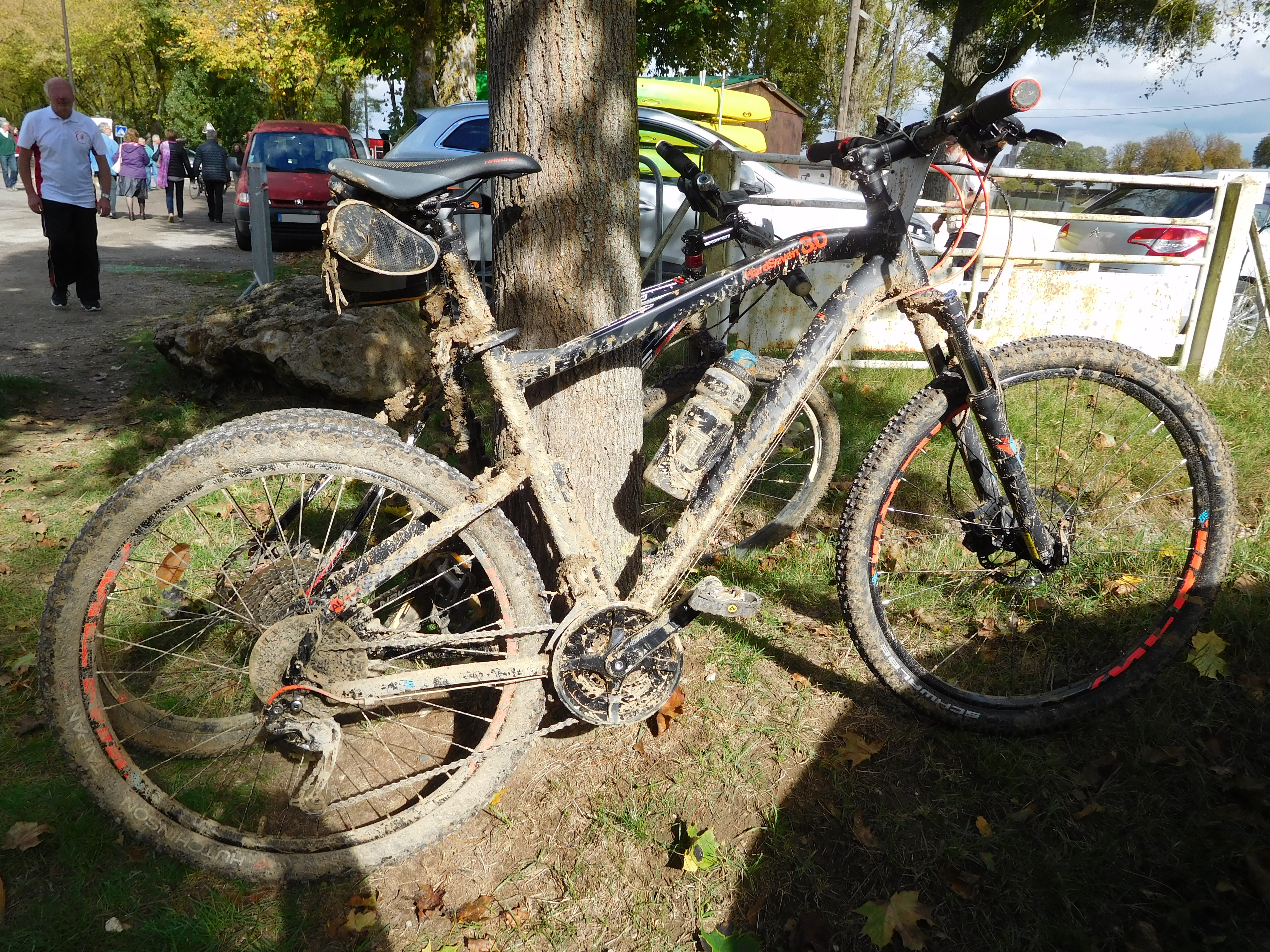
In the Cycle section's Cleaning chapter, printed page 108, the manual (https://winora-group.com/download/2018/01_WINORA%20GROUP/195922_Winora_BDA_Online_EN_Kopierschutz.pdf) calls for clean cloths, mild lukewarm soapy water and a soft brush or sponge. It advises consulting a dealer about suitable cleaning and preserving products where necessary. Assemble those materials before treating a heavily soiled bicycle as a reason to use a more aggressive tool.
The same page excludes abrasive cleaning products, sharp or metallic tools, strong water jets and high-pressure equipment. These limits matter when mud is packed into awkward places. A scraper or concentrated jet may look like a faster way to expose the frame or drivetrain, but it is outside the method described by this manufacturer manual.
Moving parts create a separate hazard while cleaning. The manual warns about fingers becoming caught and advises suitable protective gloves where necessary. Position and handle the bicycle so that cleaning does not require reaching into moving components. If accessing a dirty area requires unfamiliar disassembly, arrange appropriate help instead of improvising a repair during the wash.
Dry the bicycle and separate cleaning from servicing
The manual describes wiping surfaces and components with a damp sponge moistened with mild soapy water, followed by wiping them dry. It recommends regular cleaning even when dirt is slight. This is an ongoing care routine, not a test that proves a bicycle is sound once its paint looks clean. Use the opportunity to record concerns that need examination after the dirt is removed.
Keep frame-preserving products away from braking surfaces. The manual explicitly excludes preserving rim-brake rims and brake discs. A product suitable for painted or metallic frame surfaces therefore should not be spread across every exposed metal part. Identify the braking system and protect its working surfaces rather than treating the whole bicycle as one interchangeable cleaning surface.
Printed page 109 directs the owner to component-manufacturer information for cleaning individual components. That distinction matters around a fork, drivetrain or brake assembly. The general washing instructions do not replace the instructions for the actual component, or tell you that an unfamiliar lubricant or solvent is suitable for it. Keep a separate list of component-care questions for the workshop.
The photograph is useful historical context for a dirty HardSeven, without establishing its original year, component condition or the correct service products for a present bicycle. This article concerns the general cycle-cleaning guidance for a non-electric hardtail. It does not supply battery, charger or electric-drive washing instructions, and it does not authorise riding with an unresolved brake or mechanical fault.
FAQ: cleaning a muddy Haibike mountain bike
Does heavy mud justify a pressure washer under this manual?
No. Its cleaning instructions exclude strong water jets and high-pressure equipment.
Should frame preservative be applied to the brake discs?
No. The manual expressly keeps preserving products off brake discs and rim-brake braking surfaces.
Does a general clean replace component-specific care?
No. Follow the relevant component instructions and have unfamiliar servicing or unresolved faults assessed separately.
Use a gentle method, dry the bicycle and keep cleaning products away from braking surfaces. Record any remaining fault separately so a successful wash is not mistaken for a completed service.
After cleaning, use the brake service record or update the document checklist. The Haibike topic and Haibike brand guide place these owner tasks together.
Photograph credits and permissions
Photograph 1
Original title: Rallye des vignobles 2017, 65, VTT Haibike HardSeven 3.0.jpg
Creator: Cjp24; creator URI: https://commons.wikimedia.org/wiki/User:Cjp24
Original source URI: https://commons.wikimedia.org/wiki/File:Rallye_des_vignobles_2017,_65,_VTT_Haibike_HardSeven_3.0.jpg
License / permission: CC BY-SA 4.0
License / permission URI: https://creativecommons.org/licenses/by-sa/4.0/
Modification notice: Source metadata records GIMP 2.8.2. Original JPEG retained unchanged.