


Bike Parking with a Kickstand: Support an Empty Bicycle on Suitable Ground
Bike parking with a kickstand is a stopped handling task after the rider has dismounted. A stand can be convenient, but its presence does not make every patch of ground a parking place or turn the bicycle into a chair. Identify the actual support instructions and choose space for the whole bicycle. The stand, ground, belongings and nearby people all affect whether the planned stop is workable.
Choose bike parking with a kickstand on clear level ground
Look for firm ground that suits the exact stand and leaves doors, walkways and riding routes unobstructed. Avoid relying on soft soil, a slope or the edge of a step. Consider where the bicycle could move if disturbed and keep children away from that space. A convenient place beside a bench may still obstruct access. If stable support cannot be established, use another permitted arrangement with adult handling rather than leaving the bicycle balanced uncertainly.
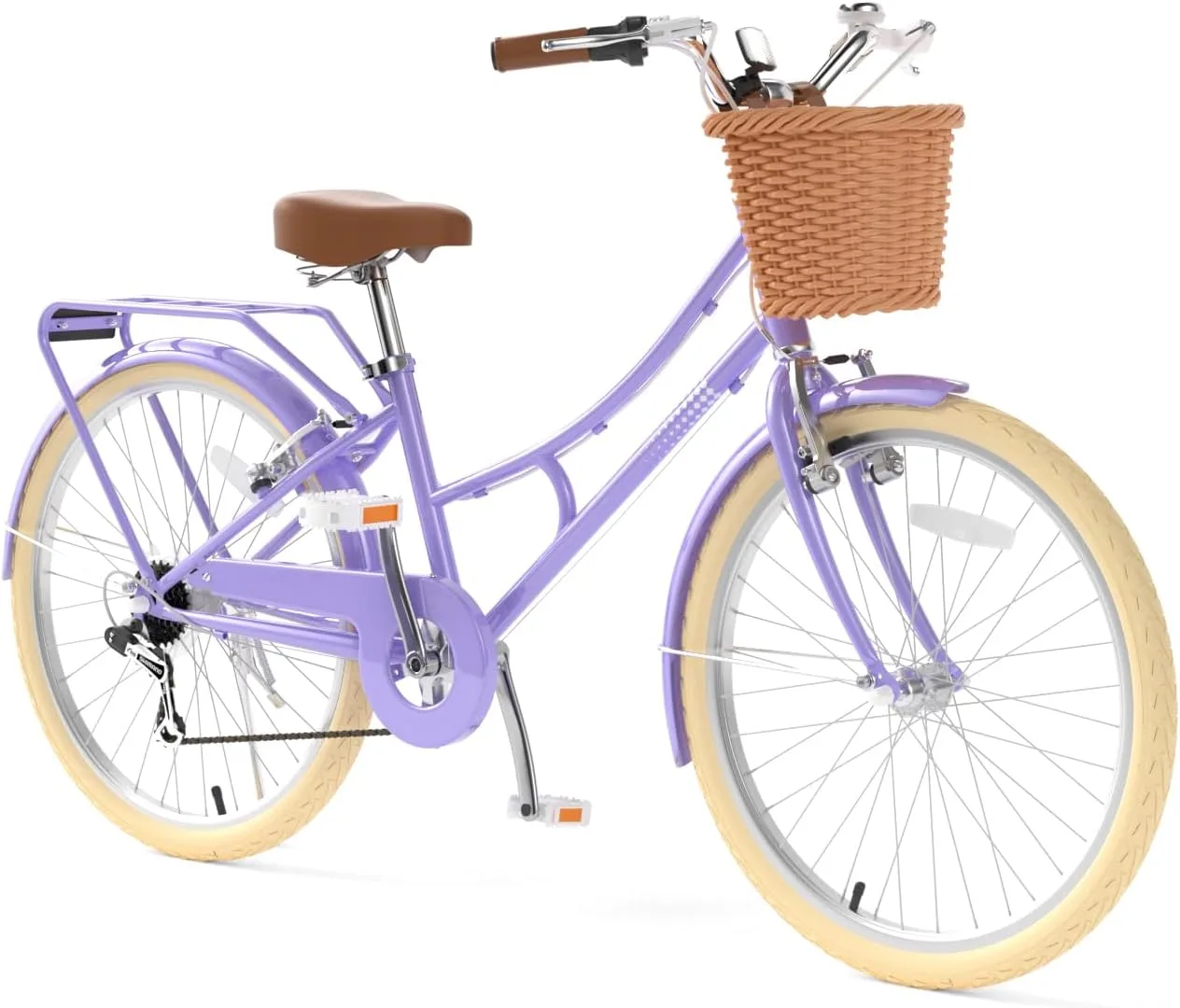
Complete dismounting before deploying the support
Have the rider get off through a manageable routine before an adult handles unfamiliar parking equipment. Follow the actual stand’s operation instructions while keeping feet and fingers clear of moving joints. Retain control of the bicycle until its support has been checked appropriately. Do not sit on the saddle, allow another child to climb on or use the supported bicycle as a play structure. No occupied support or additional load rating is established by a parked product photograph.
Manage the basket and rack without assuming stability
Keep carrying within the bicycle and accessory guidance. Removing or adding belongings changes the parked arrangement, so maintain control while handling them and reassess support. A hanging bag can move into a wheel or pull on the steering. Do not use the stand to justify leaving a heavily loaded bicycle unattended. If unloading cannot be done while keeping the bicycle controlled, ask for appropriate adult help or choose a better parking setup before opening the bag.
Prepare the restart as its own small check
Follow the prescribed sequence to retract the stand fully before movement and confirm that it stays in its intended position. Check any visible looseness, damaged spring or interference before riding rather than nudging it upward with the child already moving. A stand that deploys unexpectedly or will not remain retracted needs service. Recheck the rider’s grip and route after the pause, with suitable helmet use and supervision, so leaving the stop is as deliberate as arriving.
Model details relevant to this task
The Purple 24-inch XJD cruiser lists a basket, rear rack, Shimano 6-speed gearing and V-brakes. Its inspected product image shows a parking stand, but that image does not publish a load rating or support instructions. Confirm the selected delivered equipment and matching guidance. Basket capacity, rack capacity and stand behavior are separate facts; none is inferred here from the bicycle’s 24-inch label. The linked model details are available for XJD Purple 24-Inch Cruiser with Shimano 6-Speed Gearing.
Quick checklist
- Choose firm clear level ground.
- Dismount before handling the stand.
- Keep control until support is checked.
- Manage belongings with the bike controlled.
- Confirm full retraction before moving.
Common questions
Can the rider remain seated while the stand supports the bicycle?
Do not treat it as an occupied support. Follow the actual instructions and have the rider dismount.
Does a stand make soft ground suitable?
No. Select a surface that provides appropriate stable support for the actual equipment.
Can the bicycle move with the stand partly lowered?
Complete the prescribed retraction and check before movement; resolve an insecure or obstructing stand first.
Related collections
The XJD actual parking and carrying layouts and XJD bicycle overview provide further model details. Check the exact selected configuration when planning fit, handling and care.
Before the next outing
Make bike parking with a kickstand a controlled pause around an empty bicycle. Suitable ground, deliberate handling and a checked restart allow convenience to fit within the actual support instructions instead of becoming an assumed promise of stability.