


Bicycle Brake Pad Toe In: Understand the Contact Angle Before Calling It Crooked
Bicycle brake pad toe in describes how a rim-brake pad approaches the rim along its length. It does not mean the wheel should lean, that one brake arm should stay closer or that a pad may touch the tire. Understanding that distinction helps a parent describe a service question clearly. A slightly angled appearance needs the actual brake’s instructions, not an automatic attempt to make every visible edge perfectly parallel.
Define bicycle brake pad toe in in the direction of travel
Park Tool describes toeing a linear-pull pad so that its front edge contacts first. That explains the term rather than giving every brake a shared setting. Identify which end the component instructions call the front and use the actual system documentation. Do not infer the appropriate angle from a merchant picture, reverse a directional shoe or transfer a setup dimension from an unrelated brake to the family bicycle.
Keep the three alignment questions distinct
Along-length contact angle is different from pad height and the orientation of its working face against the rim. A pad that reaches the tire, sits outside the intended braking track or has moved unexpectedly needs proper correction; calling it toe in does not explain those conditions away. Describe which edge or surface is in question while the bicycle is stationary. Keep hands and loose measuring objects away from moving spokes and pinch points.
Do not confuse toe with cable clearance or wheel position
Cable tension, brake-arm centering and the wheel’s installation affect other parts of the setup. Trying to change one to disguise another can leave the original problem unresolved. If a recent wheel installation preceded an alignment concern, include that history in the service enquiry. An angled-looking pad is not permission to move the axle or turn adjusters until its appearance matches an internet photograph.
Understand why the actual mounting hardware matters
Common linear-pull pad assemblies use curved washers that permit alignment in more than one plane, as Park Tool explains. That example does not establish the exact hardware on this XJD cruiser. A proper procedure needs the complete fitted brake and its prescribed arrangement, not a loose collection of washers assembled from memory. Do not omit, reverse or add pieces as an improvised way of producing a contact angle.
Ask for a complete setup explanation after service
If competent service changes the pad position, ask which alignment requirement was addressed and how the finished brake was checked. Noise reduction is not the only result that matters; secure attachment, correct braking-surface contact and dependable operation must remain intact. No universal toe measurement is supplied here. An uncertain brake stays out of use rather than sending a child to perform hard stops so an adult can watch how the pad moves.
Model details relevant to this task
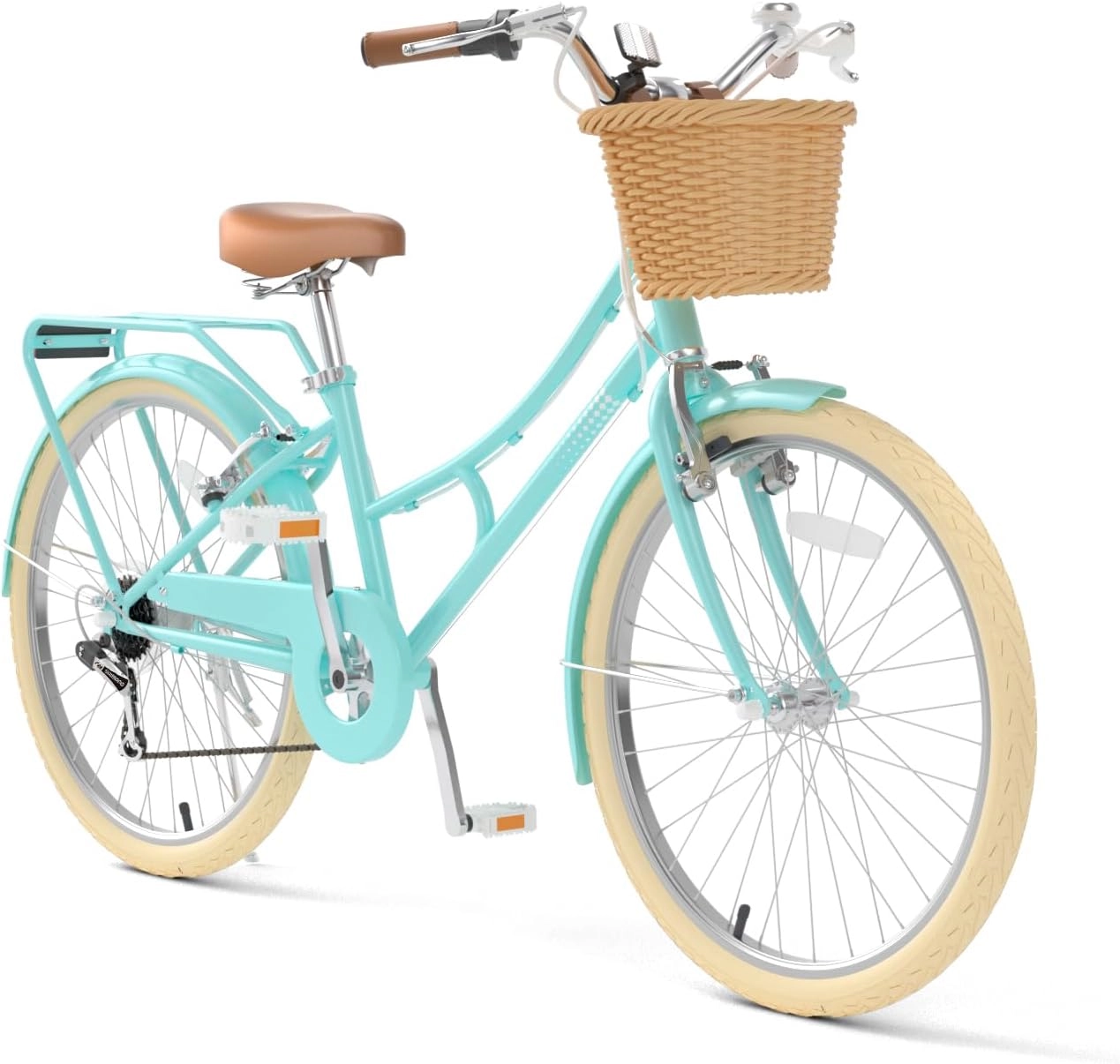
The Mint Green XJD city cruiser lists front and rear V-brakes and multiple wheel-size choices. That makes it a real context for a linear-pull brake discussion, without identifying its exact pads, washers or required toe setting. Its product image is not an alignment diagram; rider height, inseam and comfortable brake access need their own fitting assessment. The linked model details are available for XJD Mint Green City Cruiser with Basket and Rear Rack.
Quick checklist
- Identify the actual meaning of front.
- Separate toe, height and face angle.
- Keep clearance and wheel position distinct.
- Preserve the prescribed mounting assembly.
- Confirm the complete serviced brake.
Common questions
Does toe in mean the pad may touch the tire?
No. Contact outside the intended rim braking surface needs proper assessment and correction.
Should every brake use the same toe dimension?
No common setting is established here. Use the requirements for the fitted brake and pad.
Does a quiet brake prove the alignment is correct?
No. Complete secure and dependable braking matters as well as any change in sound.
Related collections
The XJD product catalog for brake identification and XJD bicycle equipment context provide further model details. Check the exact selected configuration when planning fit, handling and care.
Before the next outing
Use bicycle brake pad toe in to name one contact-angle question accurately. Separate it from height, face alignment, cable clearance and wheel installation so the eventual service addresses the real setup instead of merely changing how a photograph looks.