


Wishbone Original Sizing: Seat Height and Real Ground Contact
Wishbone Original sizing is a child-and-bike check rather than a birthday calculation. A published seat-height range helps narrow the search, but the useful result is whether the particular rider can sit on the actual wooden bike with the ground contact described in its instructions. An old photograph without a rider cannot settle that question.
Original sizing begins with the documented range
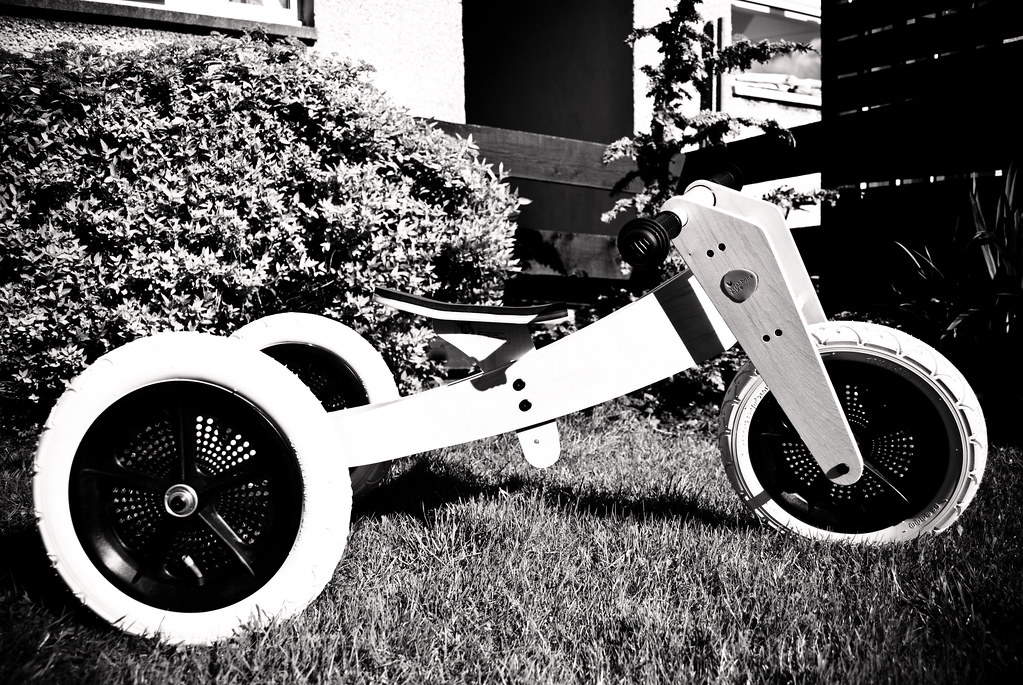
The manufacturer's NZ sizing FAQ lists a 28–46 cm seat-height range for the Original two-wheel and three-wheel versions. This is a product-family reference, not a measurement of the historical example pictured below. A modified seat, missing hardware or different frame edition needs its own verification.
For an owner, the first useful record is the bike's present seat position and orientation. For a prospective buyer, ask which configuration the seller has measured and whether the required adjustment components remain present. A single number without that context can make two listings appear more comparable than they really are.
Check what the handbook asks the child to do
Printed page 16 of the historical Original manual requires the child's feet to rest flat on the ground when the seat is adjusted. That handbook carries a 2009 copyright; its ownership certificate identifies Mark II. It supplies a concrete fit criterion for that documented design, not an automatic diagnosis for every later or altered bike.
Compare the real seated position with that instruction before considering a ride. Being able to touch with the toes is not the same observation as flat-foot contact. If the available adjustment does not produce the required position, do not treat the advertised age range as permission to overlook it. Resolve the model and fit with the manufacturer or a competent cycle professional.
Seat adjustment and frame orientation are separate decisions
The handbook places frame-flipping instructions on printed pages 14–15 and seat adjustment on page 16. That separation matters: moving the saddle and reorienting the frame are not interchangeable descriptions of one quick adjustment. Our Original frame-flip guide explains how to prepare for the latter without inventing a torque setting or an age threshold.
The historical trike image provides relevant wooden-family context only. It shows neither a child's reach nor a measured saddle height. For other owner tasks, start with the Wishbone reference collection, rather than treating this one photographed setup as a universal fit example.
Seat-fit FAQ
Is a stated age enough to confirm fit?
No. Check the actual bike and the rider's ground contact against its matched instructions.
Does the photo show the minimum seat position?
No measured seat position is established by this image.
Should I flip the frame instead of checking the seat?
No. Orientation and seat position require separate attention in the documented fitting process.