


Wishbone Flat Tyre: Identify the Wheel, Tube and Correct Instructions
A Wishbone flat tyre question has two parts: what is fitted to this bike, and which instructions apply to it? Ordering a tube from a familiar brand name alone skips the first part. For a historical wooden Original, record the actual tyre markings, valve and wheel configuration before interpreting a modern product page or an older handbook.
Flat tyre checks begin with identification
The historical English manual separates wheel, tube and tyre on printed page 5. Its front-wheel kit and fitting diagrams are separate from the rear configurations. That helps an owner explain which component is involved, rather than using wheel, tyre and tube as if they were the same part.
Record whether the affected wheel is front or rear and whether the bike is in trike or bicycle form. Copy the markings that are actually legible on the fitted tyre instead of assuming they match the photograph. If a valve or size marking cannot be identified, that is information still needed before choosing a replacement, not a reason to guess.
Keep pressure statements in their source context
The historical manual's maintenance section, printed page 17, states a maximum of 25 psi. The manufacturer's NZ FAQ has a general-care answer limiting inflation to 20 psi and a separate flat-tyre answer mentioning 25 psi. The document editions and question contexts must remain visible; they do not explain which instruction applies to an unidentified replacement tyre or wheel.
This guide therefore does not select the higher figure, average the numbers or publish one universal Wishbone pressure. Ask the manufacturer to reconcile the guidance for the actual bike and fitted tyre. A photograph of another vehicle cannot resolve its tube specification or authorize an inflation setting.
Prepare a useful repair enquiry
Provide clear pictures of the wheel, valve and tyre markings, together with the bike identity and the manual being consulted. Explain whether the problem is a puncture, an unidentified replacement component or damage that requires assessment. This keeps a tube question separate from uncertainty about the wheel assembly itself.
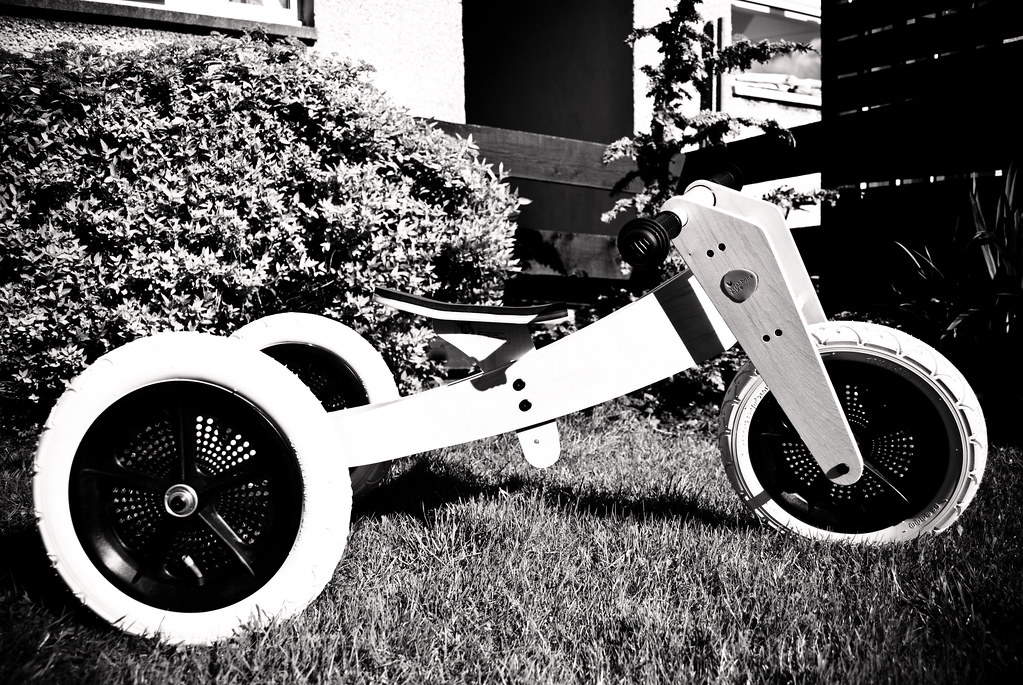
The historical trike below shows the relevant wooden family but not a readable valve or sidewall label. It is not a puncture-repair demonstration. If the wheel was removed during a configuration change, consult the separate rear-kit identification guide. Other specific owner tasks are indexed under Wishbone Bikes.
Tube-and-pressure FAQ
Should I always use the larger pressure number?
No. Resolve the applicable guidance for the identified wheel and fitted tyre first.
Can this photo identify my replacement tube?
No. Its visible wheels do not provide legible tube specifications or valve details.
Are front and rear assembly instructions interchangeable?
The manual documents them separately; use the correct version and assembly section.