


Transition Bottlerocket legacy guide: Frame Standards for Early Builds
This Transition Bottlerocket legacy guide helps owners approach an early frame as a restoration project with identifiable interfaces. A familiar model name or green paint is a starting point, but neither establishes a frame version. For readers exploring Transition, the useful distinction is between the bicycle someone photographed, the frame described in an archive, and the components fitted today.
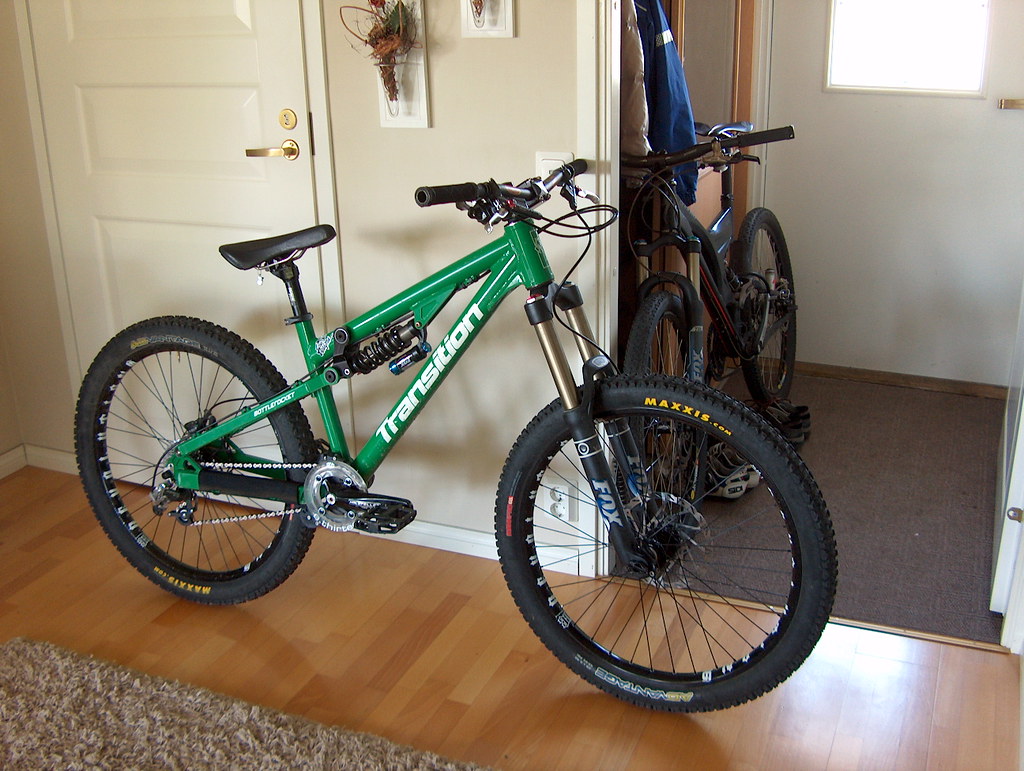
The early freeride design in context
Transition’s V1 product document presents the Bottlerocket around freeride trails featuring jumps, berms and wall rides. It describes a heat-treated aluminum frame, a sloping top tube and a one-piece rocker. That explains the original design brief without establishing how a particular used bicycle handles after years of component changes.
Treat that brief as historical context when deciding what you want to preserve. A period-style restoration and a practical rebuild can have different priorities. Write down whether your aim is to retain the original appearance, reuse existing components, or return an incomplete frame to working condition before buying anything.
Transition Bottlerocket legacy guide to frame interfaces
The V1 sheet lists a 1.5-inch head tube, a 73mm bottom bracket shell, a 30.0mm seatpost and 135 × 10mm rear dropout spacing. Its chain-guide interface is standard ISCG. These are useful comparison points for an identified V1 frame; they should not become specifications for every Bottlerocket carrying the same name.
Make an inventory with three columns: documented frame interface, installed component, and unresolved question. A seatpost measurement belongs beside the seatpost specification; a complete crank model belongs beside the bottom bracket interface. This keeps a familiar component name from concealing an incompatible mounting standard.
Choose the document before the replacement part
The official Bottlerocket support archive separates several documents, including V1 information, an early hang-tag manual and later model-year material. Keep the selected document’s title with your project notes. If the frame cannot be matched confidently, send Transition identifying photographs and the serial number rather than choosing the closest-looking archive entry.
The attached historical photograph establishes the appearance of that photographed build. Its capture date does not establish a frame model year. Likewise, an old component fitted to the bicycle cannot by itself date the frame underneath it.
FAQ about early Bottlerocket restorations
Does a photograph taken in 2008 prove a 2008 model year?
No. It records when the photograph was taken. Establish the frame version separately before applying technical specifications.
Can every early Bottlerocket use the V1 specifications?
No. Use the V1 sheet only after identifying the relevant frame. The archive contains separate documents for other versions.
What should I check before spending on cosmetic work?
Resolve frame identity, condition and the compatibility of expensive missing components first. Those answers determine whether the proposed restoration is practical.
Use this Transition Bottlerocket legacy guide to build a documented parts plan, then consult the legacy Bottlerocket maintenance article for the separate questions of cable protection, bearings and hardware.