


Santa Cruz Blur Generations: Identify the Frame Before Comparing Parts
Santa Cruz Blur generations include substantially different frames beneath a familiar name. An old orange Blur can be a useful starting point for research, but a photograph taken recently does not identify a recent platform. Establish the full frame designation before collecting attractive specifications from several support pages.
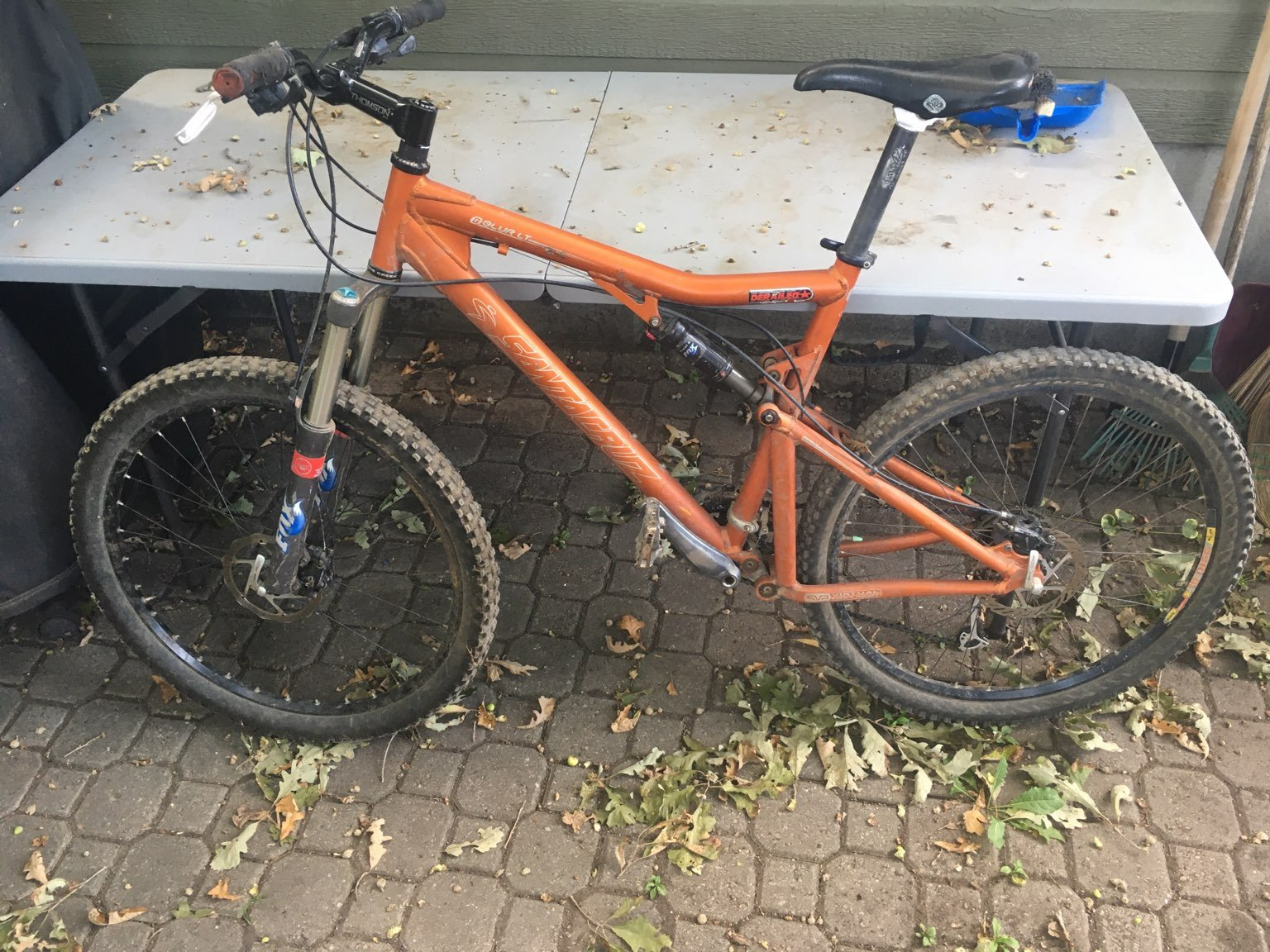
Separate the Santa Cruz Blur generations in the archive
Santa Cruz identifies Blur LT1 as a 2005–2007 aluminum platform with 135mm rear travel. Its contemporary Blur XC1 record covers 2005–2008 and lists 115mm. Those overlapping dates show why a purchase year and the word Blur cannot uniquely identify the suspension platform.
Blur XC2 belongs to a later 2009–2013 carbon generation. Blur 3 is later again: the official record covers 2018–2021, carbon construction and 100mm rear travel. These records describe their named frames; they are not competing descriptions of the orange bicycle pictured here.
Gather frame evidence that survives component changes
Look for the complete model wording, frame identification and original purchase paperwork. Ask for clear views of the head tube, suspension linkage and rear dropouts. Compare structural features with the appropriate manufacturer record before relying on a fork decal or a recently fitted drivetrain.
Replacement components explain why an apparently modern part can appear on an older chassis. They may be legitimate changes, but they cannot establish the frame’s production year. Keep the frame identity and the current equipment list as separate records so that one does not silently overwrite the other.
Turn an identification into a useful ownership file
Once the variant is established, save its exact support-page title and production range beside the frame details. If the record has revision notes, include those too. The XC2 page, for example, separates earlier and later headset and rear-hub interfaces inside the same generation.
If you cannot resolve a mismatch, send the evidence to rider support before ordering a frame-specific component. An honest uncertainty is more useful than a precise but unsupported year. It also prevents a later repair from inheriting a parts list assembled around the wrong bicycle.
Santa Cruz Blur generations FAQ
Can the year of a used-bike sale establish its generation?
No. A bicycle can be sold after production, and the named variant still matters.
Should a replacement fork be used as the frame’s identity?
No. Identify the chassis independently, then record the fork as fitted equipment.
Why retain revision notes after identifying XC2?
Because its support record changes headset and rear-hub details within that generation.
Identify Santa Cruz Blur generations through the frame and its exact support record. That identity gives every later fit, wheel and suspension question a reliable starting point.
After identifying the frame, check Santa Cruz Blur fork compatibility before planning a front-end change. Further references are grouped in the Santa Cruz bicycle collection.
Technical references: LT1 record; XC1 record; XC2 record; Blur3 record.