


Salsa Mukluk 2016 Builds: Separate X7 and Sus GX1 Equipment Records
Salsa Mukluk 2016 builds share a family name without sharing a complete equipment list. The X7 and Sus GX1 archives describe different forks, drivetrains and brakes. Use those records to establish what each catalogue offered, then make a separate inventory of the used bicycle being considered instead of assuming every fitted part is original.
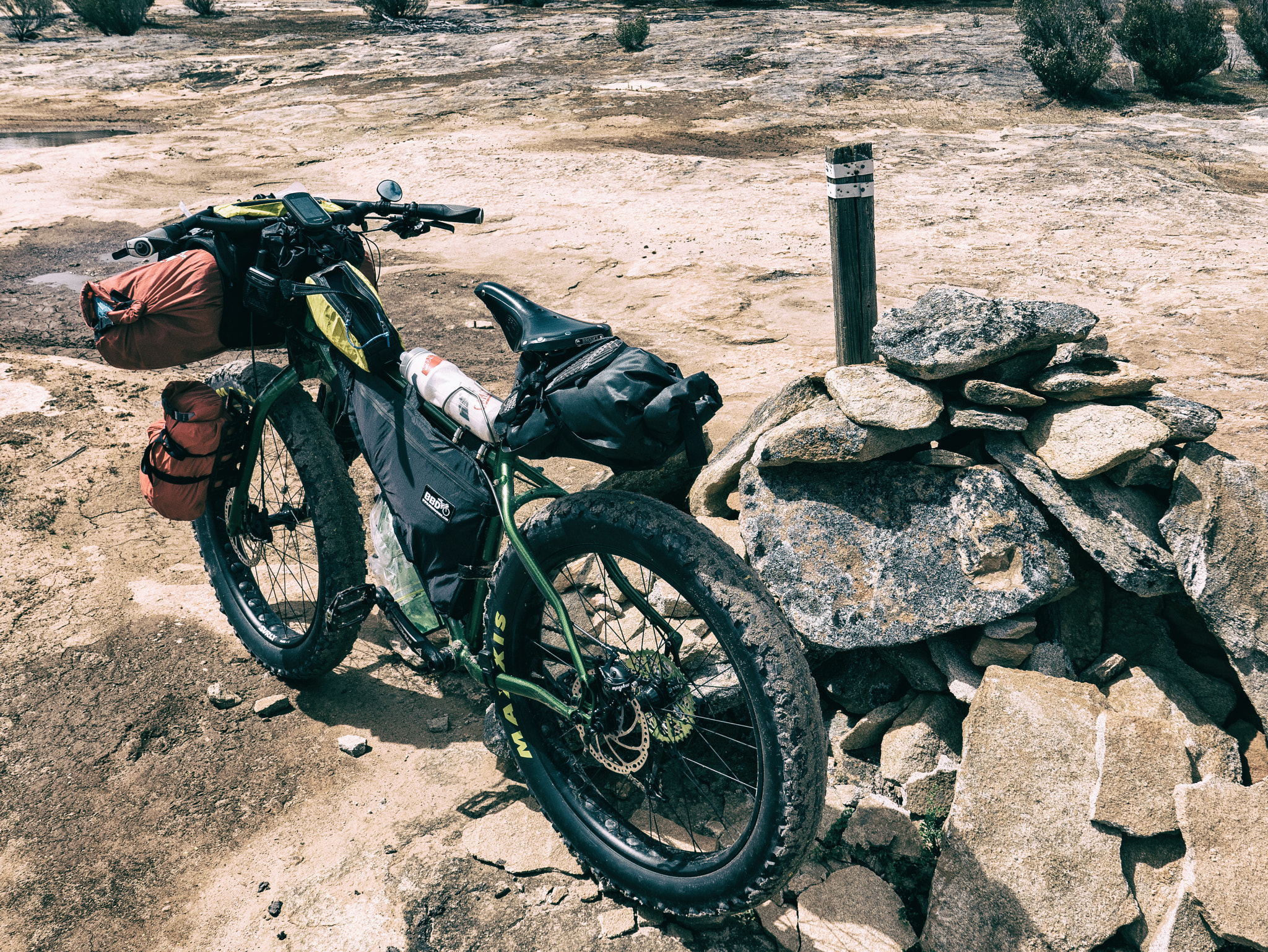
Compare Salsa Mukluk 2016 builds from the fork outward
The X7 build lists a Bearpaw Carbon/Al fork with a 15 x 150 mm thru-axle interface. Sus GX1 lists a RockShox Bluto RL, with its feature text specifying 100 mm travel. That distinction is more informative than calling both bicycles aluminum Mukluks, because a later fork change can alter the servicing and compatibility questions.
Cockpit entries differ too: X7 has a Salsa Guide stem and 700 mm Salt Flat 3 handlebar, while Sus GX1 lists a Thomson X4 stem and 750 mm Salt Flat 2 bar. These are historical equipment entries, not a prescription to restore an owner-modified bike regardless of fit or condition.
Keep cassette and rear-hub records paired
X7 has a SRAM X5 crank with 22 and 34-tooth rings, an 11–36 cassette and a ten-speed KMC X10 chain. Its rear hub entry is a 170 mm quick-release Salsa Mukluk 3 with a steel freehub. Sus GX1 instead has a 30-tooth single ring, 10–42 cassette and eleven-speed GX drivetrain.
The Sus GX1 rear hub is recorded as a 170 mm quick-release Salsa Fat Conversion with an XD driver. A shared rear spacing does not make the two cassette interfaces interchangeable. For a used bike, read the installed cassette, shifter and hub markings together before budgeting for a replacement drivetrain.
Inspect the rolling and braking equipment as a complete build
Both records name 26-inch, 80 mm SUNringlé Mulefut SL rims and 26 x 3.8-inch Surly Nate tyres, but X7 specifies a 27 tpi wire bead and Sus GX1 a 120 tpi folding tyre. The latter rim entry explicitly includes tubeless; the former entry does not supply that description.
X7 lists SRAM DB1 brakes and 160 mm rotors at both ends. Sus GX1 uses Guide R brakes with a 180 mm front rotor and 160 mm rear. Record what is fitted now rather than inferring the entire build from a single surviving component. The photograph shows a historical family example, not proof of either archive’s original configuration.
Historical build FAQ
Which archive lists the suspension fork?
Sus GX1 lists the RockShox Bluto RL; X7 lists the rigid Bearpaw Carbon/Al fork.
Do both documented rear hubs use quick release?
Yes. Both complete-build entries specify 170 mm quick release, despite their different cassette-driver descriptions.
What should a seller photograph for a drivetrain comparison?
Ask for readable chainring, cassette, shifter and rear-hub identification, not just the model decal.
A changed build is not automatically unsuitable. The useful question is whether its present parts form a documented, serviceable combination; keep the original archive and the current equipment inventory as separate records.
The shell and ring constraints are explained in Salsa Mukluk bottom bracket. Explore the Salsa bicycle collection for the broader brand context.
References: 2016 X7 archive; 2016 Sus GX1 archive.