


Salsa Mukluk Bottom Bracket: Read the 2016 Shell and Crank Constraints
The Salsa Mukluk bottom bracket record for the 2016 aluminum frame specifies PressFit 41 x 121 mm. That is a useful starting description, but it does not mean any crank advertised for a press-fit shell will work. Keep shell dimensions, spindle system, chainline, rear spacing and chainring clearance together before ordering service parts.
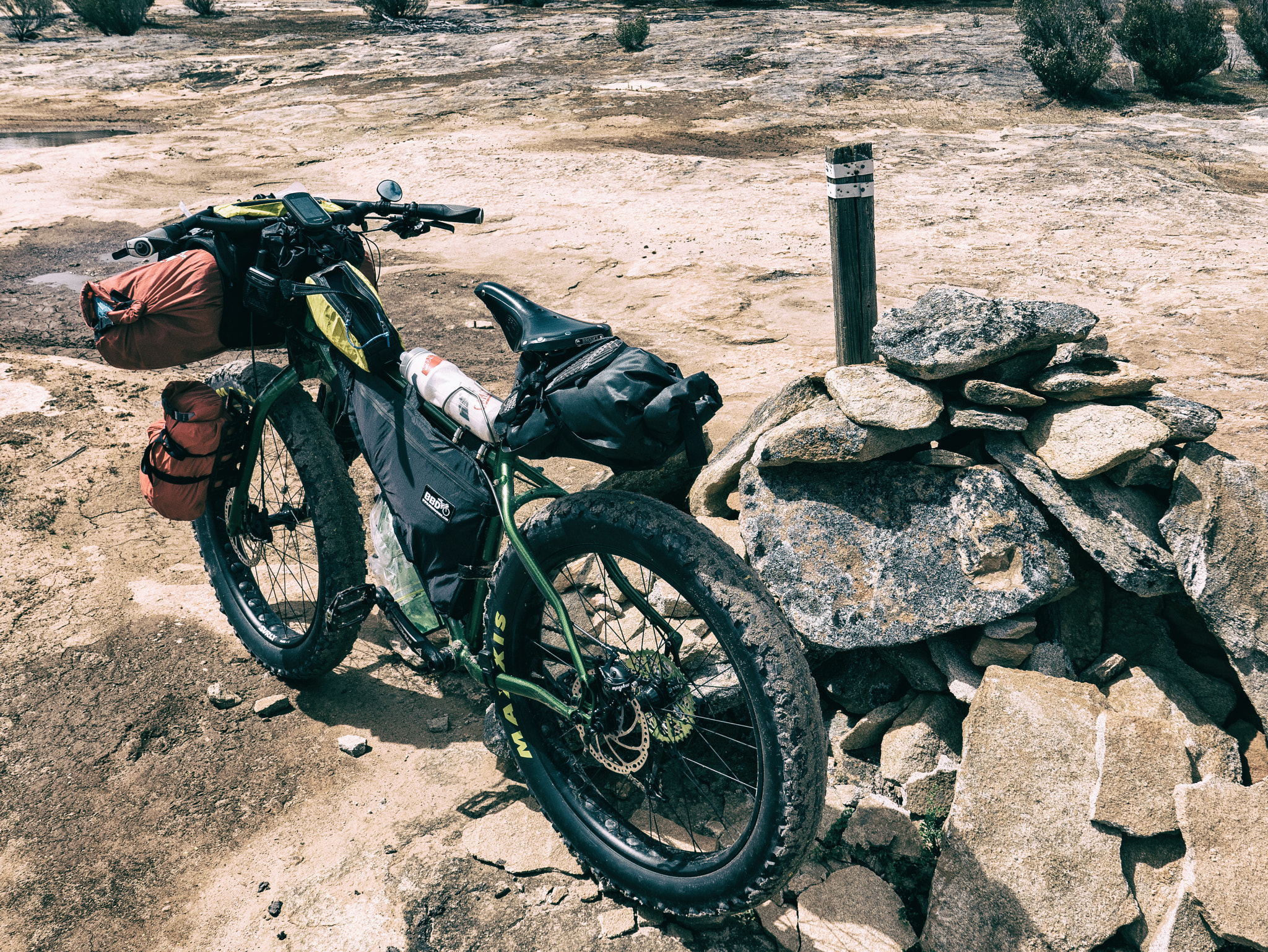
Use the Salsa Mukluk bottom bracket entry in its full context
The X7 feature text describes fatbike-specific GXP and 24 mm spindle crank types matched to 170/177 mm rear spacing. Its frame specification also gives a 66 mm chainline entry. A bearing interface by itself therefore leaves out important parts of the manufacturer’s compatibility description, especially on a wide fatbike chassis.
Identify the crank and bottom bracket actually installed before asking for replacements. The two complete builds do not use an identical crank: X7 lists SRAM X5 with 22 and 34-tooth rings, while Sus GX1 lists SRAM GX1 1000 with a 30-tooth single ring. A changed crank should be documented rather than assumed to match the original archive.
Separate clearance limits from the original ring teeth
The frame table and linked framesheet allow a fatbike-version 1x crank with a maximum 30-tooth ring, or a fatbike-version 2x arrangement with maximum 36/24 teeth. Those are compatibility limits. They are not a claim that X7 left the factory with 36/24 rings, nor permission to mix individual maximum figures into an unspecified crank assembly.
For a front-derailleur enquiry, the dated record is unusually specific: compact 2x, top-pull, high direct mount with a 43.5 mm offset, using a 34.9 mm clamp Problem Solvers bracket identified as FS1327. Keep those details with the frame record; a generic clamp diameter alone does not describe the complete mounting arrangement.
Describe the gearing change without promising a climbing result
The X7 archive pairs its 22/34 rings with an 11–36 cassette; Sus GX1 pairs 30 teeth with 10–42. Calculated from those teeth, their lowest chainring-to-sprocket ratios are approximately 0.61 and 0.71 respectively. These are arithmetic descriptions of the catalogue combinations, not measured climbing tests or a guarantee about a loaded route.
Wheel and tyre dimensions, total load, gradient and the rider still affect the riding demand. Decide whether the existing gearing meets the intended use before treating a single-ring conversion as an automatic improvement. Ask a professional mechanic to verify the complete crank, bearing, derailleur and cassette arrangement instead of using a shell measurement as an installation recipe.
Shell and crank FAQ
What shell designation does this frame record give?
It specifies PressFit 41 x 121 mm for the documented 2016 aluminum Mukluk platform.
Which single-ring maximum is documented?
The table specifies a fatbike-version 1x crank with a maximum 30-tooth ring.
Are X7’s original rings the same as the frame’s maximum pair?
X7 lists 22/34 teeth; the frame’s separate maximum 2x entry is 36/24 teeth.
Write the actual crank identity beside the shell and frame constraints. That short equipment record makes a service enquiry far more useful than asking for a generic Mukluk bottom bracket or choosing a larger ring by appearance.
Rear-wheel configuration is covered in Salsa Mukluk rear axle. Explore the Salsa bicycle collection for the broader brand context.
References: 2016 X7 archive; 2016 Sus GX1 archive; Mukluk framesheet 06/15.