


Rocky Mountain 2018 Altitude C50 Frame: Carbon Name, Alloy Rear Triangle
The 2018 Altitude C50 frame should not be described as entirely carbon just because its build name contains Carbon. Rocky Mountain's original specification explicitly includes an alloy rear triangle. Before examining a covered bicycle through a ride or demonstration, follow the 2018-model recall notice (https://www.cpsc.gov/Recalls/2018/Rocky-Mountain-Bicycles-Recall-Mountain-Bicycles-Due-to-Crash-Hazard): stop use and have an authorized dealer verify the required inspection and repair. Frame identification does not settle that safety history.
Read the 2018 Altitude C50 frame entry
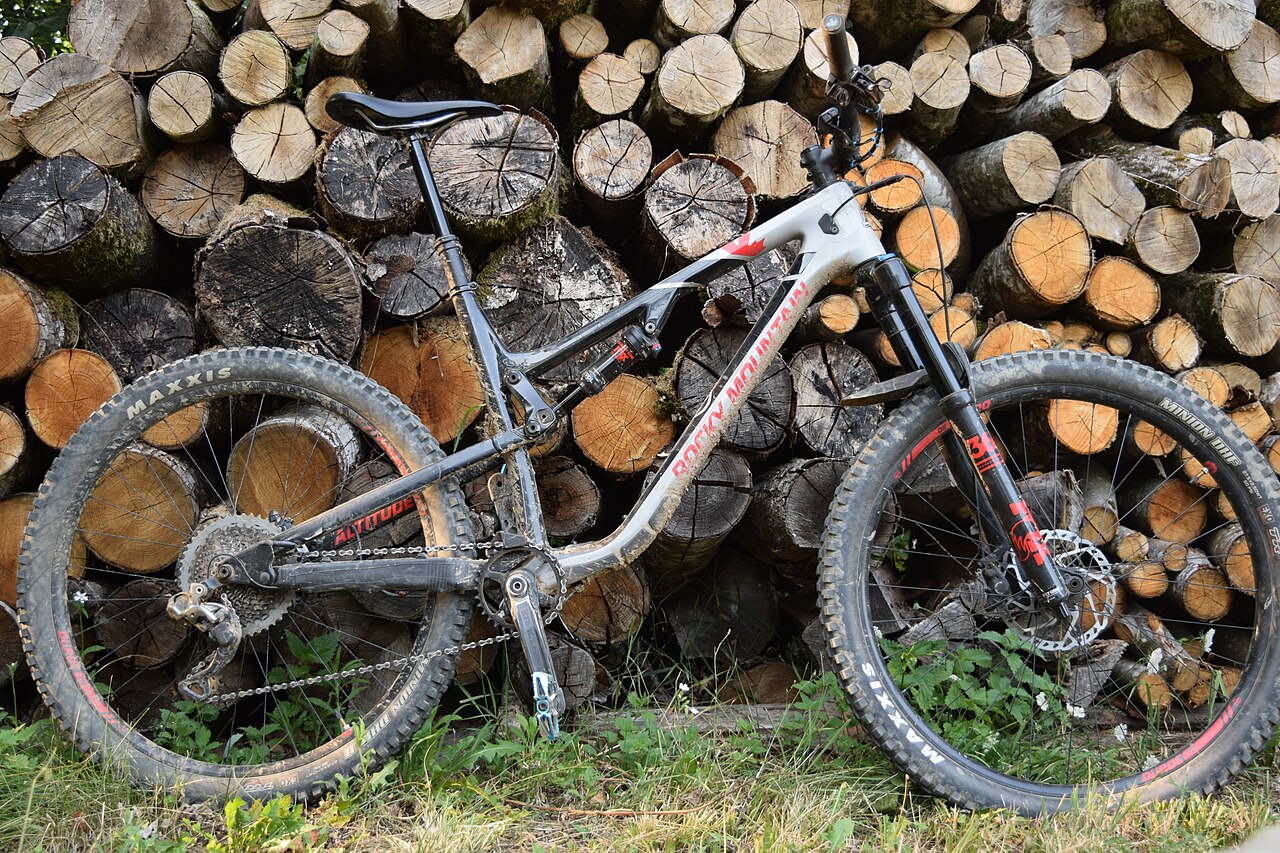
The manufacturer archive (https://resources.bikes.com/en/bikes/altitude/2018) contains several Altitude builds on the same page. The Carbon 50 entry identifies SMOOTHWALL carbon and a FORM alloy rear triangle. It also lists sealed cartridge bearings, a press-fit bottom bracket, internal cable routing, two-bolt ISCG05 tabs and RIDE-9 adjustable geometry and suspension rate. The material statement is specific to this historical build, not a definition of every bike called C50.
For a used-bike enquiry, ask which frame and rear triangle are actually present and what documentation supports the claimed model year. A colour, a carbon-labelled component or a seller's shorthand is less useful than a complete model identification. The historical image supplies context for the family but does not certify the material or condition of a different bicycle offered for sale.
Separate the C50 from the Alloy 50 build
The same archive describes the Alloy 50 frame as FORM alloy. Several named components overlap with Carbon 50: both have a Fox 36 Float EVOL Grip Performance fork with 160 mm front travel, a Fox Float DPS EVOL Performance shock, and 150 mm rear-wheel travel. Those shared components cannot distinguish the frame construction on their own.
The original hub lists provide another comparison to record rather than a shortcut to identification. Carbon 50 names a Rocky Mountain sealed Boost front hub and a DT Swiss 370 Boost 148 mm rear hub. Alloy 50 names Shimano SLX Boost hubs. The spoke entries also differ. These are archived build descriptions; wheels may have been replaced on an older bicycle.
A useful viewing record therefore separates frame identity, rear-triangle identity and installed equipment. If a seller presents a different rear wheel or fork, note the change and ask for its details. A component difference does not by itself prove the frame claim false, and an apparently matching component does not prove the rest of the bicycle is original.
There is no need to invent a weight advantage, strength ranking or repair outcome from the material names. The archive supports the construction distinction and named hardware. A damaged or uncertain frame needs its own professional assessment, while a purchase comparison should also consider documented condition and the actual installed parts.
FAQ: Material and identity questions
Does Carbon 50 mean both triangles are carbon?
Not for this entry. The 2018 Carbon 50 specification expressly names a FORM alloy rear triangle.
Can the original fork identify C50 rather than Alloy 50?
No. Both archived builds list the same Fox 36 Grip Performance fork and 160 mm front travel.
Is a DT Swiss rear hub proof that a used bicycle is a C50?
No. It matches one original component entry, but wheels can change and frame identity still needs independent confirmation.
Keep the construction record with the service-parts enquiry. For the broader model families, use the Rocky Mountain introduction and brand topic.
Photograph credits and permissions
Photograph 1
Original title: Rocky Mountain Altitude C50 2018.jpg
Creator: ThienToons; creator URI: https://commons.wikimedia.org/wiki/user:ThienToons
Original source URI: https://commons.wikimedia.org/wiki/File:Rocky_Mountain_Altitude_C50_2018.jpg
License / permission: CC BY-SA 4.0
License / permission URI: https://creativecommons.org/licenses/by-sa/4.0/
Modification notice: Wikimedia-provided 1280×853 reduced-size version; no additional local changes.