


Niner CVA Suspension: Anti-Squat Is Different from a Shock Lockout
Niner CVA suspension is short for Constantly Varying Arc. Its manufacturer explanation distinguishes chain-force anti-squat from rear-shock compression damping and manual lockouts. That distinction helps when a rider asks why a CVA bicycle can resist unwanted pedalling movement while its shock remains active, or wonders whether the acronym names another lever setting.
What the Niner CVA suspension layout does
Niner describes CVA as a short dual-link, four-bar arrangement. Its lower link sits below the bottom bracket, while the virtual centre about which the rear axle rotates moves as the suspension compresses. This is a description of the linkage’s geometry, rather than a dial the rider adjusts.
The company defines chain growth as the changing distance between the bottom bracket and rear axle through suspension movement. It connects this change with chain force and anti-squat: the tendency to counter the suspension’s settling or bobbing under acceleration and pedalling loads.
Keep anti-squat separate from the shock controls
Niner says CVA uses calibrated anti-squat from chain force instead of relying on compression damping or a manual lockout to control unwanted movement. A shock’s damping circuit and lockout remain separate components with their own instructions. The linkage name does not specify their adjustment positions.
In its design account, Niner emphasizes anti-squat around sag, within roughly the first 25–30% of travel, then describes reduced chain growth and anti-squat deeper into movement. Those percentages explain its design narrative; they are not a new universal sag target for every Niner frame and shock.
Apply the explanation to the actual bicycle
The company says it tunes the kinematics for different RKT, JET and RIP applications. It follows that a shared CVA name does not erase differences in travel, leverage characteristics, shock tune or intended terrain. Identify the actual platform and fitted damper before seeking setup advice.
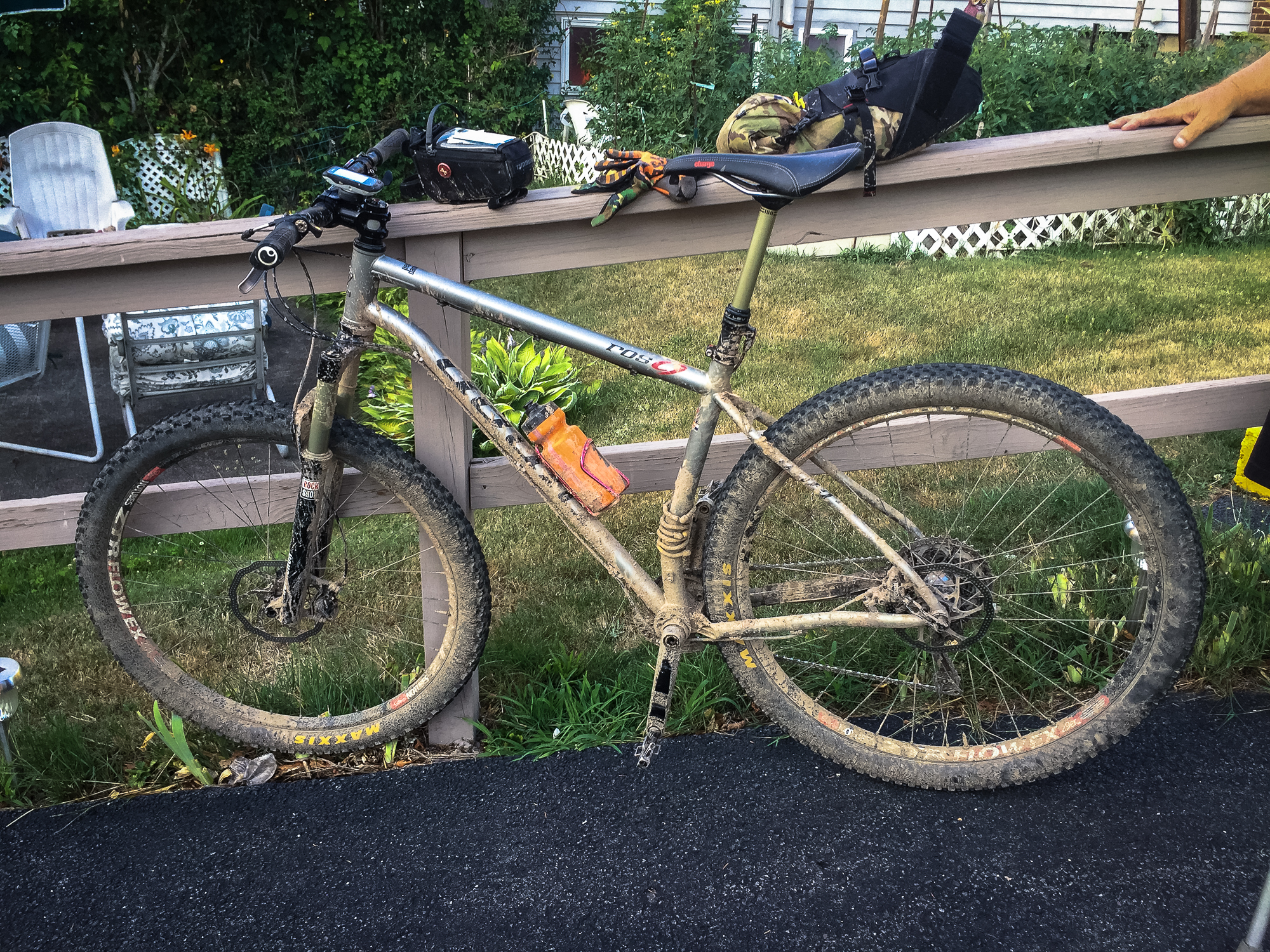
Keep riding observations specific: describe when unwanted movement occurs, the gear being used, the shock identity and its service history. Ask the workshop to establish the applicable baseline. This article has not measured efficiency or traction and does not turn Niner’s performance claims into comparative test results. The hardtail photograph supplies brand context and does not illustrate CVA hardware.
FAQ
Is CVA the name of a lockout control?
No. It describes Niner’s linkage layout and suspension behaviour, while a shock lockout is a separate control.
Does the 25–30% design discussion set every shock’s sag?
No. Use the actual frame and suspension component’s applicable setup guidance.
Do all CVA bikes have identical suspension settings?
No. Niner describes family-specific kinematic tuning, and the actual damper and platform must be identified.
Use the CVA explanation to distinguish the frame mechanism from the damper adjustments before discussing a riding symptom. The Niner topic and brand introduction provide the wider bicycle context.
Primary references: official reference 1 (https://www.ninerbikes.com/pages/cva-suspension)
Photograph credits and permissions
Photograph 1
Original title: Tilting at Windmills, Pittston to Crystal Lake
Creator: alex_cuse; creator URI: https://www.flickr.com/photos/alex_cuse/
Original source URI: https://www.flickr.com/photos/alex_cuse/27800588304/
License / permission: CC BY 2.0 Generic
License / permission URI: https://creativecommons.org/licenses/by/2.0/
Modification notice: Original JPEG bytes unchanged.