


Merida Silex 400 original build: read the mixed GRX component list
A Merida Silex 400 original build enquiry is easier to answer with individual component names than with a seller's phrase such as full GRX. Merida's archived entry combines several named parts. Reading that combination accurately helps you recognise substitutions and ask useful questions about a used bicycle without expecting one groupset label to describe everything.
Read the Merida Silex 400 original build by row
The archived manufacturer specification names Shimano GRX400 shifters, front and rear derailleurs, hydraulic brakes and brake levers. Its chainwheel row instead identifies Shimano GRX600 with 46–30 teeth. The cassette is Shimano CS-HG50, listed as ten-speed with an 11–36-tooth range, and the chain is KMC X10. Those are distinct entries in the same documented build.
A GRX600 crank therefore does not, by itself, contradict this archived reference. Equally, seeing GRX on a brake lever cannot prove the cassette, chain or derailleurs. Make a short table with one column for Merida's listing and another for markings you can actually read on the bicycle. Keep uncertain items blank until they are identified.
Keep the photograph and archive in their proper roles
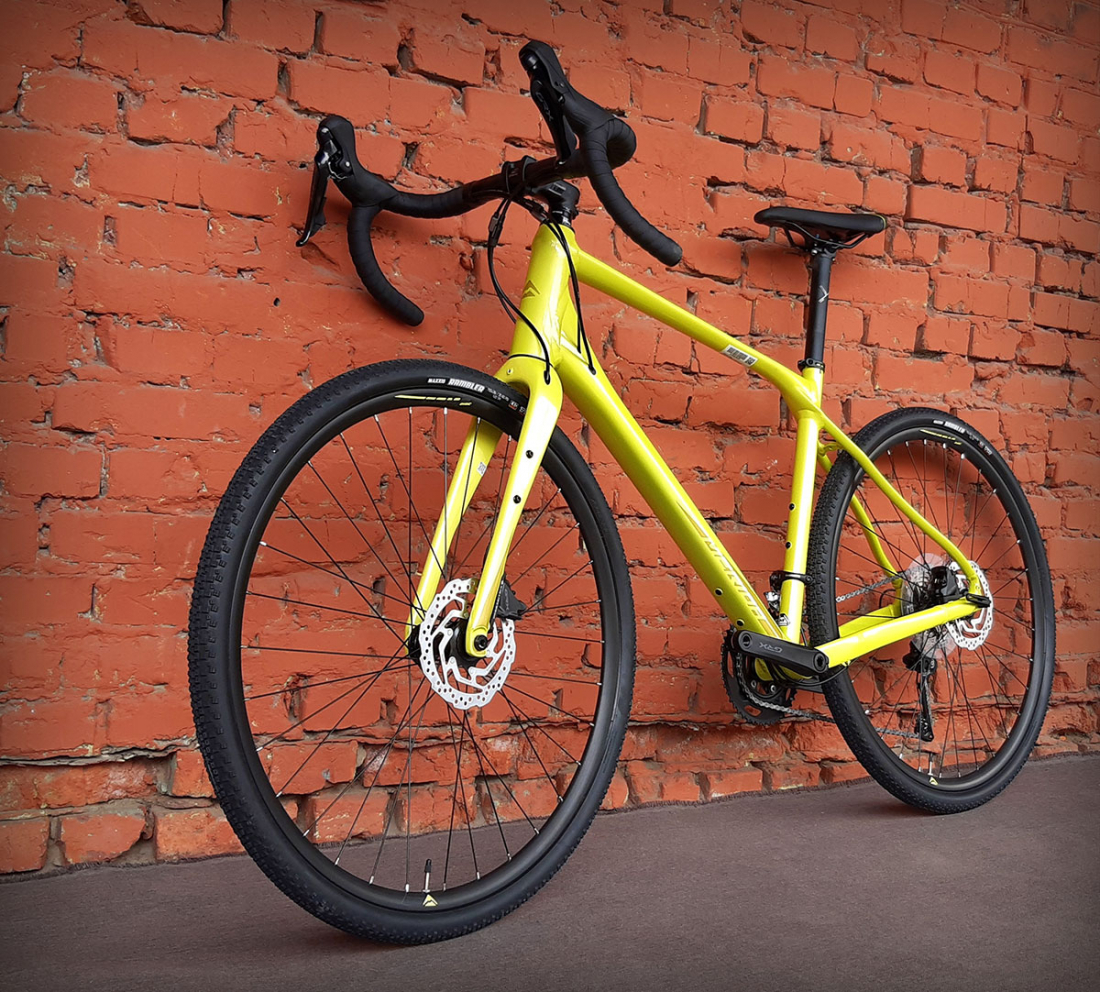
The accompanying photograph records a yellow Silex 400 in October 2021. The selected archive lists a blue colourway. The image illustrates the historical model family; it does not establish the archive edition, every component identifier or the original contents of a particular sale. Neither the photograph's date nor matching frame graphics proves a model year.
Ask for a drive-side overview and readable detail pictures of the actual shifters, derailleurs, chainset and cassette. Record the seller's account of replacements beside those observations. A matching frame can remain a Silex 400 after significant equipment changes, so a disagreement deserves investigation rather than an immediate conclusion that the entire bicycle is incorrectly described.
Use the list for a defined purchase question
The useful outcome is a documented comparison: which parts match the chosen reference, which are confirmed replacements and which remain unidentified? Ask a workshop to assess the installed system and its condition if those differences matter to your decision. A catalogue match establishes neither wear nor correct installation.
Keep other measurements separate. The archived weight has a size and pedal qualification, while tyre compatibility and frame interfaces have their own requirements. A complete-looking groupset does not settle those questions. Before agreeing a purchase, list the accessories and spare parts actually included; equipment appearing in an old photograph is not an inventory of the seller's offer.
FAQ
Should the archived bicycle have a GRX400 crank?
The selected entry explicitly lists a GRX600 chainwheel alongside GRX400 controls and derailleurs.
Can a GRX lever identify the complete drivetrain?
No. Read the separate crank, cassette, chain and derailleur identifiers on the actual bicycle.
Does matching the original list prove good condition?
No. Original specification and present mechanical condition require separate evidence and an appropriate inspection.
Continue with the Silex bottom-bracket and crank reference or browse the Merida topic.
Sources: Merida archived Silex 400 specification.