


Giant Escape vs Roam: Choose Around the Surface You Actually Ride
Giant Escape vs Roam is a useful comparison when a commute includes both smooth streets and less tidy paths. Start with how much of the route is genuinely rough. A suspension fork is a meaningful equipment difference, but it does not automatically make one bicycle the better everyday choice.
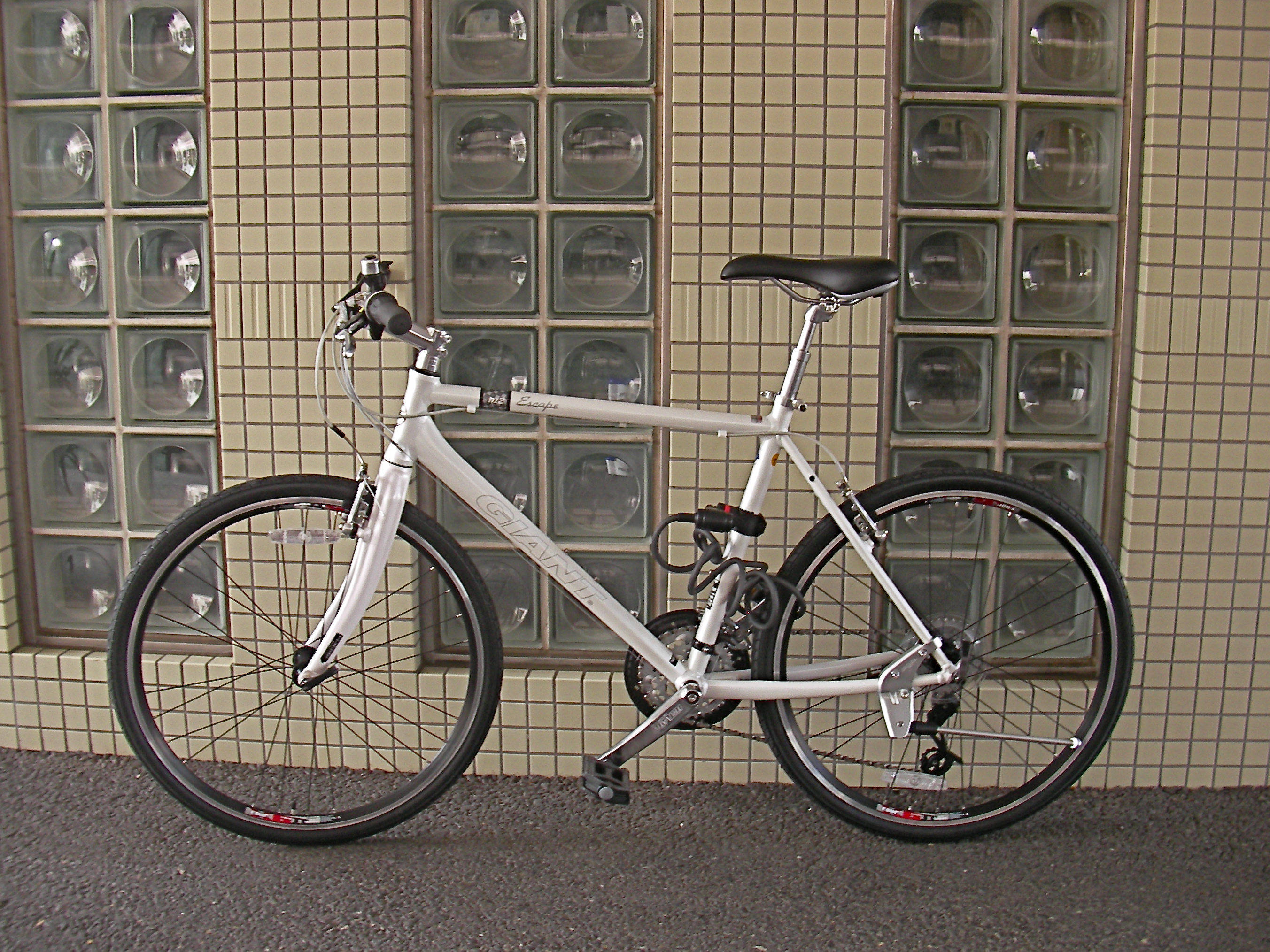
Read the Giant Escape vs Roam family distinction
Giant describes Escape as a flat-bar range for transport, fitness and recreation. The historical Escape M2 pictured here shows a rigid fork and rim brakes. It establishes a real older member of that family; it does not show the equipment of a current Escape, and its precise model year remains unknown.
For a dated comparison, the United States 2025 Escape Disc 2 lists a rigid alloy fork, while the US 2025 Roam 2 uses a Suntour NEX HLO suspension fork with 63mm travel. These examples make the rigid-versus-suspension distinction concrete without claiming every past Escape or Roam shares their specification.
Match the fork to the repeated part of the journey
If almost every trip stays on paved streets, a rigid fork avoids adding a suspension mechanism that the route rarely asks you to use. Try the bike over the actual broken surfaces you expect, with sensible tyre pressure and a position that lets you steer and brake comfortably.
If uneven tracks form a substantial part of the journey, the Roam example offers front suspension and a wider listed stock tyre: 700x42c against the Escape example’s 700x38c. That does not turn either hybrid into a technical mountain bike. Keep the intended terrain of the exact bicycle in the decision.
Compare the complete commute before choosing
A short demonstration ride should include stopping, starting, turning and carrying the bag you normally use. Ask whether the fork’s extra mechanism is worth maintaining for your route, rather than assuming that visible suspension is always an upgrade.
Also compare the actual contact points and carrying arrangement. Both dated US examples advertise rear-rack compatibility, but that does not identify an appropriate rack for every older frame. A bike that fits well and carries daily essentials securely can solve more of the commuting problem than a feature selected in isolation.
Giant Escape vs Roam FAQ
Is a rigid fork reasonable for a mostly paved commute?
Yes. Compare its control and comfort on your actual route before adding a suspension mechanism you may rarely need.
Is front suspension essential on every gravel path?
No. Surface severity, intended use, tyres and rider preference all matter.
Can an Escape specification be copied onto a Roam?
No. Compare the exact model, year and regional equipment record for each bicycle.
For Giant Escape vs Roam, choose the fork and riding position that suit your repeated journey; use the dated examples as comparisons, then confirm the actual bicycle you will ride.
Once the route category is clear, compare Giant Escape gearing for the hills on that journey. The Giant bicycle collection connects these family references.
Manufacturer references: Global Escape family; US 2025 Escape Disc 2 reference; US 2025 Roam 2 reference.