


Giant Escape Gearing: Compare an Older Triple with a Modern Single Ring
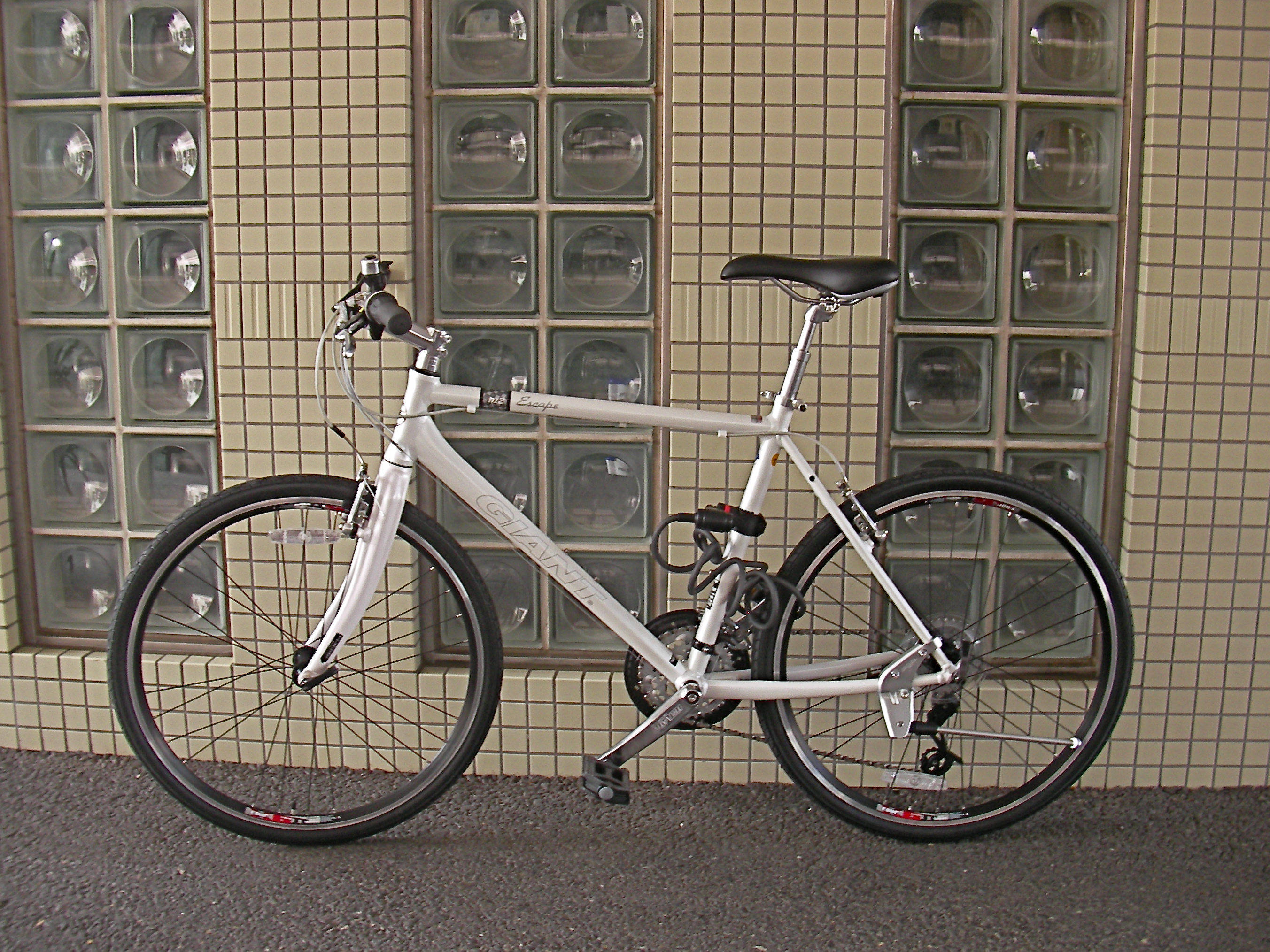
Giant Escape gearing has changed across models and generations. The historical M2 photograph shows several front chainrings and a front derailleur, while the US 2025 Escape Disc 2 record lists a single-ring drivetrain. That contrast matters more than assuming the Escape name defines one universal gear system.
Understand Giant Escape gearing architecture first
A multi-ring arrangement gives the rider both a front and a rear shifting decision. Some combinations overlap in useful ratio, so multiplying the number of front rings by the number of rear sprockets does not tell you how many distinctly useful steps the bike provides.
A single-ring system removes the front shift. The dated US Disc 2 example lists microSHIFT Advent 1x9, a 40-tooth chainring and an 11–46 cassette. That is a reference configuration, not a parts list for the white M2. Its visible chainrings do not reveal reliable tooth counts from this photograph.
Calculate range without promising climbing ability
For the published 40T and 11–46 example, divide front teeth by rear teeth. The lowest ratio is 40/46, approximately 0.87 wheel revolutions per crank revolution; the highest is 40/11, approximately 3.64. The cassette’s largest-to-smallest ratio is about 4.18, conventionally expressed as a 418% range.
Those are calculations from the official tooth counts. They do not predict how steep a hill you can climb or your road speed. Actual wheel circumference, cadence, total mass, surface and the rider’s effort also matter. Compare an older bike only after reading the tooth markings on its fitted parts.
Decide whether to keep the existing system
If an older Escape already supplies comfortable low gears and reliable shifts, fewer front rings alone may not justify replacing it. Have worn chainrings, cassette, chain and controls assessed together. Replacing an entire drivetrain can involve more than choosing a chainring that looks attractive.
For a different bicycle, test the easiest gear on a representative climb and notice the gaps between adjacent shifts. A broad range and closely spaced ratios answer different needs. Record what works for your riding before comparing the model names or the number printed on the shifter.
Giant Escape gearing FAQ
Does nine-speed mean the same gearing as an older triple?
No. Gear count alone does not establish the lowest ratio or overall range.
What should I record on an older Escape before comparing range?
Read the fitted chainring tooth counts and the smallest and largest rear sprockets; do not infer them from the family name.
Does a 0.87 ratio guarantee easy climbing?
No. It describes gearing, while climbing also depends on rider, load and route.
A useful Giant Escape gearing comparison starts with architecture and actual tooth counts, then checks whether the resulting range suits your hills and preferred cadence.
Gearing is one part of the journey; the Giant Escape vs Roam comparison also considers fork choice and surface. The Giant bicycle collection connects these family references.
Manufacturer references: US 2025 Escape Disc 2 reference; Global Escape family; Giant extended English owner manual V13.