


CUBE Torque Settings: Match the Joint, Material and Model Year
CUBE torque settings are useful only after the actual component, joint and model have been identified. A number copied from the nearest Stereo row can belong to a different suspension connection or generation. Read the table as an identification exercise before treating it as an instruction for work on an uncertain used bicycle.
Select CUBE torque settings from the explicit row
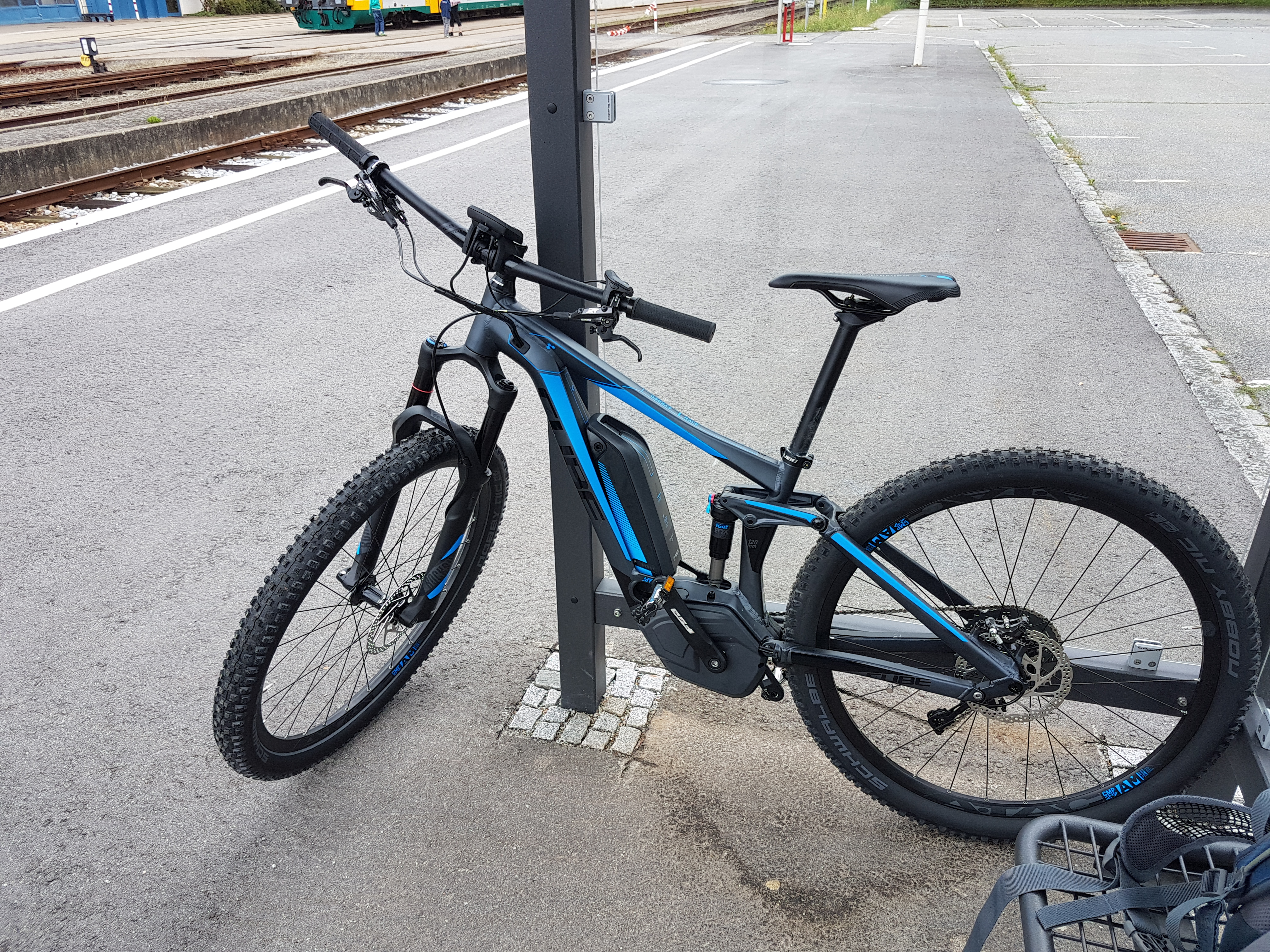
The full-suspension torque table (https://file.cube.eu/azwesc1xfg346/media/5d/4a/89/1657879987/Torque_Settings_Fullsuspension_MY20.pdf?ts=1657879987) has MY20 in its filename, but its actual page includes earlier models. Under Hybrid Fullsuspension, it explicitly lists Stereo Hybrid 120 HPA for MY16–MY18. The relevant evidence is that printed row, not an assumption that a document filename either includes or excludes every earlier year.
The columns separate main pivot, Horstlink, shock mount, link to shock, rocker mount and seatstay to link. For the identified MY16–MY18 Hybrid HPA row, the main pivot is listed at 12 Nm and the Horstlink at 8 Nm. These two values already show why one number should not be applied to every suspension fastener on the frame.
Check similar names and the actual hardware
The ordinary, non-Hybrid Stereo 120 MY16–MY18 row differs from the Hybrid HPA row at the rocker mount and seatstay-to-link columns: 8 Nm versus 12 Nm. The later MY20 Stereo Hybrid 120 row also has its own figures. Keep the Hybrid designation, construction, years and joint heading together when asking a workshop to select a specification.
The manufacturer FAQ (https://www.cube.eu/support/help-faq) says component manufacturers' maximum torques matter and identifies part-printed recommendations from model year 2021 onward, while linking older documents for earlier bicycles. An altered component therefore adds a source question. A frame's historical year does not prove that a replacement part or its supplied bolt still has the original requirements.
The road and MTB mounting sheet (https://file.cube.eu/azwesc1xfg346/media/ed/e3/d5/1657879987/Mounting_instruction_Torque_Road_Race___MTB.pdf?ts=1657879987) reinforces the distinction between interfaces: it labels different fixing locations separately rather than assigning one torque to a complete bicycle. A derailleur mounting bolt, hanger attachment and brake fixing are not interchangeable merely because the same tool might fit them. Read each arrow or column with its associated part.
For a service request, provide the exact model record, a photograph of the joint and any evidence of replaced hardware. Ask the workshop to confirm the applicable instruction and required preparation before tightening. The suspension table includes maximum-torque and thread-locking notes; a detached number does not convey all those conditions. This article is not a bolt-removal sequence, a substitute for component instructions or a diagnosis of looseness.
FAQ: Choosing the correct specification
Does MY20 in the filename rule out a 2016 entry?
No. The actual table explicitly includes the MY16–MY18 Stereo Hybrid 120 HPA row.
Can ordinary Stereo 120 values replace Hybrid HPA values?
No. The named historical rows differ at some joints; keep the complete model description and column.
Does a catalogue match prove changed hardware is original?
No. Present parts and their instructions still need confirmation before a workshop applies a historical specification.
The joint-specific bearing guide helps name the location under discussion. Keep both documents with the CUBE historical owner information.
Photograph credits and permissions
Photograph 1
Original title: Cube Stereo Hybrid 120 HPA Race (2016).jpg
Creator: Fllweissbr; creator URI: http://commons.wikimedia.org/wiki/User:Fllweissbr
Original source URI: https://commons.wikimedia.org/wiki/File:Cube_Stereo_Hybrid_120_HPA_Race_(2016).jpg
License / permission: CC BY-SA 4.0
License / permission URI: https://creativecommons.org/licenses/by-sa/4.0/
Modification notice: Original JPEG unchanged.