


Cannondale CAAD10 Frame: Why Alloy Does Not Describe Every Component
A Cannondale CAAD10 frame can be alloy while other parts of the bicycle are carbon. That distinction matters when identifying an older road bike, discussing handling damage or requesting replacement components. Treat the frame, fork and contact-point parts as separate items rather than calling the whole bicycle “aluminium” and stopping there.
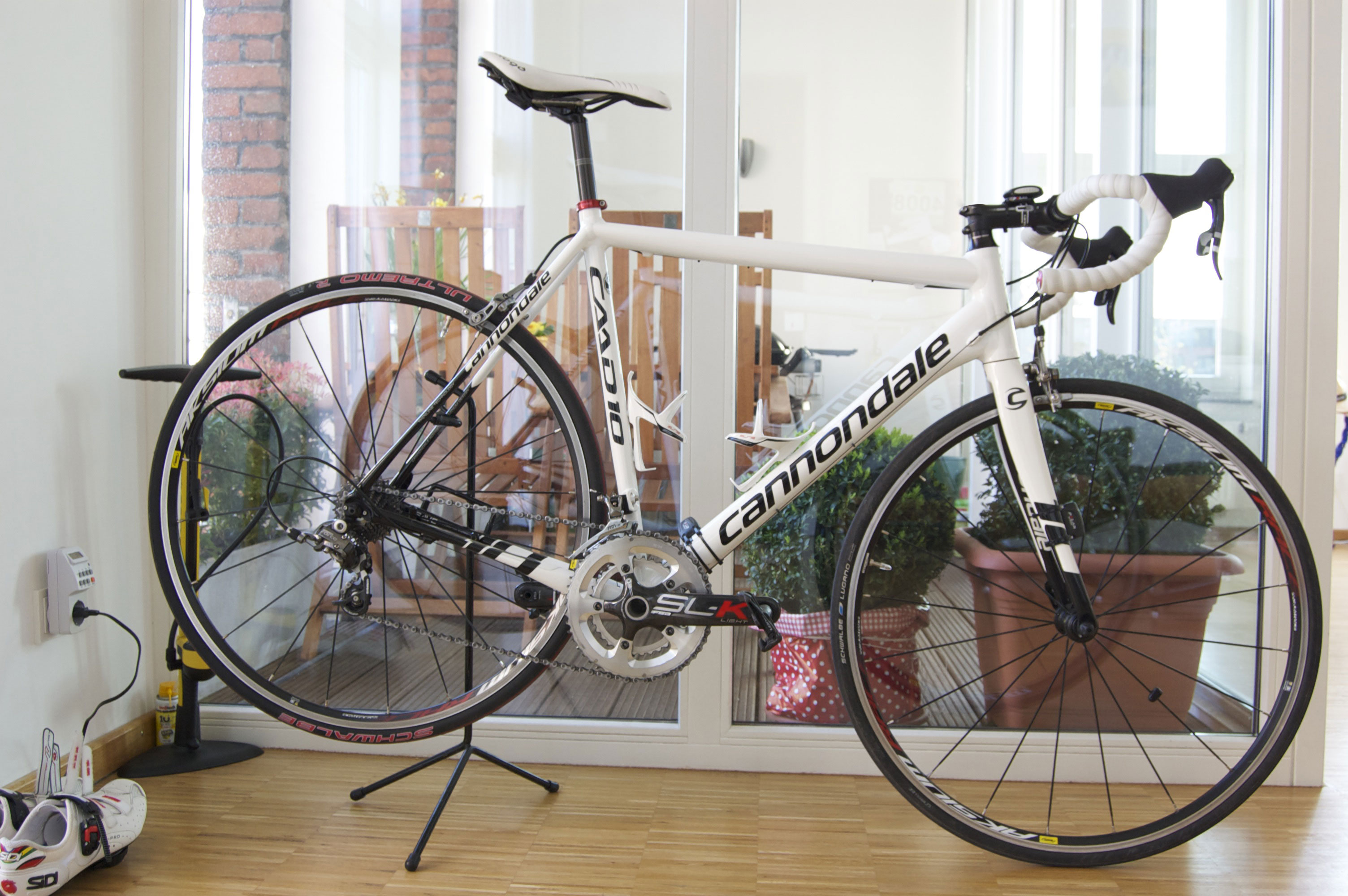
Read the Cannondale CAAD10 frame entry beside the fork
The manufacturer's 2011 CUSA catalogue lists CAAD10 frames as SmartFormed 6069 alloy. Beside those entries it describes a full-carbon CAAD10 fork with a tapered steerer. This is a useful historical example of a mixed-material bicycle, not a contradiction in the product description.
The white photograph is identified by its source as a 2011 CAAD10, photographed in April 2012. It shows a relevant historical bicycle, but its paint and visible components do not establish a complete factory build. Use the catalogue for the documented family and the actual component markings for the machine being assessed.
Make the component record specific
Write separate entries for frame, fork, handlebar, stem, seatpost and crank. Photograph readable model markings and ask about replacements. A carbon-looking finish or a seller's memory is weaker evidence than an identified part and the manufacturer's applicable information.
The 2011 catalogue includes several CAAD10 drivetrain packages. Therefore, a component differing from one photographed catalogue build does not automatically prove something is wrong. Equally, the CAAD10 name cannot confirm that a replacement fork, cockpit or crank is compatible. Those questions need the exact installed configuration.
Use material information for the next decision
If you are buying, ask a mechanic to inspect the actual frame and fork and identify any concern requiring further assessment. If you are ordering parts, state the interface as well as the material. The catalogue's tapered-fork description is context, not a complete headset or replacement-fork specification for every surviving example.
For transport or workshop support, give the shop the identity of each contact point and the proposed equipment. Do not assume an alloy main frame makes every clamping position appropriate. Follow the instructions applying to the actual bicycle and carrier or stand.
For the riding-format question, our historical CAAD10 and Synapse comparison explains the catalogue positioning. The Cannondale topic links the broader references.
Mixed-material FAQ
Does an alloy frame mean the fork is alloy?
No. This historical CAAD10 catalogue pairs an alloy frame with a carbon fork.
Can the photograph prove every fitted part is original?
No. Its source identifies the model family and year, while component history remains a separate enquiry.
Is a similar steerer label enough to approve a new fork?
No. Have all relevant frame, headset, brake and wheel interfaces checked for the specific replacement.
Understanding a Cannondale CAAD10 frame means keeping the frame's material distinct from the rest of the bicycle, then using the correct component record for each practical decision.
Manufacturer references: 2011 Cannondale CUSA catalogue.