


Brompton Folded Chain Clearance: When the Chain Touches the Rear Frame
Brompton folded chain clearance can explain why a drivetrain that appears unobstructed when unfolded touches the rear frame in its parked position. Brompton documents one particular cause: a chainring sitting too far inboard. The task is to establish whether that condition actually applies, then have the correct assembly checked, rather than treating every contact mark as a reason to add a spacer.
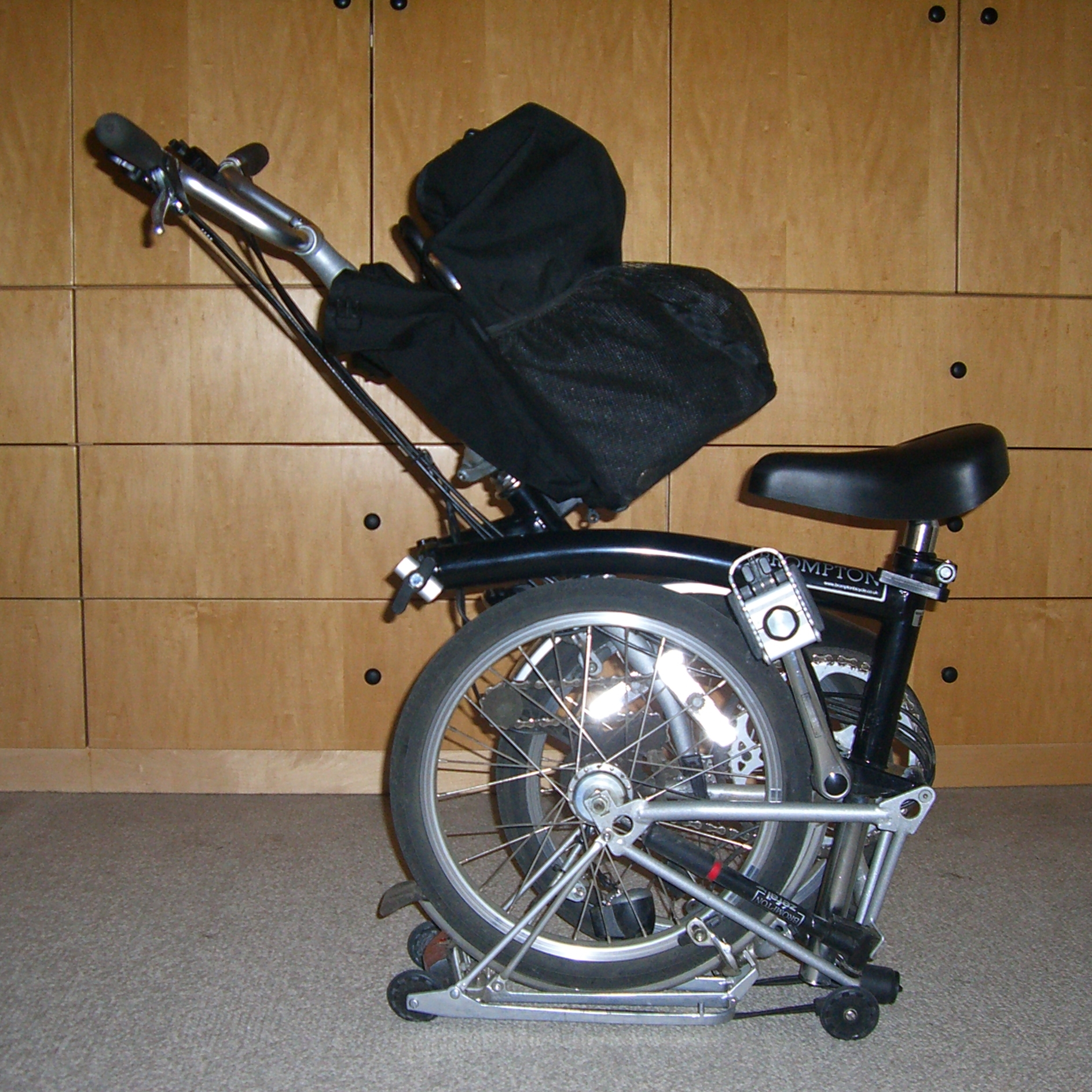
Brompton folded chain clearance in the spacer sheet
In the manufacturer's S1008 spacer instructions (https://trade.brompton.com/Uploads/QPart/QPart-Datasheets/ds-bbsp_1.pdf), the supplied spacer sits between the right-hand bottom-bracket cup and the frame's bottom-bracket shell. Its stated purpose is to move the chainring outboard. The sheet specifies at least 1 mm between the chain and rear frame when folded, within this documented fitting context.
That dimension is a folded chain-to-frame check. It is not a specification for tyre clearance, chainstay clearance on every bicycle, or crank position measured while riding. Describe which surfaces touch and in which position. A close photograph of the actual contact point is more informative to a workshop than a general report that the bike feels tight.
Record the condition before changing the assembly
Note whether the contact appeared after a crank, chainring or bottom-bracket replacement. Record the installed crank type and any identifiable cartridge details. Those observations let the mechanic compare the current assembly with the sheet instead of assuming that a familiar-looking bicycle still has its original components. Avoid forcing the fold through an obstruction to demonstrate the symptom.
Changing the outboard position affects an assembly that must be correctly identified and refitted. S1008 distinguishes the earlier fixed-chainring crank from the detachable-ring design introduced in January 2013; its fitting notes should not be collapsed into a universal tightening instruction. Read the crank compatibility guide before buying a cartridge, and refer uncertain fitting work to a Brompton dealer.
Distinguish an old contact mark from the clearance that exists now. A mark can help locate a past problem, but cannot establish the current gap after components have changed. Ask the workshop to document the assembled clearance in the folded position and the parts used. That creates a specific outcome to compare with the sheet, rather than merely reporting that a spacer has been added.
FAQ
What gap does this sheet specify?
At least 1 mm between chain and rear frame when folded, for the spacer condition described in S1008. It is not a universal clearance dimension for other parts.
Where does the documented spacer go?
Between the right-hand bottom-bracket cup and the bottom-bracket shell. The sheet describes that position as moving an overly inboard chainring outwards.
Should every rubbing chain receive this spacer?
First establish the actual contact point and fitted components. The source describes a specific chainring-position problem; it does not diagnose all chain rubbing or approve arbitrary spacers.
Bring the contact location, folded position and replacement history together in one inspection request. The Brompton owner articles keep this clearance decision separate from wheel, brake and lighting work, so an unrelated adjustment is less likely to become the proposed cure.
Photograph credits and permissions
Photograph 1
Original title: Brompton bicycle half folded and loaded
Creator: Bossphotography
Original source URI: https://commons.wikimedia.org/wiki/File:Brompton_bicycle_half_folded_and_loaded.jpg
License / permission: CC0 1.0
License / permission URI: https://creativecommons.org/publicdomain/zero/1.0/
Modification notice: Original photograph reproduced without alteration.