


Brompton Bottom Bracket Compatibility: Identify the Crank First
Brompton bottom bracket compatibility starts with the crank fitted to the bicycle, rather than the age printed in a sale listing. A classic bike can have replacement components from different periods. Before ordering a cartridge, establish whether the chainring is fixed to the crank or detachable, and ask a dealer to confirm the interface of the actual assembly.
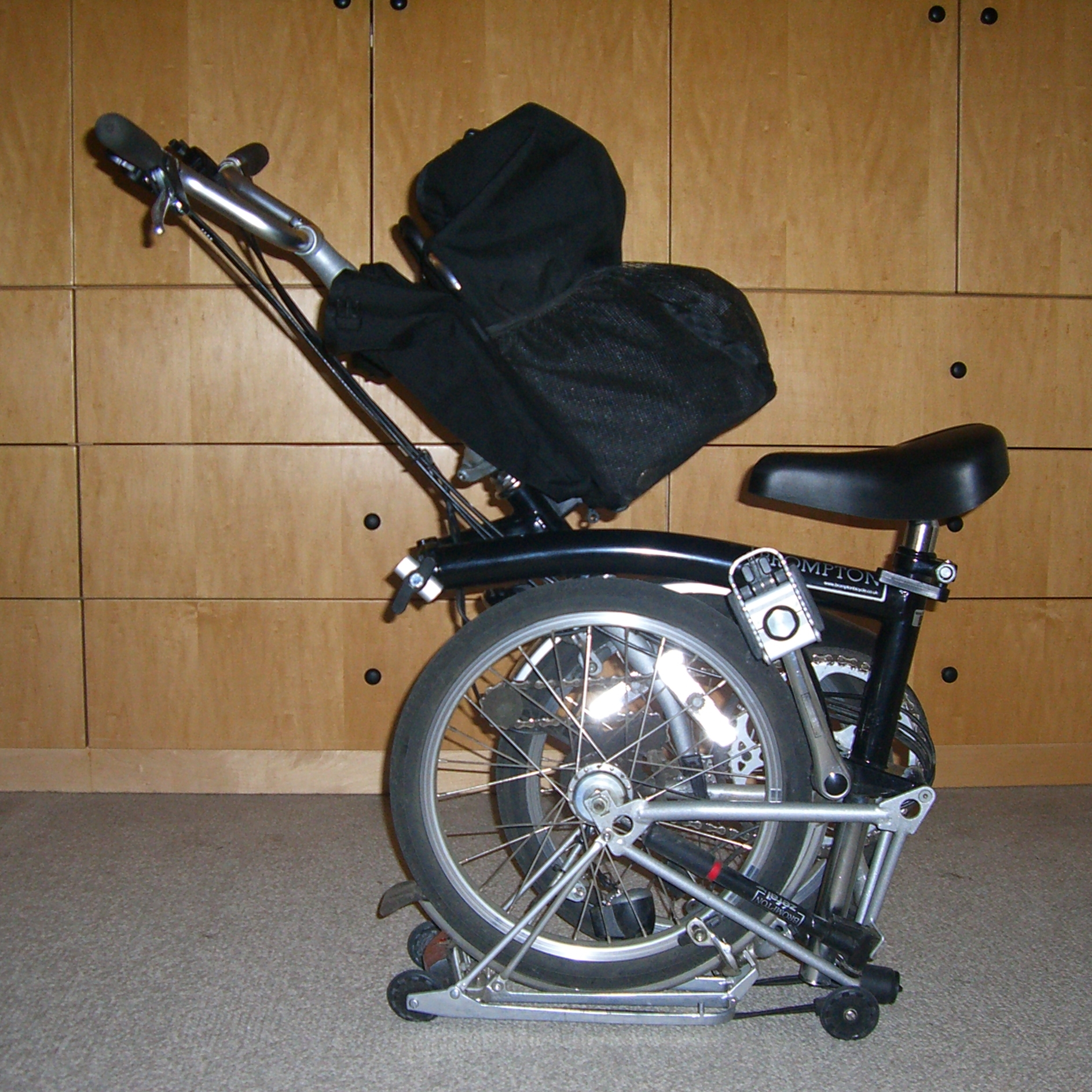
Brompton bottom bracket compatibility across the crank change
The manufacturer's S1008 bottom-bracket spacer sheet (https://trade.brompton.com/Uploads/QPart/QPart-Datasheets/ds-bbsp_1.pdf) describes a new crankset introduced in January 2013 with detachable chainrings. It specifies a JIS-taper bottom bracket for that crankset and explicitly excludes an ISO bottom bracket. The useful conclusion is narrow: a cartridge advertised merely as fitting a Brompton is insufficient evidence for that documented crank.
The same sheet treats the earlier fixed-chainring crankset separately. That does not establish the taper of every unidentified older or aftermarket crank. Examine the installed parts, retain any legible identifiers and describe previous replacements. A purchase date can help locate records, but it cannot override evidence that the original crank has been changed.
Build a parts enquiry around the existing assembly
Send the workshop a clear view of the crank and chainring attachment, any cartridge markings already visible, and the bicycle's identification details. Ask which current replacement is approved for that combination. If the existing cartridge cannot be identified without dismantling, arrange an inspection rather than ordering several apparently similar options and forcing an uncertain fit.
Keep three questions separate: whether the crank and taper match, whether the chain clears the rear frame when folded, and whether the bicycle needs the documented recall remedy. The spacer sheet addresses a particular clearance problem; it is not a certificate that every cartridge is suitable. The 2017 bottom-bracket recall guide explains the identification check independently of component selection.
When comparing replacement proposals, ask each supplier to identify both the retained crank and the proposed cartridge. A quotation that assumes a crank change describes a different job from one retaining the existing assembly. Recording that distinction is more helpful than comparing the word upgrade, which does not identify an interface or explain which components would remain on the bicycle after the work.
FAQ
Which crank does the sheet identify as JIS?
The detachable-chainring crankset introduced in January 2013. S1008 specifies JIS for that design and says it is incompatible with an ISO bottom bracket.
Does an older bicycle necessarily retain its original crank?
A date alone cannot establish that. Record the crank actually installed and any replacement history before asking the dealer to identify the matching cartridge.
Can the spacer solve a taper mismatch?
The sheet describes a spacer for a chainring positioned too far inboard. It does not present that spacer as an adaptor between incompatible crank and bottom-bracket tapers.
The useful next step is an identified crank-and-cartridge combination, not a guess based on a broad compatibility label. Browse the Brompton topic for the separate folded-clearance and older-wheel decisions that can accompany a restoration.
Photograph credits and permissions
Photograph 1
Original title: Brompton bicycle half folded and loaded
Creator: Bossphotography
Original source URI: https://commons.wikimedia.org/wiki/File:Brompton_bicycle_half_folded_and_loaded.jpg
License / permission: CC0 1.0
License / permission URI: https://creativecommons.org/publicdomain/zero/1.0/
Modification notice: Original photograph reproduced without alteration.