


BESV PSA1 vs PSF1: Compact and Folding-Bike Specifications
BESV PSA1 vs PSF1 involves a design choice that small wheels alone cannot answer. A compact bicycle and a bicycle built to fold solve different storage problems. The manufacturer's global pages describe the PSA1's small-wheel city-bike positioning and explicitly identify the PSF1 as a folding e-bike.
Start BESV PSA1 vs PSF1 with the folding claim
The official PSF1 product overview says that the model adds a folding feature. Its specification table gives folded dimensions of 840 × 330 × 770mm. Treat those as the manufacturer's listed dimensions, not proof that it fits a particular cupboard, boot or travel bag.
The PSA1 overview emphasizes small wheels and a removable battery; its global specification page does not publish a corresponding folded-size row. Do not invent a PSA1 folding sequence or assume that compact dimensions alone demonstrate folding capability.
Compare the actual fork and tyre rows
| Manufacturer-listed item | PSA1 | PSF1 |
|---|---|---|
| Frame material | Aluminium | Aluminium |
| Fork listing | RST CAPA 20 | Folding fork |
| Tyres | CST C1854, 20 × 1.95 | Duro DB7023, 20 × 1.50 |
| Transmission | Shimano Altus, 7 speeds | Shimano Altus, 7 speeds |
The PSA1 description identifies full suspension, while the PSF1 description identifies rear suspension alongside its folding design. These are equipment distinctions, not evidence that either bicycle has been tested on your route. A narrower published tyre size does not by itself quantify comfort, efficiency or permitted replacement clearance.
Both specification tables list 36V, 10.5Ah batteries, torque sensors and assistance modes one to three plus Smart. Matching figures do not establish interchangeable batteries, chargers or displays. Keep the documentation for each complete model and its specific hardware separate.
Check storage and transport requirements in practice
If storage is the deciding factor, compare the actual space with the manufacturer's dimensions and obtain the correct PSF1 folding instructions. Consider access through doors and how the bicycle will be handled, not merely a rectangular space measurement. This article does not establish a fold time or demonstrate a folding technique.
The two published weight figures do not explain all equipment-inclusion details on a common basis, so this guide does not calculate a carrying advantage. Likewise, a folded bicycle is not automatically accepted by an airline, rail operator or vehicle rack. Confirm those requirements independently before planning transport.
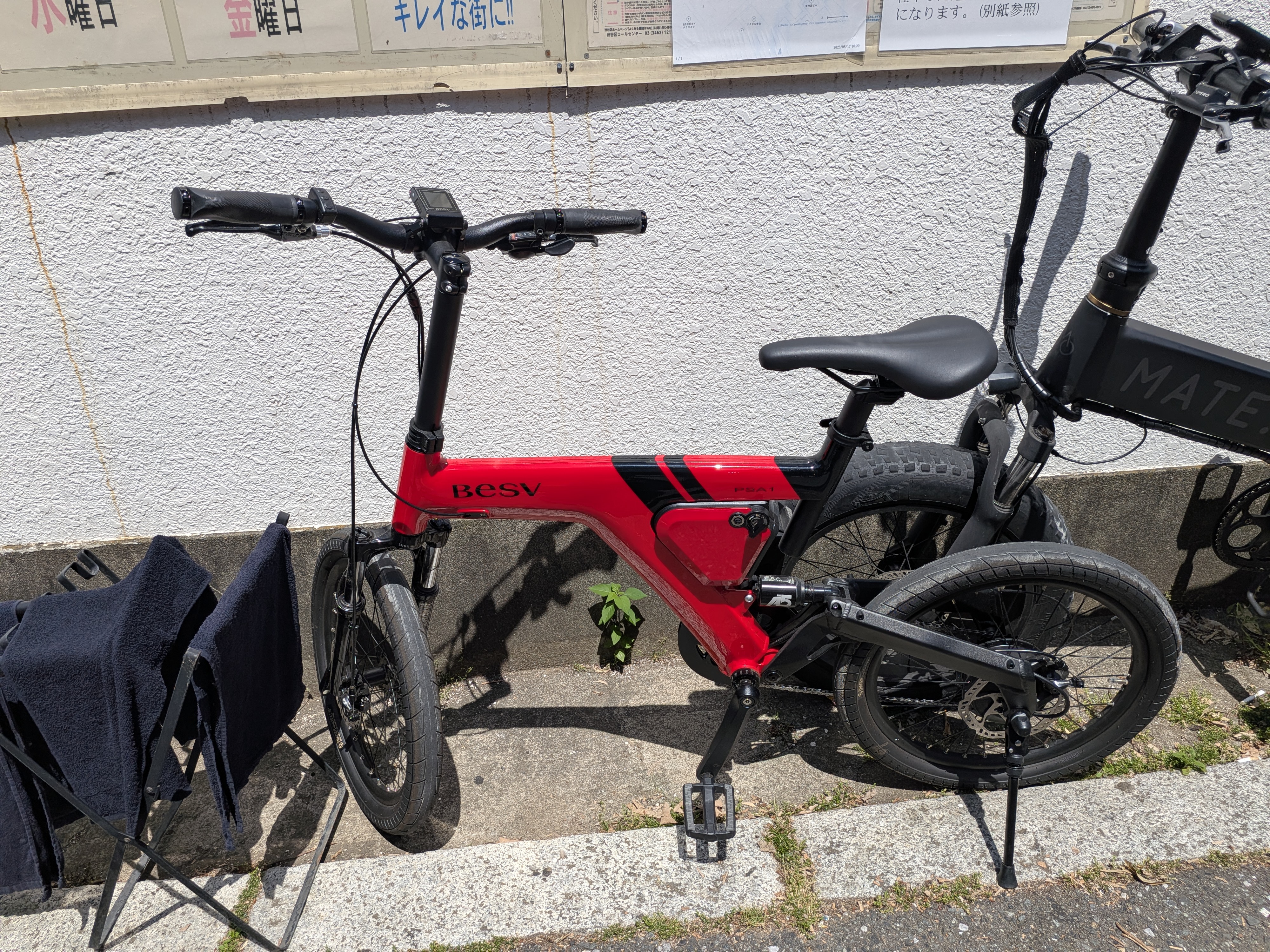
FAQ: Small wheels and storage
Does the photograph demonstrate the PSF1 folding mechanism?
No. Only the red PSA1 comparison side is photographed. The PSF1's folding design is supported by its manufacturer pages, not by relabelling the pictured bicycle.
Can the listed battery capacity prove compatibility?
No. A shared voltage and capacity are insufficient to establish physical, electrical or software compatibility. Ask the manufacturer or an authorized dealer about exact approved parts.
Where can I compare carbon and aluminium models instead?
The separate PSA1 versus PS1 guide covers frame and transmission differences within the same global source set, including the important weight-comparison caveat.
Find both comparisons in the BESV topic, with the pictured model and source versions kept explicit.