


Yamaha PW-X3 vs PWseries ST: Compare Torque, Weight and Rated Output
Yamaha PW-X3 vs PWseries ST figures can be compared in the manufacturer’s 2022 systems table: 85Nm versus 70Nm maximum torque and 2.75kg versus 3.4kg drive-unit weight. Both entries list 36V and 250W rated output. Keep this comparison tied to that catalogue generation, rather than treating it as a universal motor-swap guide.
Compare Yamaha PW-X3 vs PWseries ST in one table
The Yamaha PW-X3 torque entry is 85Nm; PWseries ST is 70Nm. These are the published maximum-torque figures, not a measurement of a particular bicycle’s output during a ride. The table does not turn their difference into a quantified climbing advantage, battery-range gain or rider-experience score.
Yamaha PWseries ST weight is 3.4kg, compared with 2.75kg for PW-X3. Both are drive-unit weights. They are not complete-bike weights, and subtracting them does not establish how much two assembled bicycles differ. Frames, batteries and other equipment are outside that narrow weight comparison.
Rated output and assist-speed scope remain separate
For Yamaha drive unit rated output, both 2022 entries state 250W and 36V. Retain the word “rated”: the table field should not be silently relabelled as a measured peak-power result. Matching those two fields also does not establish electrical, mounting or control-system interchangeability.
The catalogue lists 25km/h maximum assist speed for both. It separately includes a PW-X2 Speed Pedelec record with 45km/h. That separate entry is not permission to transfer the higher figure to PW-X3 or PWseries ST, nor does a catalogue speed field establish the rules applying to an individual bicycle in a particular place.
Connect each motor name to its own bicycle record
The Wabash RT factsheet identifies PWseries ST with a three-bolt mounting description; the MORO-07 factsheet names PWSeries X3, while the systems catalogue uses PW-X3. These are useful anchors when asking which documented build is being discussed. They are not evidence that either drive unit can be installed in the other frame.
Yamaha 2022 motor specifications remain a dated reference. This dated table does not establish which system is the latest Yamaha offering. A useful enquiry supplies the actual bicycle, drive-unit identity and applicable generation before comparing a number from a historical table.
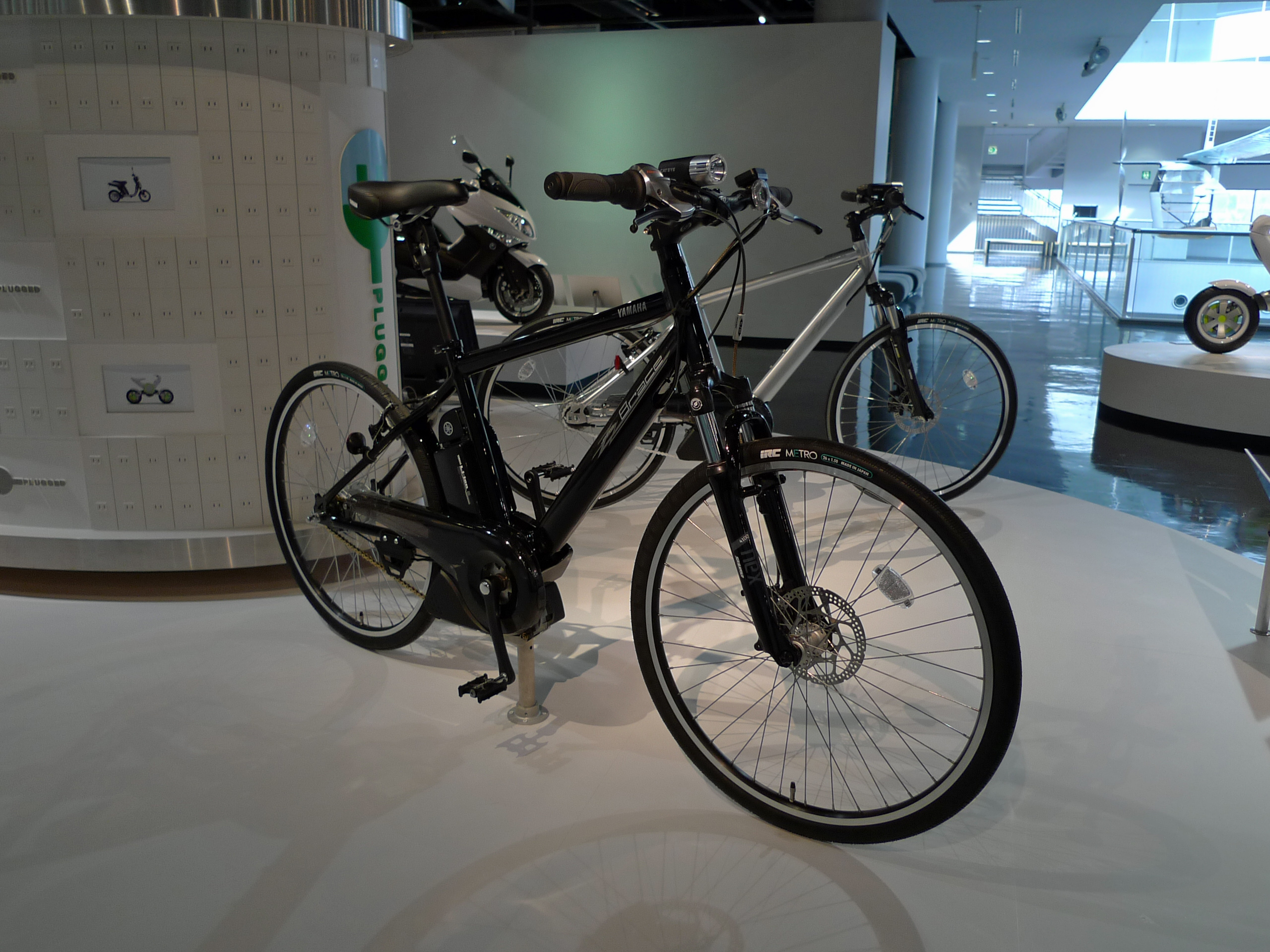
The PAS museum photograph supplies historical Yamaha context and does not show either motor installation discussed here. The existing Yamaha pages cover the wider family background. Yamaha topic; Yamaha introduction.
FAQ
Are 2.75kg and 3.4kg complete-bike weights?
No. They are the table’s drive-unit weight entries.
Does the 45km/h entry apply to both compared units?
No. It belongs to the separate PW-X2 Speed Pedelec record.
Do matching voltage and rated output prove interchangeability?
No. Those shared fields do not establish a compatible motor swap.
Sources
Yamaha 2022 systems catalogue (https://global.yamaha-motor.com/business/e-bike-systems/news/catalog/YAMAHA_2022_eBike_systems_EN.pdf).
Manufacturer Wabash RT factsheet (https://cdn2.yamaha-motor.eu/prod/product-assets/2022/WABASH-RT/Factsheets/2022-WABASH-RT_en-GB.pdf). Manufacturer MORO-07 factsheet (https://cdn2.yamaha-motor.eu/prod/product-assets/2022/YDX-MORO/Factsheets/2022-YDX-MORO_en-GB.pdf).
Photograph credits and permissions
Photograph 1
Original title: YAMAHA PAS Brace-L Special Yamaha Communication Plaza
Creator: PekePON; creator URI: https://commons.wikimedia.org/wiki/User:PekePON
Copyright notice: Embedded sRGB IEC61966-2.1 colour-profile notice: Copyright (c) 1998 Hewlett-Packard Company. This names the colour-profile owner, not the photographer.
Original source URI: https://commons.wikimedia.org/wiki/File:YAMAHA_PAS_Brace-L_Special_Yamaha_Communication_Plaza.jpg
License / permission: CC BY-SA 3.0
License / permission URI: https://creativecommons.org/licenses/by-sa/3.0/
Modification notice: Original Wikimedia-hosted JPEG bytes retained without crop, recompression or colour edits. EXIF and XMP retain Adobe Photoshop Elements 10.0 Windows processing notices, including a saved event on 4 November 2012; earlier processing is unassessed.
Source disclaimer: Historical Yamaha PAS Brace-L Special museum photograph at Yamaha Communication Plaza, as identified by its source. Capture and upload dates do not establish bicycle model year. Related Yamaha brand context only, not a photograph of Wabash RT or MORO-07 or evidence of their dimensions, parts, assistance, fit, condition or compatibility. Exact licence: Creative Commons Attribution-ShareAlike 3.0 Unported, also named CC BY-SA 3.0. No endorsement or warranties are implied; other rights may apply. The unchanged photograph remains under CC BY-SA 3.0; no additional restrictions are imposed.