


Bicycle Broken Spoke: Stop and Arrange a Complete Wheel Assessment
A bicycle broken spoke is a wheel-service concern even when the tire still holds air. Spokes are part of the wheel structure, and the visible broken piece may not be the whole problem. Stop riding and arrange competent assessment rather than planning how far the bicycle can travel before repair. If the issue appears during an outing, organize recovery from a suitable place without using another ride as a condition test.
Record a bicycle broken spoke while the wheel is stationary
Keep the bicycle unoccupied and supported appropriately. Note which wheel is affected and what was already heard or felt. An accessible photograph can show the break and its location, but it does not measure wheel tension or establish the cause. Keep fingers clear of sharp ends and the drivetrain. Do not spin a damaged wheel quickly to capture a dramatic wobble or bend a protruding piece repeatedly to see where it might break next.
Include the rim and remaining wheel in the service request
A technician needs to assess the complete wheel, including related damage and whether the wheel can be repaired correctly. Mention any impact, new rubbing or earlier spoke work that is actually known. Avoid choosing one replacement solely by the bicycle’s wheel-size label. Spoke length and suitable construction depend on the particular wheel build. An online count of visible spokes cannot identify the needed replacement or prove that the remaining ones are correctly tensioned.
Do not create clearance by weakening another system
If the wheel rubs, do not release a brake, remove a guard or adjust nearby components just to make riding possible. Clear rotation after such a change would not establish a sound wheel. Likewise, twisting other spokes by guesswork can conceal one symptom while creating another. Ask how to transport the bicycle for assessment and whether any handling precautions are needed. A temporary-looking straight wheel is not an inspection result or permission to continue a planned trip.
Use the repair handover to understand the finished work
Ask the technician what was repaired, whether the rim or other parts required attention and which follow-up checks the wheel needs. Keep that service information with the bicycle. Before returning to use, have wheel attachment, brake function and relevant clearances checked through the actual equipment guidance. A new spoke on a receipt does not replace those checks. If noise or rubbing returns, stop and bring the observation back rather than treating every subsequent symptom as harmless settling.
Model details relevant to this task
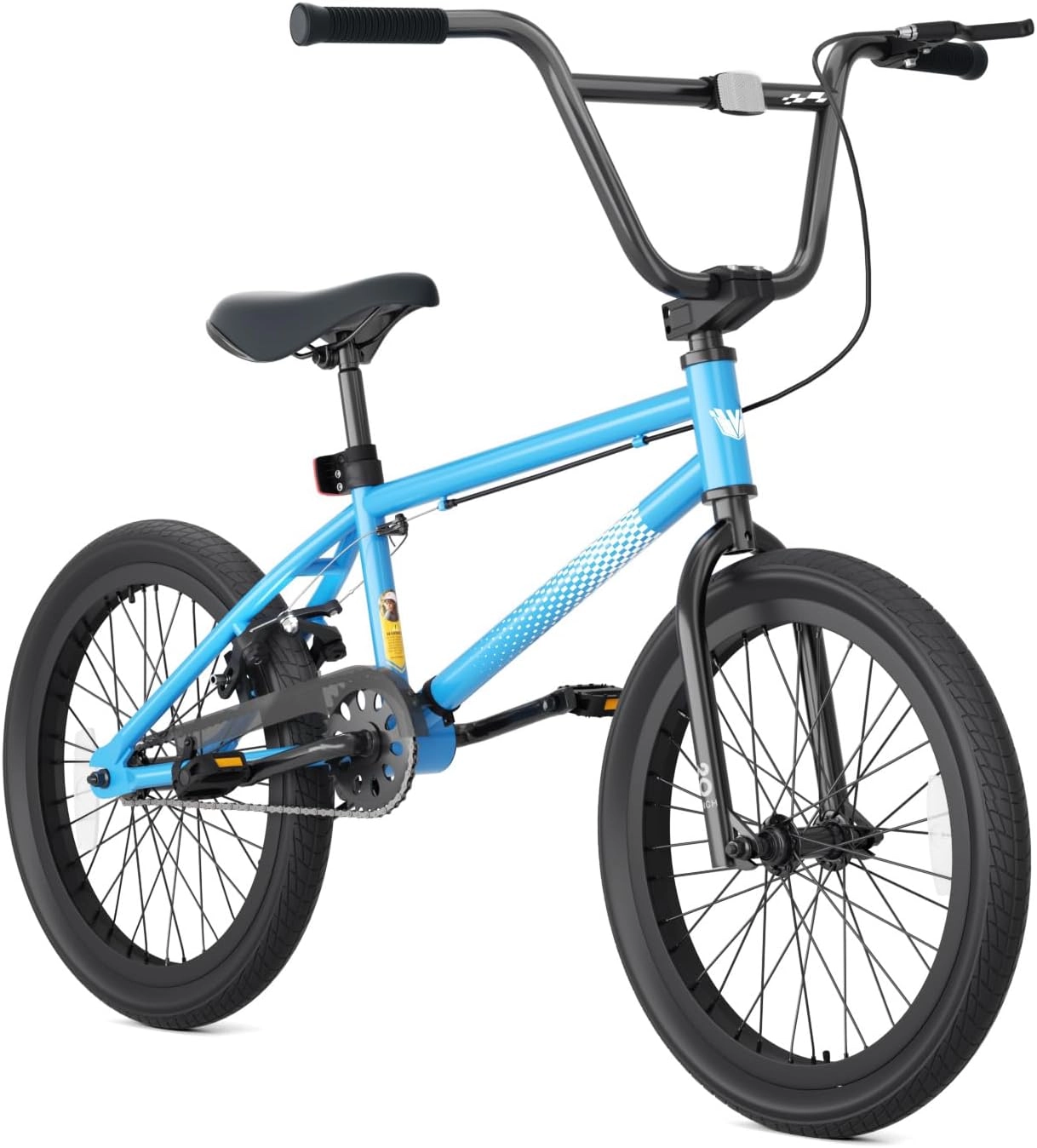
The Blue 20-inch Basic XJD BMX is an actual spoked-wheel bicycle in Best Bicycle’s catalog. Its listing records single-speed gearing, U-brakes and 20 by 2.4-inch tires. Those details identify the bicycle but do not supply spoke length, spoke tension, wheel-building instructions or a distance that can be ridden with damage. This article reports no fault in the catalog example. The linked model details are available for XJD Blue 20-Inch Single-Speed BMX – Basic Model without Pegs.
Quick checklist
- Stop riding after finding damage.
- Keep clear of sharp broken ends.
- Record wheel identity and observations.
- Arrange complete wheel assessment.
- Confirm the finished wheel and brakes.
Common questions
Does an inflated tire make the damaged wheel usable?
No. Tire pressure does not establish the condition of the spokes, rim or wheel build.
Can wheel diameter select a replacement spoke?
Not by itself. The particular wheel’s hub, rim and build determine the appropriate service parts.
Should the brake be opened to let a rubbing wheel turn?
Do not alter braking to continue riding a damaged wheel. Arrange appropriate recovery and service.
Related collections
The XJD exact bicycle catalog and XJD brand and bicycle information provide further model details. Check the exact selected configuration when planning fit, handling and care.
Before the next outing
Treat a bicycle broken spoke as the start of a complete wheel assessment. Stopping promptly, preserving clear observations and understanding the repair handover provide a better next step than guessing a permitted distance from how freely the tire still turns.