


Whyte Verro geometry: compare reach, stack and wheelbase together
Whyte Verro geometry combines changing reach, stack and wheelbase with a constant rear-centre entry. Read those rows together when comparing sizes. A shared angle or rear dimension does not make the five frames identical, while a larger size name does not tell you how much each coordinate changes.
Read Whyte Verro geometry across the whole row
In Extra small, Small, Medium, Large and Extra large order, reach is 398.5, 413.5, 428.5, 436 and 448.5 mm. Stack is 563, 577.3, 591.4, 605.4 and 619.5 mm. Whyte's table labels these as separate measurements, so keep each reach value paired with the stack from its own column.
The step from Medium to Large adds 7.5 mm of frame reach and 14 mm of stack. The next step, Large to Extra large, adds 12.5 mm of reach and 14.1 mm of stack. Those are simple differences calculated from the published values. They describe the chart's progression rather than a measured change in comfort, steering or the rider's position.
Notice what stays constant and what grows
Wheelbase rises through 1052, 1072, 1092, 1105 and 1123 mm. Rear centre remains 445 mm in every column. The head angle stays at 70 degrees and the seat angle at 74.5 degrees. A comparison based only on one of those constant entries would miss the increasing front-to-rear overall wheel spacing and the changing frame coordinates.
The Verro listing identifies the bicycle with its five configurations. Match the selected option to a complete column rather than collecting the longest or lowest number from different sizes. Whyte's Total Geometry description considers the frame and fitted components together; it should not be converted into a prediction about a particular rider from one angle alone.
Keep height, drop and clearance distinct
The bottom-bracket row explicitly says height: 283.5 mm in all five columns. It does not label that number bottom-bracket drop. Renaming it would change the measurement being reported. Neither that entry nor a photograph provides a pedal-clearance measurement for a modified bicycle.
Standover is another separate row, progressing from 727 to 814 mm across the range. It is not a rider-height chart. For a useful fitting conversation, take reach, stack and standover from the same size, then discuss the actual bar, stem and saddle arrangement. The Whyte topic and brand background provide the wider context without replacing those configuration-specific figures.
FAQ
Does rear centre change with frame size?
The inspected table lists 445 mm in all five columns.
Is 283.5 mm the stated bottom-bracket drop?
No. Whyte labels that row bottom-bracket height.
Does the chart predict how the bike will feel?
No. These are published dimensions, not a personal fit or riding test.
Reference: Verro reach, stack, wheelbase and height table (https://whytebikes.com/products/verro-gravel-adventure-bike), saved 6 November 2026; reread 7 November 2026.
Photograph credits and permissions
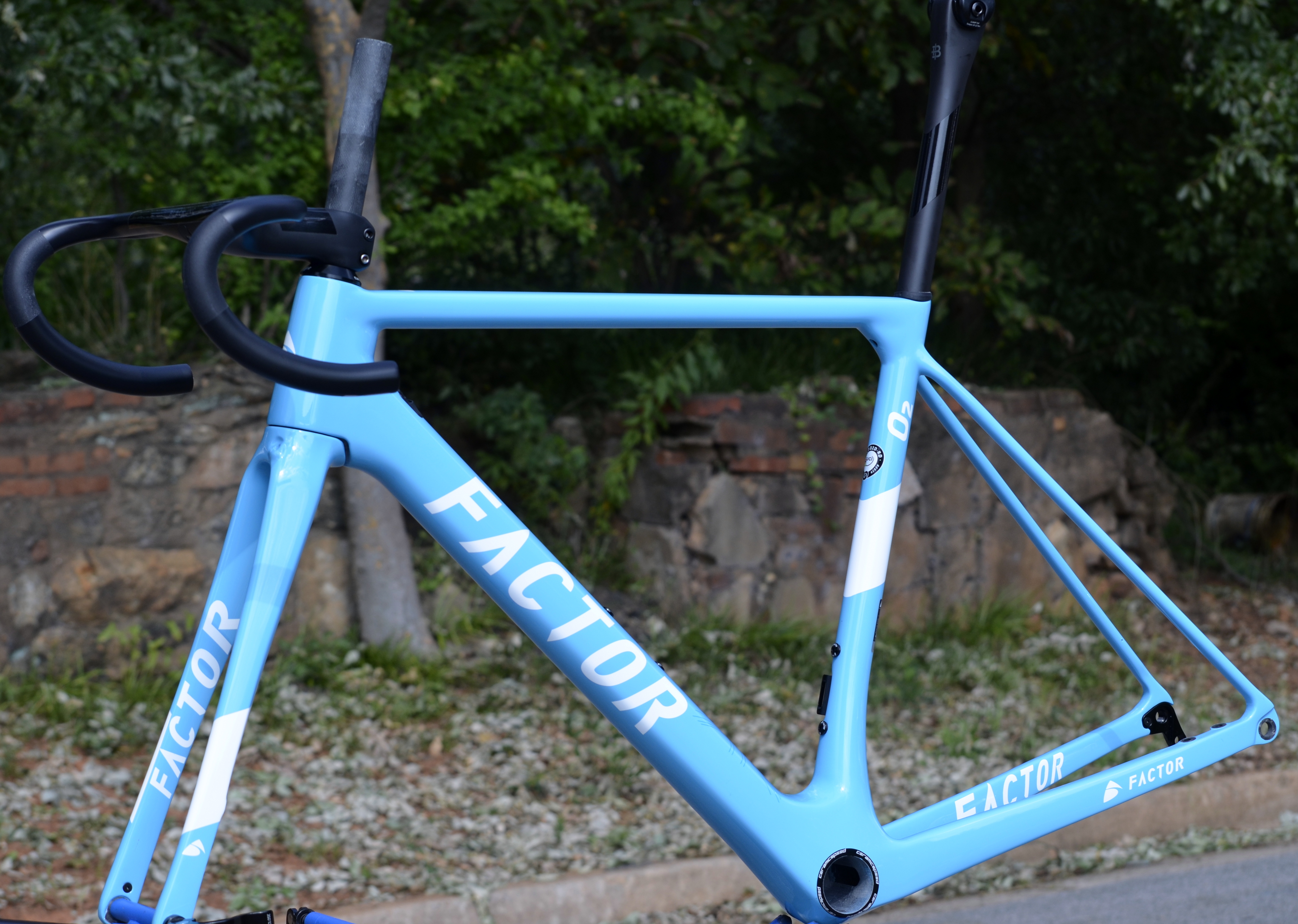
Photograph 1
Original title: Factor O2 Disc in AG2R Team Blue
Creator: Glory Cycles; creator URI: https://www.flickr.com/photos/glorycycles/
Copyright notice: Some rights reserved (supplied Flickr notice). No separate photographic copyright notice found in the saved original metadata.
Original source URI: https://www.flickr.com/photos/glorycycles/44846075802/
License / permission: CC BY 2.0 Generic
License / permission URI: https://creativecommons.org/licenses/by/2.0/
Modification notice: Original JPEG bytes unchanged; no crop, recompression or colour edit. EXIF Artist Picasa, Software Ver.1.01 and original XMP Picasa creator/ModifyDate retained. Prior editing unassessed; dates do not establish bicycle model year.
Source disclaimer: Different source-identified Factor bicycle used only for explicit component comparison, not a Whyte Verro or proof of its dimensions, material, specification, fit, compatibility, load or safety. No endorsement implied. Licensed as-is without warranties; other rights may apply.