


TIME Braided Carbon Structure: How BCS and RTM Describe Different Manufacturing Stages
TIME braided carbon structure describes how the manufacturer prepares its fiber architecture before adding resin. BCS and RTM are therefore not competing frame options: Braided Carbon Structure concerns the dry-fiber construction, while Resin Transfer Molding describes the later resin-injection and molding stage. Understanding that sequence makes TIME’s technical language easier to interpret when comparing frames.
TIME braided carbon structure starts before the resin
The BCS page describes fibers braided into tubular sleeves. Because the material is dry during this stage, TIME says it can position the sleeves and vary their fiber orientation before molding. The description is about the structure inside the component, rather than a decorative weave pattern applied only to its exterior.
The manufacturer also explains that different fibers can be included in the braid. That does not mean every current frame contains every material named in a general technology article. A particular model’s specification remains necessary to identify what TIME says is used in that frame or fork.
RTM adds the resin within controlled molds
TIME’s RTM page describes resin injected under pressure and heat between internal and external molds. It also says internal wax mandrels are melted out and recycled after molding. In the company’s explanation, that stage turns the prepared dry layup into the finished composite structure.
This distinction helps decode product descriptions: BCS explains how fibers are arranged, and RTM explains the resin and molding process that follows. Neither abbreviation, by itself, supplies a frame weight, a crash-test result or a measured advantage for an individual rider. Those would require their own evidence.
Use construction information alongside the actual bicycle
TIME presents its process as a way to control manufacture and reduce defects. Those are the manufacturer’s claims, not a finding from a test performed for this article. A construction explanation cannot establish the present condition of a used frame or guarantee that damage from an impact is harmless.
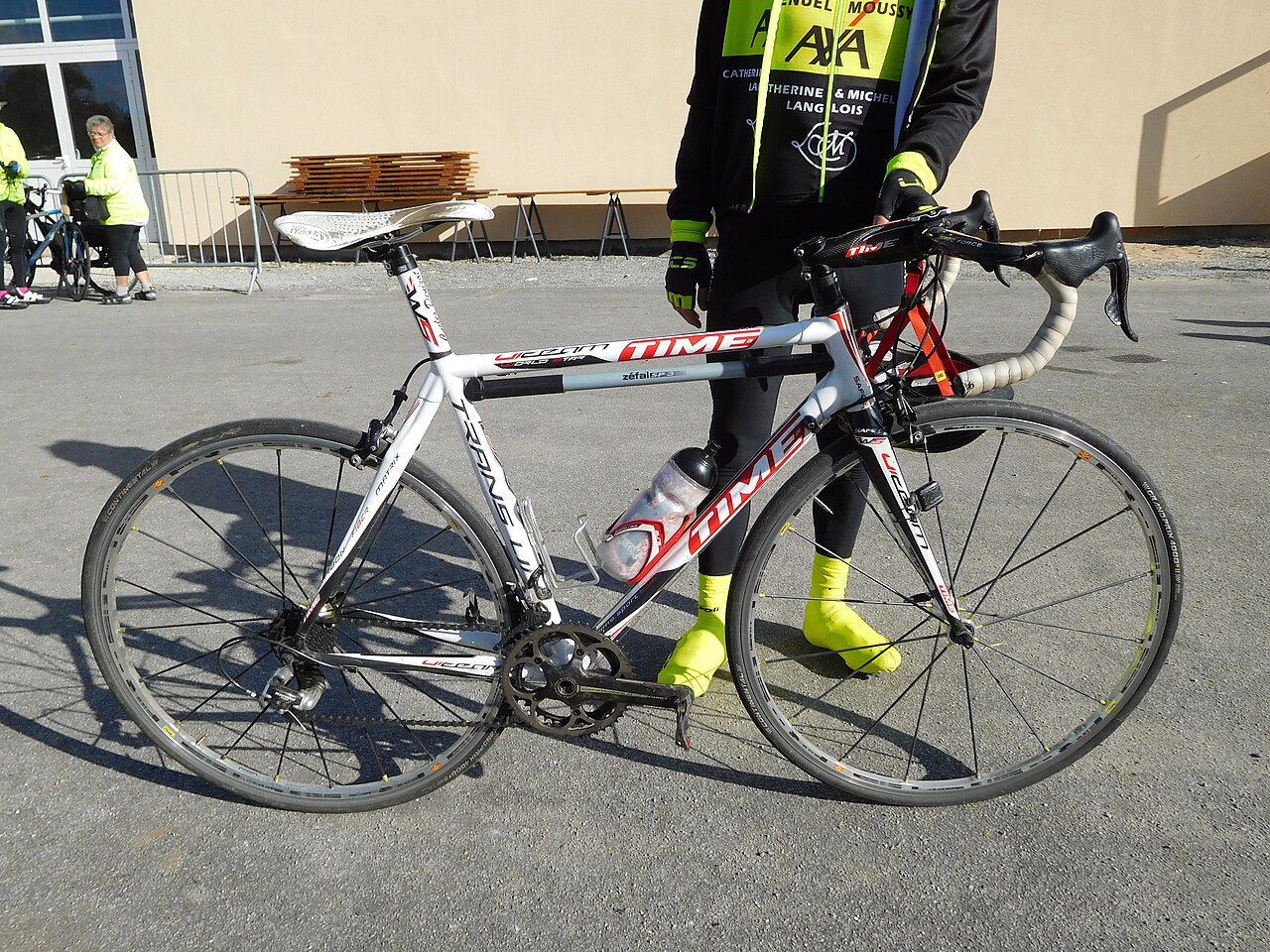
Route, position and the model’s equipment provisions still matter when choosing a bicycle. The TIME company introduction connects this manufacturing identity to the range, while the TIME topic holds specific frame questions. The real historical road bike shown here illustrates the brand’s context; its photograph cannot reveal internal fiber orientation or certify structural condition.
FAQ
Are BCS and RTM two alternative frame materials?
No. TIME uses them to describe different stages of its composite-frame manufacturing process.
When does TIME say resin is added?
Its explanation places resin injection in the molding stage after the dry-fiber layup is prepared.
Does the manufacturing description establish a used frame’s condition?
No. Process information is not an inspection or a guarantee about a particular bicycle.
Sources
Manufacturer references retrieved 29 October 2026:
TIME Braided Carbon Structure explanation (https://www.timebicycles.com/en-us/pages/technology-bcs).
TIME Resin Transfer Molding process (https://global.timebicycles.com/pages/technology-rtm).
Photograph credit and permission details appear below.
Photograph credits and permissions
Photograph 1
Original title: Vélo Time.jpg
Creator: Cjp24
Original source URI: https://commons.wikimedia.org/wiki/File:V%C3%A9lo_Time.jpg
License / permission: CC BY-SA 4.0
License / permission URI: https://creativecommons.org/licenses/by-sa/4.0/
Modification notice: Wikimedia Commons-provided 1280×960 JPEG rendition of the 4608×3456 original. No further crop, retouching or re-encoding by this publisher. Photograph remains under CC BY-SA 4.0.