


Tern GSD Gen 3 weight limit: calculate a complete carrying budget
The Tern GSD Gen 3 weight limit is a total-system limit, not an amount of shopping that can be added to any rider and bicycle. The QuickStart Guide specifies a maximum gross vehicle weight of 210 kilograms. Planning a useful load starts by identifying everything that already occupies part of that allowance.
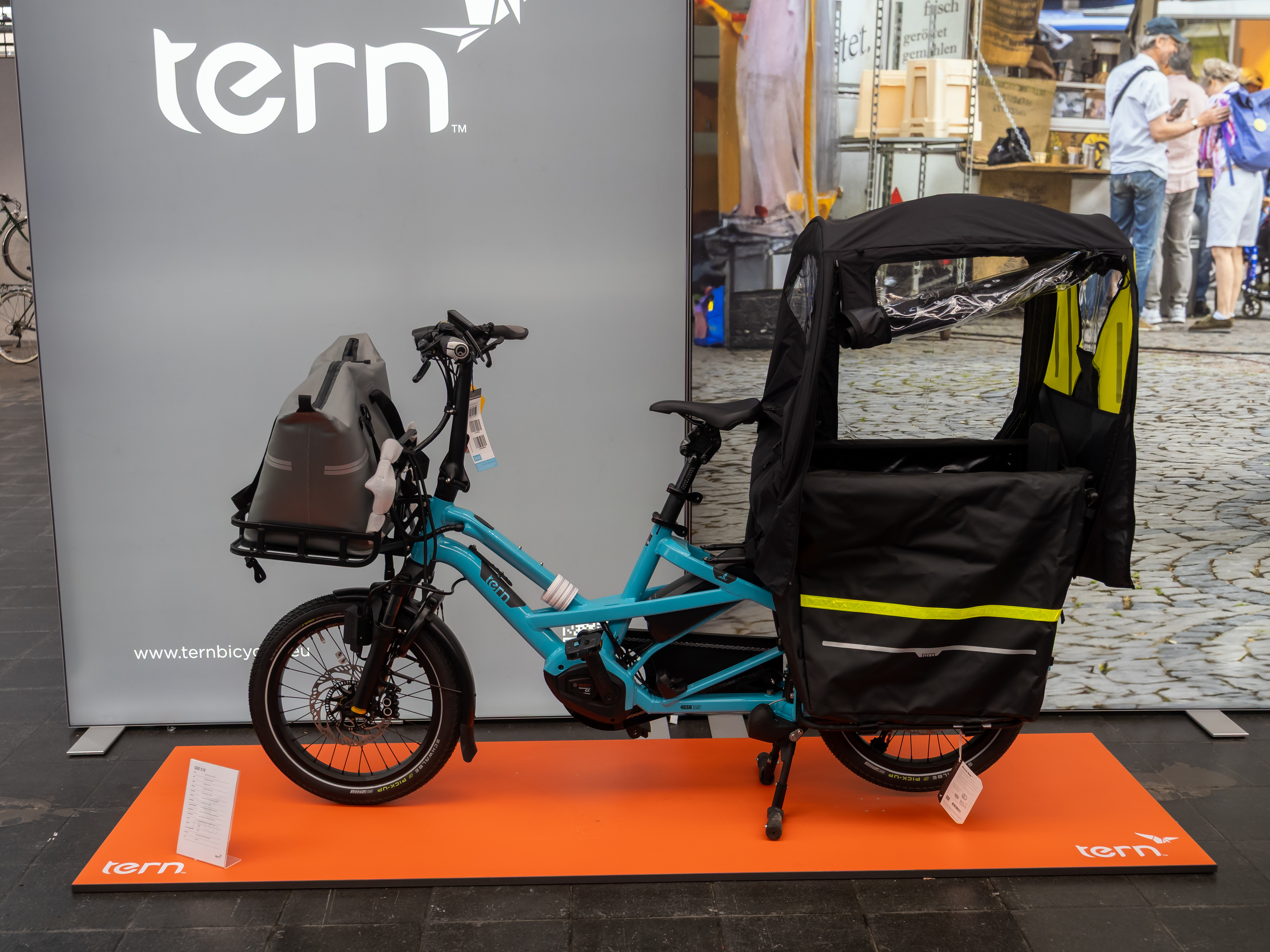
Build the Tern GSD Gen 3 weight limit calculation
Printed pages fourteen and fifteen include the bicycle, battery, rider, passengers, accessories and cargo in the gross calculation. They list the bicycle without a battery at thirty-two to thirty-four kilograms and say to follow the CE frame sticker if the stated bicycle weight differs. Do not subtract an unverified catalogue weight and forget the battery or installed equipment.
Write a separate line for the bicycle with its battery, each accessory not already included, the rider and the planned contents. Avoid counting a rack or bag twice when it is already part of a measured assembly. The result should describe one actual configuration, not a collection of individually favourable estimates taken from different models.
Apply the local limits alongside the total
The guide separately sets a maximum rider weight of 130 kilograms, a rear-rack top load of 100 kilograms and a Combo Mount limit of twenty kilograms. Accessory manuals have their own requirements. Staying below 210 kilograms does not authorize exceeding any one of those component or rider limits.
For example, suppose a hypothetical bicycle with battery weighs thirty-eight kilograms before separately listed accessories, its rider weighs eighty and those accessories add twelve. Eighty kilograms remains in the gross calculation. That arithmetic is an example, not a measured specification or a promise that all remaining weight can be placed in any chosen bag or seat.
Recalculate when the configuration changes
Record the proposed distribution as well as the total. A new passenger seat, weather enclosure or front carrier changes the starting configuration. If a trailer is involved, consult the generation-specific towing instructions too; its allowance is not simply another independent amount to add to an already full bicycle.
Printed page fifteen also limits cargo supported by the lowered Atlas Lockstand to 100 kilograms. A parked loading arrangement and a riding gross-weight calculation answer different questions. Have the dealer confirm the complete equipment combination and applicable loading method before relying on a large number printed beside an individual part. Recheck the budget whenever equipment or occupants change.
GSD carrying-budget FAQ
Can I carry 210 kilograms of cargo?
No. The gross limit includes the bicycle, battery, people, accessories and cargo together.
Does being below the total override a front carrier's limit?
No. The Combo Mount and the fitted carrier's own instructions still constrain the proposed front load.
Can I use the example's bicycle weight for my own GSD?
No. It is hypothetical arithmetic; use the applicable frame-sticker information and the actual configuration without double counting.
A useful carrying plan satisfies the complete gross budget and every relevant local limit. Browse the Tern ownership collection and the related GSD technical guide.
Primary reference: Tern GSD Gen 3 QuickStart Guide, printed pp14–15.