


Tern GSD vertical parking: compare standing storage with FlatFold
Tern GSD vertical parking and FlatFold solve different storage problems. In the Gen 3 QuickStart Guide, one procedure stands the bicycle on its rear contact points while the other reduces its size by changing the cockpit and saddle position. Evaluate the actual storage space and fitted equipment before deciding which procedure is useful.
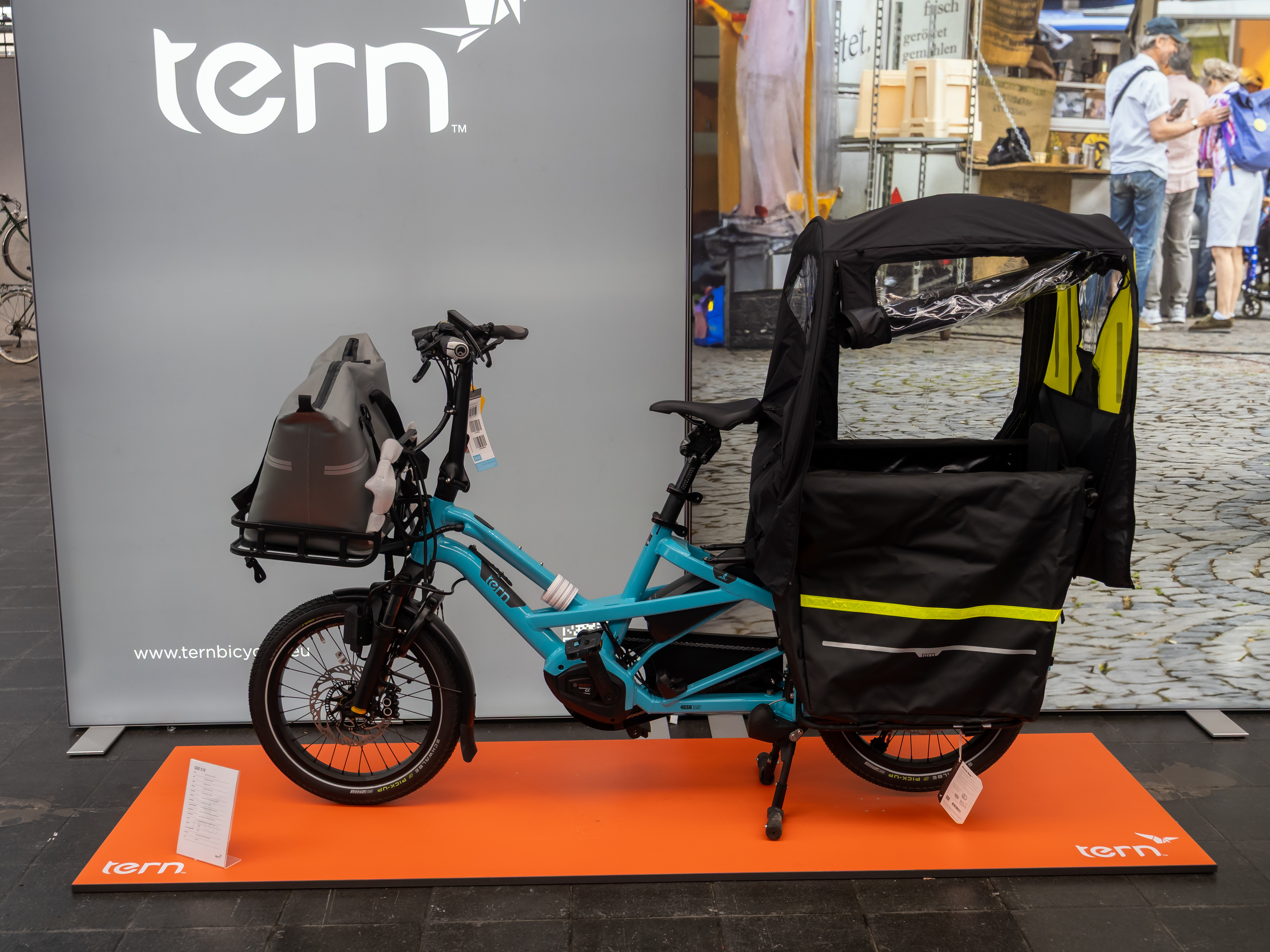
Plan the space for Tern GSD vertical parking
Printed page seventeen describes applying the rear brake, lifting through the handlebar while walking backward and checking that all support points meet the ground evenly. The contact-point drawing is part of the procedure. Simply balancing the bicycle on a rear tyre is not the same arrangement as using the documented support points.
The same page says to hold the bicycle in public areas to prevent a fall. Before leaving it vertically parked unattended, it requires strapping it to a fixed object. Plan a suitable securing position as part of the storage arrangement, rather than deciding that a bicycle which stands momentarily needs no additional restraint.
Treat FlatFold as a different operation
The guide's FlatFold drawings show adjustments at the stem, front wheel, handlepost and saddle. They are a sequence to follow for the confirmed bicycle, not an invitation to fold any joint that appears movable. Ask for a dealer demonstration if the labelled releases or their secure riding positions are unclear.
For a cupboard, vehicle or shared storage area, check the actual resulting shape and access path with your installed equipment. A front carrier, canopy or rear accessory changes what occupies that space. Neither a family photograph nor the word compact supplies the measurements for your specific loading opening, and FlatFold alone does not establish that lifting the bicycle is manageable.
Make the return to riding part of the plan
An effective demonstration includes returning every adjusted control and release to its correctly secured riding position. The guide's first-ride section separately calls for saddle and Andros Stem adjustment and practice in a safe area. Retain a usable riding-position reference so that a storage adjustment does not leave the next rider guessing at the intended setup.
If you cannot maintain control during the vertical movement or cannot obtain even support-point contact, stop and arrange assistance or choose another parking method. Do not use a tight available corner as proof that a setup is stable. The storage decision should account for the complete bicycle, its accessories and the person who will repeatedly move it.
GSD storage-method FAQ
Does FlatFold automatically put the GSD into vertical parking?
No. They are separately illustrated procedures: one reduces size and the other uses the rear standing contact points.
May an upright GSD be left unattended without restraint?
The Gen 3 guide requires strapping a vertically parked bicycle to a fixed object before leaving it unattended.
Do the pictures prove my canopy will fit a particular cupboard?
No. Measure and demonstrate the actual equipped bicycle and access path; no dimensions for that combination are supplied here.
Choose a storage method that you can repeat with secure support and a clear return to riding. Browse the Tern ownership collection and the related GSD technical guide.
Primary reference: Tern GSD Gen 3 QuickStart Guide, printed pp16–17.