


Surly Long Haul Trucker Wet-Weather Storage: Deal With Water Inside the Frame
Surly Long Haul Trucker wet-weather storage should address water that is no longer visible after the ride. Wiping the outside can leave moisture inside a steel frame. For a touring bicycle used through rain or carried into cold storage, separate ordinary cleaning from the question of trapped water and possible damage.
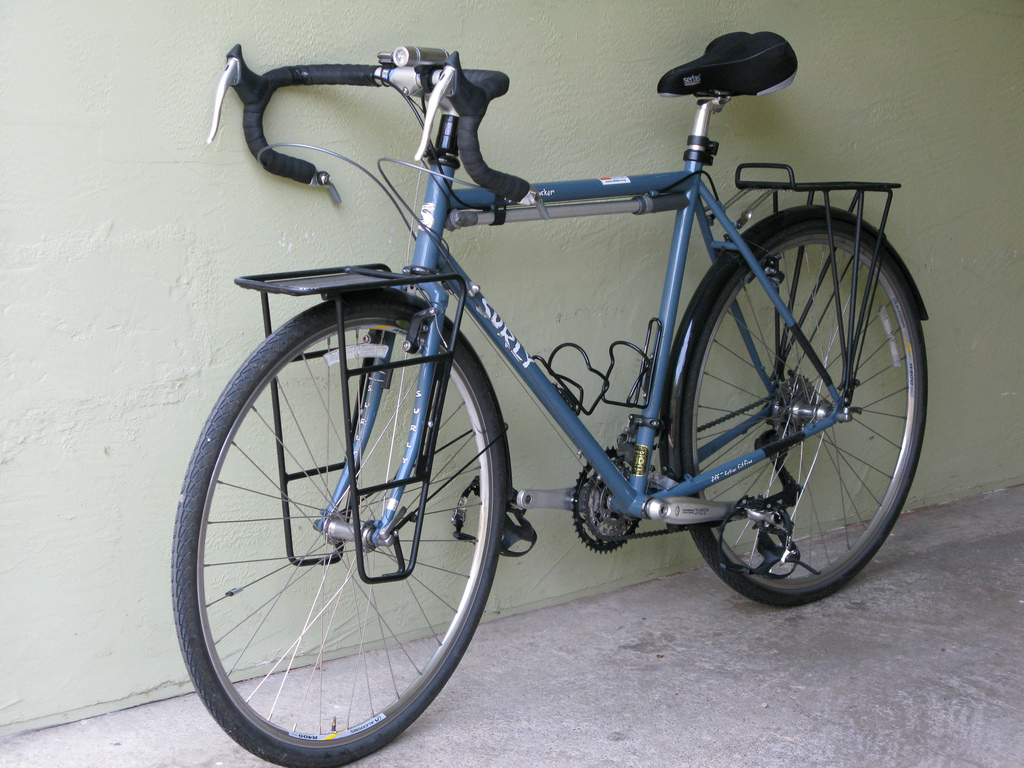
Apply Surly Long Haul Trucker wet-weather storage to the steel frame
The 2008 LHT catalogue identifies a 4130 chromoly steel frame. The current ASTM 2 frame sheet linked from the official LHT archive instructs owners to dry a bicycle thoroughly after wet use and to drain water that has entered the frame. It is current linked care guidance, not evidence that the photographed bicycle has received that care.
That sheet describes tilting the bicycle to drain water and, if necessary, removing the seatpost and turning the bicycle over. Any component removal and refitting must follow the actual assembly instructions or be handled by a competent mechanic. Do not drill an extra drain hole or modify the frame to make a shortcut.
Deal with internal moisture before freezing or long storage
Surly specifically warns that water freezing inside a frame can expand and damage or rupture it. A clean outer tube is therefore not proof that the frame is ready for freezing conditions. If substantial water is suspected inside, address the drainage and drying question before putting the bicycle away in the cold.
The linked guidance also identifies moisture and road salt as corrosion risks for a metal frame. Store the bicycle protected from the elements, and follow the maker’s preparation guidance for extended storage. Do not treat a coating on a later frame record as a promise that an unidentified older frame cannot corrode.
Keep finish care separate from structural inspection
Clean tubes are easier to inspect than surfaces covered in road grime. Surly notes that dirt can accelerate paint abrasion where cable housing rubs, and severe abrasion can remove frame material. Look at those contact areas as well as obvious chips, while avoiding the assumption that every mark is merely cosmetic.
The frame sheet calls for inspection for fatigue or damage and for professional advice or replacement when needed before riding. After storage, complete the applicable pre-ride checks rather than assuming drying has certified the bicycle. An old receipt, attractive paint or a past trouble-free tour cannot establish the present condition of the frame.
After-rain storage FAQ
Does a dry outer surface prove that no water remains inside?
No. Internal drainage and drying are separate questions after wet use.
Why address trapped water before freezing storage?
Surly warns that freezing water expands and can damage the frame, so resolve drainage and drying first.
Can finish care establish that a damaged frame is usable?
Cleaning or polish does not settle structural condition; obtain the appropriate assessment before riding.
A bicycle can look dry while retaining water inside. Before cold or extended storage, address that moisture and inspect worn contact areas; cleaning the finish and confirming structural condition remain different jobs.
When packing for the next wet tour, revisit Surly Long Haul Trucker front rack. More background is grouped in the Surly bicycle collection.
Technical references: 2008 catalogue; Linked frame instructions.