


Scott Scale RideLoc vs TwinLoc: identify what the remote controls
A Scott Scale RideLoc vs TwinLoc search often begins with a small lever whose purpose is unclear. The useful first question is what that lever actually controls on the bicycle, not which name sounds newer. Identifying the system prevents an owner from following a procedure for a different suspension arrangement or ordering a remote that merely resembles the existing one.
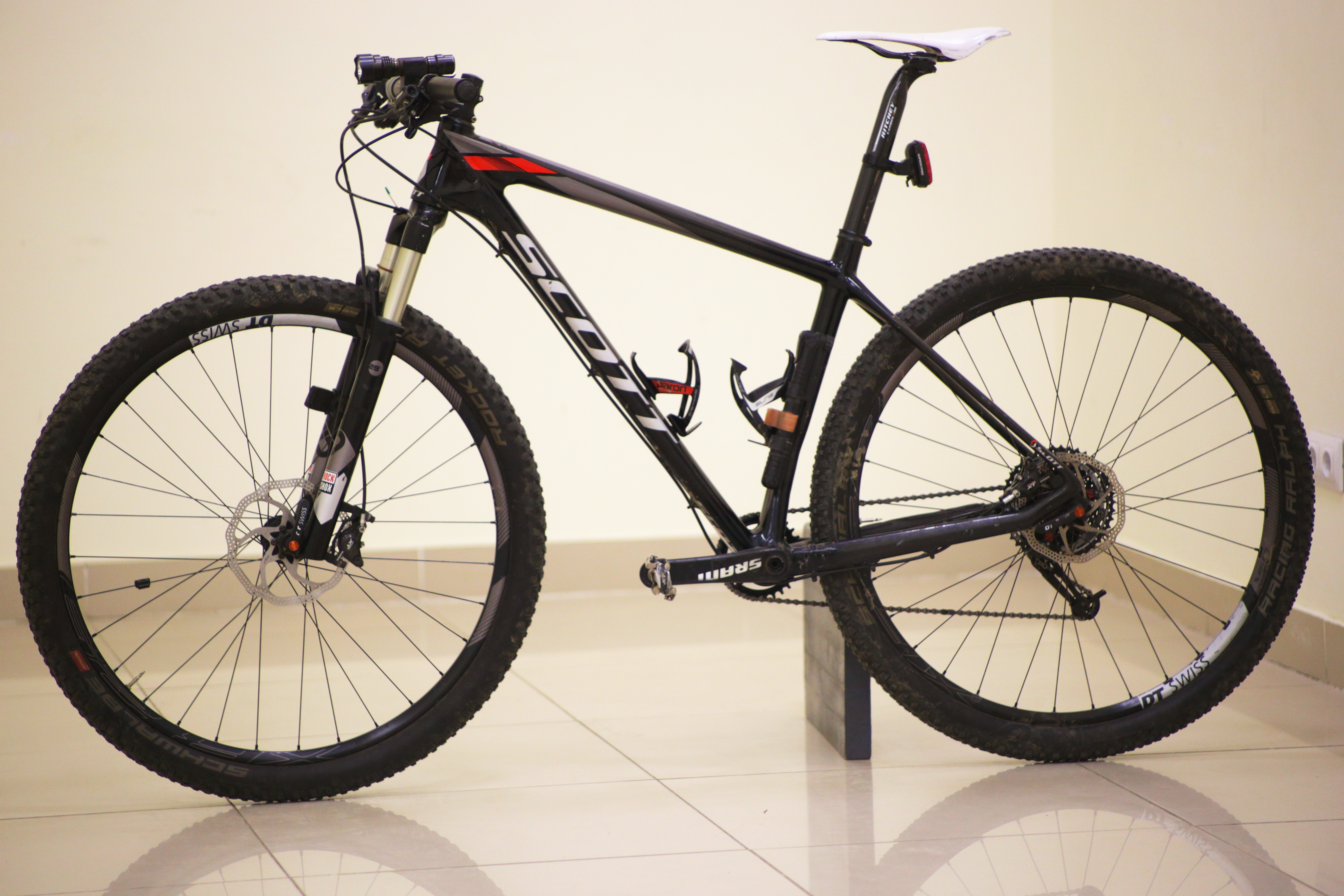
Start Scott Scale RideLoc vs TwinLoc with the controlled component
The 2018 carbon Scale manual describes RideLoc as a three-mode control for the front fork: climb, traction and descent. Scott's separate TwinLoc help page discusses three travel settings and fork lockout. Those descriptions are not permission to treat the names as interchangeable. Establish the fitted system and its controlled components before comparing a replacement lever or diagnosing a missing mode.
The manual's example applies to its stated historical carbon Scale platform. It is not a description of every Scale generation or proof of the equipment on the photograph. That image records a Scale 910 in July 2019; its capture date does not establish its model year, original remote or internal fork specification.
Make a physical control map
Record the fork identifier, the remote's markings and where its cable goes. If another lever operates a dropper post, identify it separately rather than counting every cable as suspension control. Keep clear photographs of the current arrangement with the bicycle's documents. Ask a dealer to establish any connection you cannot identify without disturbing the equipment.
Lever position alone does not settle identity
The historical manual discusses above-bar and under-bar RideLoc arrangements in the context of different front-chainring setups. A lever's position is therefore information to record, not a complete compatibility test. A used bicycle may also have changed components. Do not assume that moving an existing lever to another location makes it the alternative arrangement described in the instructions.
Describe a missing function precisely
If an identified system does not behave as its applicable instructions describe, tell the workshop which control position is involved and which component fails to respond. Separate an uncertain system identity from a confirmed malfunction. That avoids asking for a rear-suspension response from a fork-only example or replacing a lever before the rest of its system has been examined.
Any proposed replacement needs confirmation against the actual remote, fork and applicable documentation. This guide does not assign cable-pull compatibility or recommend adapting one named system into another. Its purpose is to make the enquiry specific enough that a supplier can answer it.
Remote identification FAQ
Does a three-position lever automatically identify TwinLoc?
No. The historical RideLoc description also has three positions; identify the actual system and the components it controls.
Can I assume the photographed Scale has the manual's remote?
No. The photograph provides family context and does not verify that historical equipment configuration.
What helps a dealer evaluate a replacement?
Provide the bicycle identity, fork identifier, remote markings, cable arrangement and the function you need restored.
Resolve Scott Scale RideLoc vs TwinLoc by mapping the actual controls. For a separate air-pressure question, see our fork-pump reading guide; the Scott topic gathers the wider series.
Sources: 2018 carbon Scale manual; Scott TwinLoc explanation.