


Scott Scale rear brake mount: keep rotor size and frame generation together
A Scott Scale rear brake mount enquiry needs the frame generation as well as the rotor diameter. A rotor-size number can describe an existing part, a replacement mount or a frame limit, and those are not the same piece of information. Reading them together prevents a plausible-looking adapter from becoming an unsupported brake conversion.
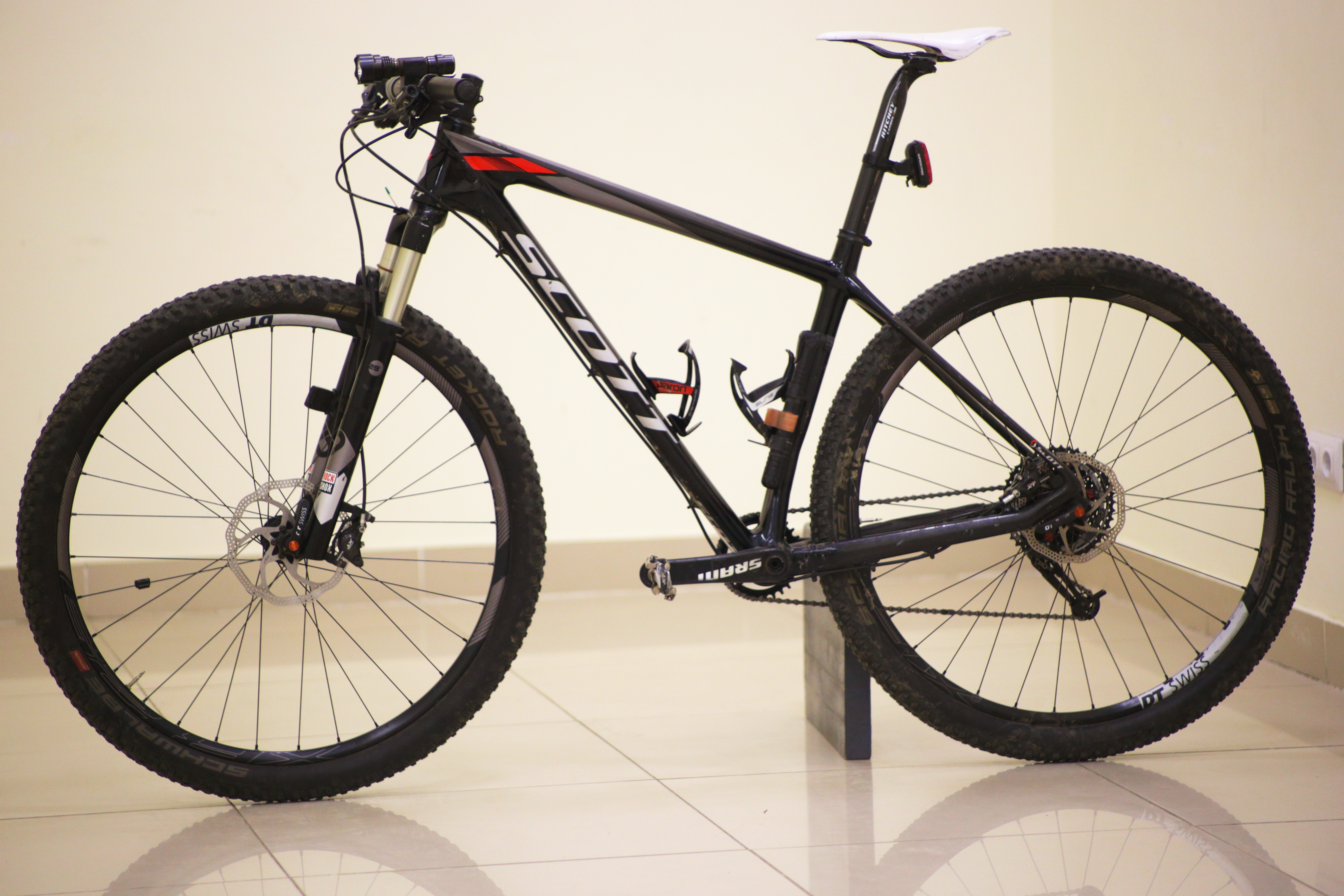
Identify the historical Scott Scale rear brake mount references
The 2018 carbon Scale manual lists 254096 for its 160 mm mount and 254095 for its 180 mm mount. It explicitly excludes Boost quick-release bicycles from that description. Keep that exception attached to the references when asking about parts. Omitting it changes a scoped historical example into a much broader compatibility claim.
These numbers establish what that manual documented. They do not show which mount belongs on the Scale 910 photographed in 2019, and they do not establish the pictured bicycle's frame generation. Use the image as family context, then identify the actual frame and installed brake hardware independently.
Do not import a limit from another frame
The 2023 Scale manual describes a different rule: a maximum rear rotor of 180 mm, with a 160 mm maximum for a small frame. That is a useful contrast in how the documentation is scoped. It is not permission to apply the newer limit to an older frame or use the older adapter number to implement the newer arrangement.
Keep three entries on the parts request
Record the frame identity and size, the existing rotor marking, and the installed mount or adapter marking. Add the brake-caliper model if known. If one entry is uncertain, leave it unresolved rather than completing it from the closest-looking online bicycle. Ask the dealer to identify the permitted combination before a part is purchased.
Make the proposed work explicit
Tell the workshop whether the request concerns replacing an existing damaged mount or changing the braking arrangement. A like-for-like repair and a proposed rotor-size change require different confirmation. Do not assume that the existence of two historical mount numbers means an owner should choose the larger one for an imagined performance benefit.
Have the dealer confirm all necessary hardware and the applicable installation instructions for the actual bicycle. A mount, caliper, rotor and frame need to be considered as an assembly. This article supplies no universal bolt length or tightening value and does not replace the checks required after brake work.
Rear mount FAQ
Does a 180 mm rotor marking prove the frame permits it?
No. Establish the frame's applicable limit and the complete approved installation rather than relying on the rotor marking alone.
Can I ignore the historical Boost QR exception?
No. It is part of the documented scope and must remain with that example when checking compatibility.
Should a newer Scale manual override an older bicycle's instructions?
Not automatically. Match the document to the actual frame and ask the dealer to resolve any uncertainty.
Keep a Scott Scale rear brake mount request tied to its frame. For a different rear-end component, use the hanger identification guide; more references appear on the Scott topic.
Sources: 2018 carbon Scale manual; 2023 Scale manual.