


Santa Cruz Blur Suspension Sag: Why a Weight-to-Pressure Shortcut Is Not Enough
Santa Cruz Blur suspension sag is a better starting question than asking for one air pressure from the model name. On an older bicycle, the shock may have been repaired or replaced several times. A pressure that once suited an original damper cannot automatically describe the correct setup of the shock fitted today.
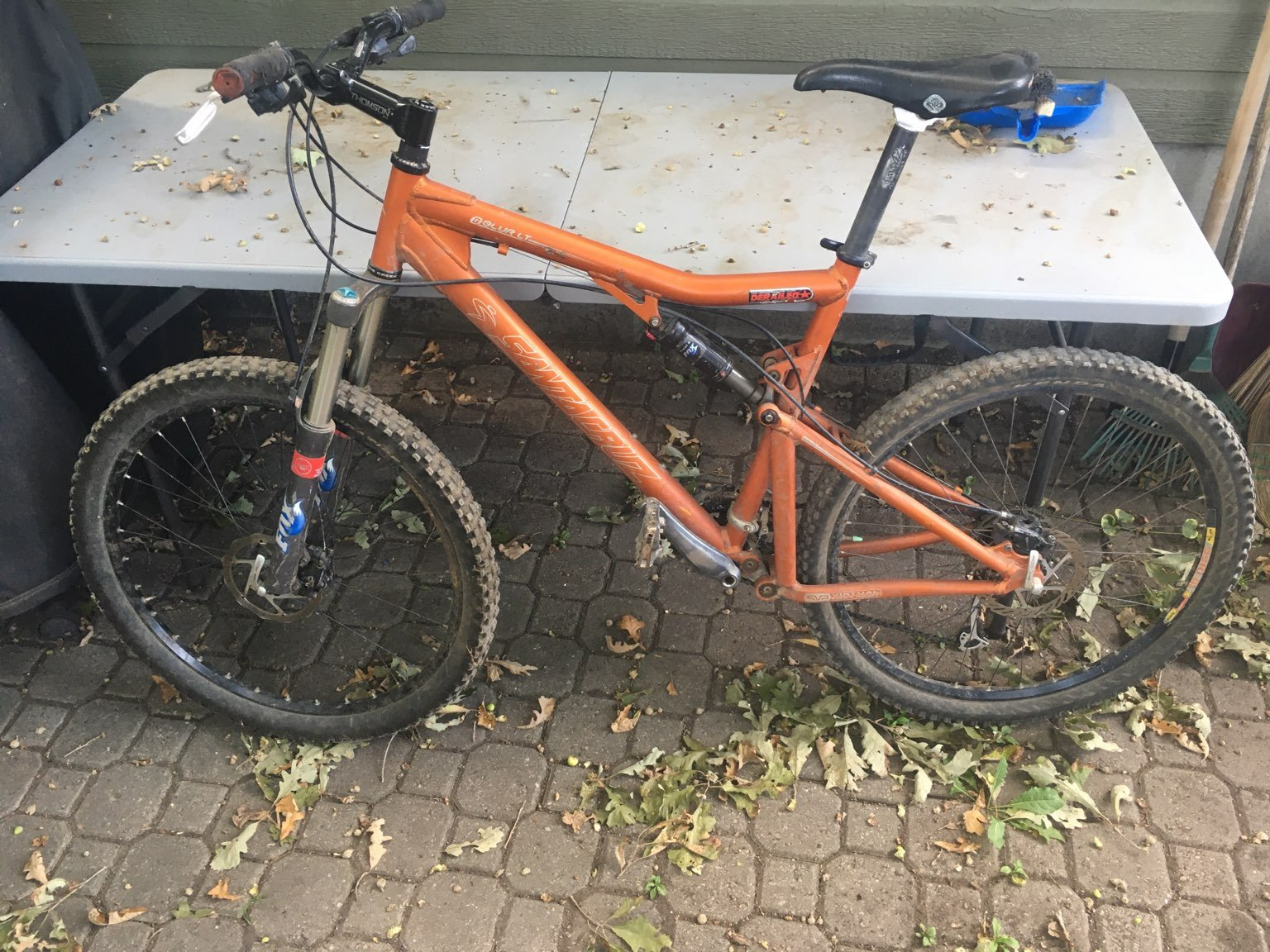
Read Santa Cruz Blur suspension sag in its historical context
Santa Cruz’s LT1 support record explicitly warns that old rear shocks are likely to have changed during the frame’s life. It gives basic guidance and directs owners to the actual shock manufacturer’s instructions. Its archived reference is 13–18mm of sag measured at the shock shaft.
That measurement belongs to the identified LT1 reference, not every Blur. The XC1 page even distinguishes its XS/S and M/L frames and their shock dimensions. A single pressure formula or sag number therefore should not be carried across the family without first confirming the frame and damper.
Keep sag, stroke and pressure conceptually separate
Sag describes how far the suspension settles under the rider in the specified measuring conditions. Stroke is the shock’s full permitted movement. Air pressure is an adjustment used to achieve an appropriate setup on an air shock; it is not itself a measurement of the resulting sag.
Follow the actual shock instructions for preparing and checking that measurement, using the riding equipment those instructions specify. If the required setup cannot be reached normally, ask a suspension specialist to assess the system. Increasing pressure without understanding the fitted shock and its limits is not a useful diagnosis.
Use damping adjustments after establishing the baseline
The historical LT1 guidance treats rebound and compression as further tuning once suitable sag is established. Record the initial configuration before making an approved change. That makes a comparison repeatable and gives a workshop a clearer account than saying the rear end simply feels wrong.
Also explain whether the concern is excessive settling, harshness, poor recovery or a suspected mechanical problem. These observations are different from an unverified claim that the frame needs a different shock stroke. A setup conversation should work from the actual damper, its service condition and the identified frame.
Santa Cruz Blur suspension sag FAQ
Is the historical LT1 sag figure a universal Blur setting?
No. It applies to that reference; other frames and fitted shocks require their own instructions.
Does rider weight alone provide a reliable final air pressure?
No. The manufacturer warns that the actual shock model can change the relationship.
Should rebound be used to disguise incorrect sag?
No. Establish the appropriate baseline first, then tune damping through the correct shock instructions.
Use Santa Cruz Blur suspension sag as a measured setup question, supported by the frame record and the actual shock manual. That is more useful than treating an old pressure example as a permanent rule.
If the damper’s identity is unclear, use the Santa Cruz Blur shock dimensions record before applying any setup reference. Further references are grouped in the Santa Cruz bicycle collection.
Technical references: LT1 record; XC1 record; Owner manual.