


Rocky Mountain 2018 Altitude C50 Gearing: Compare Tooth Ratios With C70 SRAM
The 2018 Altitude C50 gearing can be compared with C70 SRAM using actual chainring and cassette tooth counts. That comparison describes gearing, not a guaranteed climbing result or a permitted parts swap. Any practical ride comparison must first satisfy the Rocky Mountain recall requirement (https://www.cpsc.gov/Recalls/2018/Rocky-Mountain-Bicycles-Recall-Mountain-Bicycles-Due-to-Crash-Hazard): stop use of a covered bicycle and have an authorized dealer verify its inspection and repair.
Calculate the 2018 Altitude C50 gearing endpoints
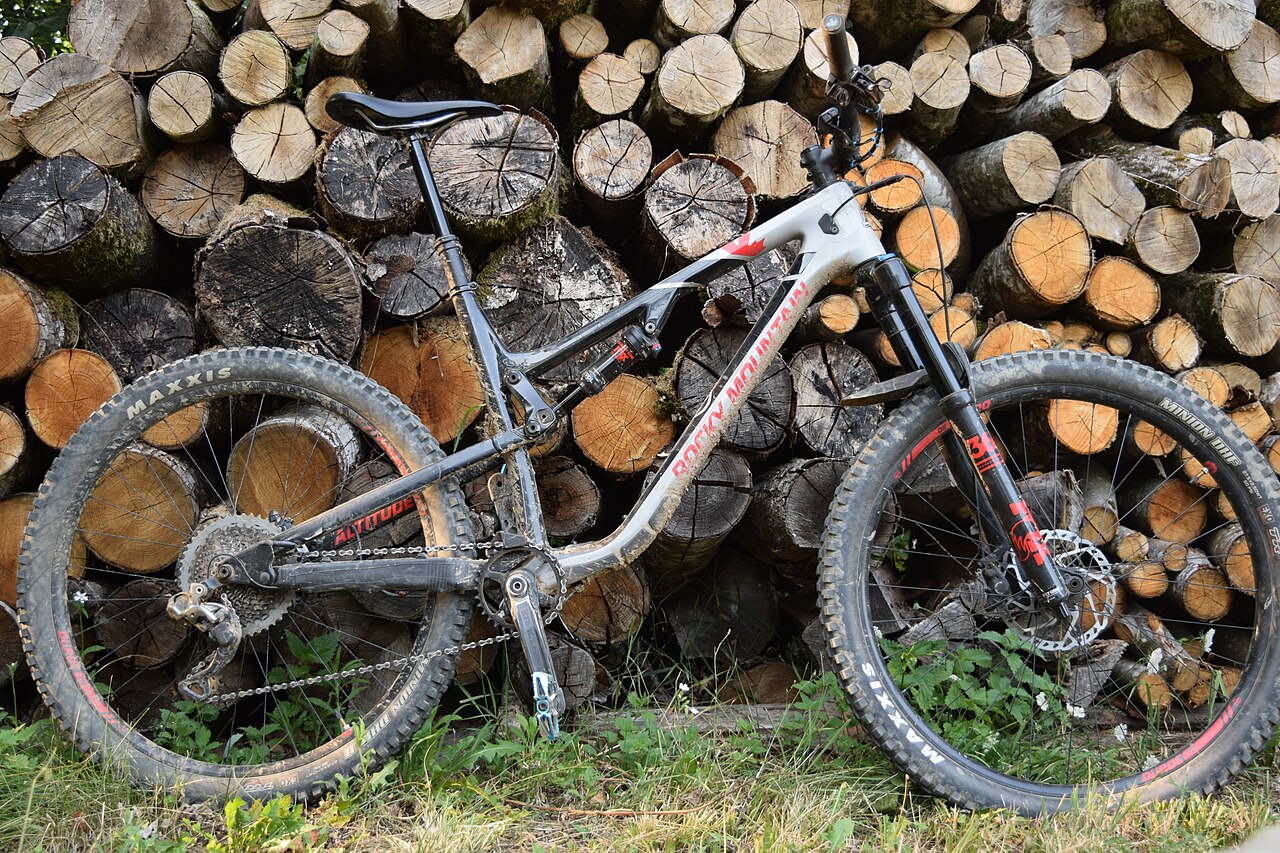
The 2018 archive (https://resources.bikes.com/en/bikes/altitude/2018) gives Carbon 50 a Race Face Aeffect Cinch 32-tooth steel chainring and a Shimano XT 11–46-tooth cassette. Divide chainring teeth by sprocket teeth to compare the nominal transmission ratios. The lowest endpoint is 32 ÷ 46, approximately 0.696; the highest is 32 ÷ 11, approximately 2.909.
For Carbon 70 SRAM, the same archive lists a SRAM Stylo 7k Eagle 34-tooth chainring and XG-1275 10–50-tooth cassette. Its calculated endpoints are 34 ÷ 50 = 0.680 and 34 ÷ 10 = 3.400. These are calculations from published tooth counts, rather than measured wheel development or an account of an author's riding experience.
Compare range without confusing it with compatibility
The two low endpoints are relatively close despite the different largest sprockets, because the chainrings differ too. Comparing only 46 and 50 teeth would omit that second part of the calculation. The high endpoints differ more noticeably: a smaller smallest sprocket and a larger chainring both affect the C70 SRAM figure.
Cassette span is a separate calculation. The C50's 46 ÷ 11 is about 4.182, or 418 percent when expressed as a largest-to-smallest ratio. The C70 SRAM's 50 ÷ 10 is 5, or 500 percent. Span does not describe the spacing between every neighbouring gear, and these endpoint counts do not supply that complete sequence.
The original drivetrain lists also differ beyond tooth numbers. Carbon 50 names Shimano SLX shifters, a Shimano XT rear derailleur and KMC X11-1 chain. Carbon 70 SRAM names GX Eagle shifters, an X01 Eagle rear derailleur and GX Eagle chain. Those named systems belong in a replacement enquiry; a ratio calculation does not approve mixing their components.
Record the presently fitted chainring, cassette and controls before ordering for a used bicycle. Ask a supplier to confirm the exact compatible combination, including interfaces not established by these calculations. No climbing guarantee follows from a lower ratio, and the archive alone does not specify how the owner bicycle's current wheel, tyres, condition or rider will affect a real ascent.
FAQ: Gearing questions
Which listed build has the lower calculated low endpoint?
C70 SRAM is slightly lower: 0.680 from 34/50, compared with about 0.696 from C50's 32/46.
Does 500 percent mean every gear step is equal?
No. It expresses the largest-to-smallest cassette endpoint ratio, not the spacing of individual sprockets.
Does the calculation approve a cassette swap?
No. It compares tooth ratios; exact drivetrain and wheel-interface compatibility remain separate requirements.
Use the documented-interface parts enquiry to record the rest of the bicycle. More historical model context appears in the Rocky Mountain topic.
Photograph credits and permissions
Photograph 1
Original title: Rocky Mountain Altitude C50 2018.jpg
Creator: ThienToons; creator URI: https://commons.wikimedia.org/wiki/user:ThienToons
Original source URI: https://commons.wikimedia.org/wiki/File:Rocky_Mountain_Altitude_C50_2018.jpg
License / permission: CC BY-SA 4.0
License / permission URI: https://creativecommons.org/licenses/by-sa/4.0/
Modification notice: Wikimedia-provided 1280×853 reduced-size version; no additional local changes.