


Peugeot Bike Restoration: Start by Preserving Paint and Decals
Peugeot bike restoration can begin with a smaller decision than repainting: what can you learn before changing the finish? Photograph the bicycle, record its lettering and separate dirt from features you want to preserve. A careful initial record keeps later cleaning or replacement choices from erasing the evidence used to identify the machine.
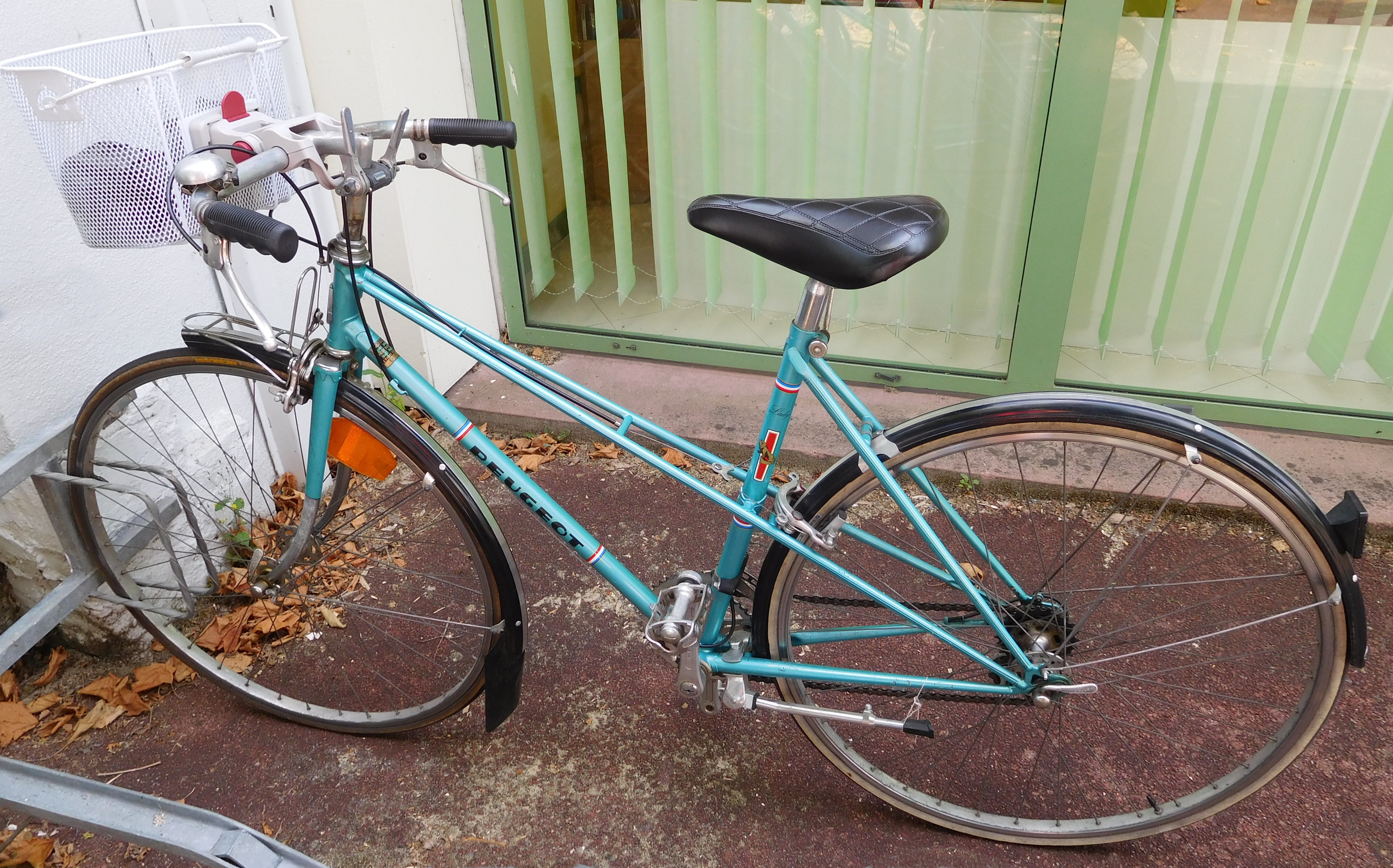
Begin Peugeot bike restoration with a finish record
The Peugeot Lady shown here was photographed in 2017. Its lettering, colored tubes and bright fittings make finish preservation a relevant question, but the picture does not authenticate a production year or prove that every surface remains original. Treat the individual bicycle’s condition as something to examine, not something a familiar style can guarantee.
Make readable photographs of decals, badges and areas where the appearance changes. Keep notes about which parts you intend to retain and which need a separate assessment. That record is particularly useful if an identification depends on lettering that might become less legible during a more ambitious project.
Read the manufacturer’s modest starting point
The paint-care section of Peugeot’s July 1974 manual (https://www.bikeboompeugeot.com/Owner%27s%20Manuals%20International/Peugeot%201974%20Owner%27s%20Manual/Peugeot%201974%20Owner%27s%20Manual%20Pg8.jpg) starts with a wet sponge and a little mild detergent for dust and dirt. It offers a specific period starting point rather than an instruction to remove the finish. The following page (https://www.bikeboompeugeot.com/Owner%27s%20Manuals%20International/Peugeot%201974%20Owner%27s%20Manual/Peugeot%201974%20Owner%27s%20Manual%20Pg9.jpg) warns against petrol or trichlorethylene on enamel-painted parts and describes soap and water for plastic parts.
Keep the cleaning decision narrower than the project
These passages do not establish the composition or stability of every aged decal, replacement paint or plastic component. If a surface is lifting, flaking or otherwise uncertain, seek appropriate conservation advice before proceeding. Stop when the next action would depend on an assumption about a finish that has not been identified.
This guide does not extend the manual into a chemical rust-removal recipe or a guarantee for polish, abrasive treatment or repainting. Decide separately whether your aim is a documented preserved appearance or a newly finished bicycle. Write that aim down before agreeing work so a cosmetic preference does not become a claim of factory originality.
Leave mechanical readiness on its own checklist
A cleaner frame can make markings easier to read; it does not certify brakes, wheels or controls. Arrange the relevant mechanical checks independently of the appearance work. The Peugeot introduction gives the historical context, while the Peugeot collection separates identification, fit and component questions from finish care.
FAQ
Does the period manual guarantee that aged decals tolerate washing?
No. The actual finish and decal condition remain unverified and may require specialist advice.
Does restoration have to mean repainting?
No. Documentation and modest preservation can be a separate, deliberately limited project.
Does a newly cleaned bicycle become ready to ride?
No. Cosmetic work and mechanical inspection answer different ownership questions.
Photograph credits and permissions
Photograph 1
Original title: Peugeot Lady bicycle.jpg
Creator: Cjp24; creator URI: https://commons.wikimedia.org/wiki/User:Cjp24
Original source URI: https://commons.wikimedia.org/wiki/File:Peugeot_Lady_bicycle.jpg
License / permission: CC BY-SA 4.0
License / permission URI: https://creativecommons.org/licenses/by-sa/4.0/
Modification notice: The original image file is unchanged by this publisher. Earlier image edits are not specified; source metadata lists GIMP 2.8.2.
Source disclaimer: No warranties are given. No endorsement is implied. Other rights may apply.