


Panasonic Titanium Bike: FRTD05 and FRTD11 Frame Choices
A Panasonic titanium bike order needs a model choice before a finish choice. The current FRTD05 offers two stiffness versions and shaped, variably thick tubing; FRTD11 uses uniform-wall tubes and has no equivalent stiffness selector in its specification. Both are road frames, but their construction is not identical.
Compare Panasonic titanium bike tubing by model
The FRTD05 model record (https://cycle.panasonic.com/products/pos/bikes/frtd05/) identifies Version L and Version H. Its down-tube entries give different diameters for those versions, while the manufacturer describes its X-butted processing. Choose between the documented constructions through an assessment of the rider and intended build, rather than treating the larger tube as an automatic improvement.
FRTD11 has its own material description
The FRTD11 specification (https://cycle.panasonic.com/products/pos/bikes/frtd11/) describes uniform-wall titanium tubes and marks the stiffness-choice field with a dash. A shared expandable technology panel contains X-butted wording, but the model's introduction and tube table say otherwise. This comparison follows those specific entries and leaves the shared panel separate.
Keep the reference weights on the same basis
At 550 mm, FRTD05 lists reference frame masses of 1,380 g for L and 1,390 g for H; FRTD11 lists 1,590 g. Paint can change these reference values. They describe frames, not the weight of a bicycle ready to ride, and they do not establish strength or comfort for an individual rider.
The photographed complete examples use different equipment: an ULTEGRA-equipped FRTD05 and a 105-equipped FRTD11. Their total weights therefore cannot isolate the effect of tubing. If comparing finished proposals, keep size, wheels, drivetrain and other equipment visible instead of assigning the whole difference to titanium construction.
Specify the order beyond the metal
Both records list sizes from 460 to 610 mm in 10 mm steps, a carbon fork option, disc-brake interfaces and 700 × 32C tyre accommodation. Mechanical and electronic-shifting frame selections are separate choices. Ask the builder to identify the intended routing version and supplied fork before parts are ordered.
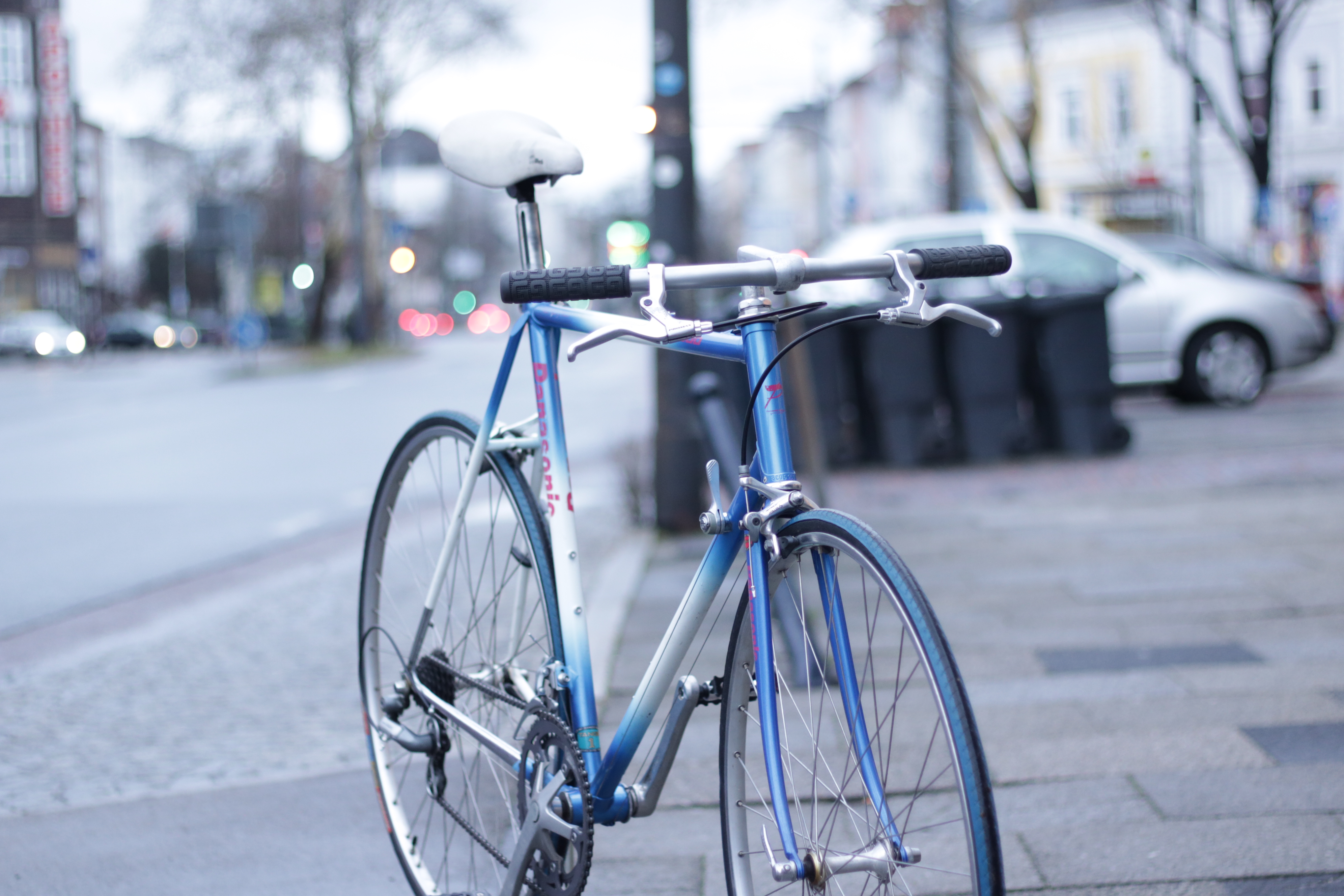
The historical rim-brake bicycle pictured here illustrates a different Panasonic build. It cannot identify either current titanium model or establish its material. Use the Panasonic range introduction for the wider distinction between ordered sporting frames and electric bicycles; the Panasonic topic keeps those references together.
FAQ
Does FRTD11 offer the same L and H selector?
No. Its current specification marks that choice with a dash.
Are the quoted frame masses complete-bike weights?
No. They are size-specific frame reference values, with paint qualifications.
Does the historical photograph show either titanium model?
No. Its exact model and frame material are unverified.
Photograph credits and permissions
Photograph 1
Original title: Panasonic Roadbike1.jpg
Creator: Rapsinol; source-provided creator URI: https://commons.wikimedia.org/w/index.php?title=User:Rapsinol&action=edit&redlink=1
Original source URI: https://commons.wikimedia.org/wiki/File:Panasonic_Roadbike1.jpg
License / permission: CC BY-SA 4.0 International
License / permission URI: https://creativecommons.org/licenses/by-sa/4.0/
Modification notice: Original 3984 × 2656 JPEG retained unchanged. No crop, resize, conversion, retouching, re-encoding or metadata removal by this publisher. Prior source edits are not assessed. Photograph remains under CC BY-SA 4.0.
Source disclaimer: No endorsement by the photographer is implied. Exact current model and configuration unverified; historical brand context only.