


Nukeproof Mega Carbon Suspension Sag: Use the Manual’s Conditions
Nukeproof Mega Carbon suspension sag starts with the conditions attached to the number. The 2023 MK4 manual recommends 30–35%, seated with riding kit on. It also calls for a level surface, support while the rider sits on the bicycle and sag adjustment before rebound and compression. Copying only the percentage loses the circumstances that make a comparison useful.
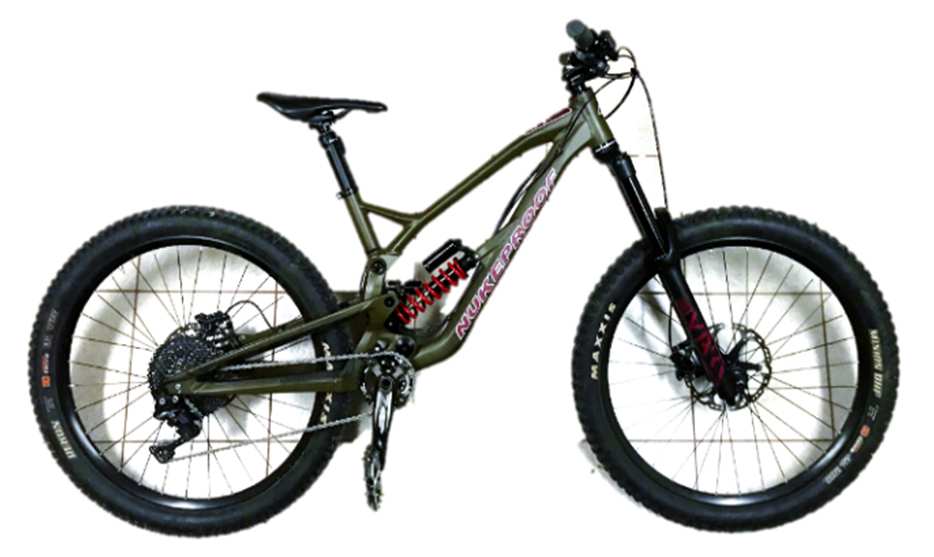
Nukeproof Mega Carbon suspension sag: Prepare the bicycle and rider consistently
Printed page 25 asks owners to read the full instructions for the actual shock and fork before setup. It specifically reminds them to leave the rear shock’s lockout off when setting it. Follow the relevant component instructions alongside the bicycle guidance. Do not apply one rear-suspension percentage indiscriminately to the fork or infer an air-pressure value from a photograph.
Page 26 shows the rider supported on a level surface and recommends setting sag before adjusting rebound and compression. When comparing observations, use the stated riding-kit condition rather than switching between a lightly dressed measurement and a fully equipped one. If the process or measurement is unfamiliar, ask an authorised dealer to demonstrate it on the actual bicycle and suspension unit.
Separate sag from damping and tune
The manual describes rebound and compression as dependent on terrain, riding style and preference. Its generic illustration suggests beginning around the middle of the adjusters and making incremental changes. That is not a universal click count: different suspension models can have different controls and instructions. Use the exact unit’s setup information, not another owner’s count from an unidentified shock.
Keep air-spring pressure, sag observation and damping positions separately identified when discussing a setup problem. A change in one should not be reported as if it directly measured the others. The manual’s kinematic description explains its design intentions, but it does not provide a verified pressure chart for every rider, replacement shock or special-edition configuration.
Treat maintenance as a separate requirement
Nukeproof calls suspension maintenance specialist work and recommends official service centres and intervals from the component manufacturer’s guide. A setting that felt satisfactory on one ride does not establish the unit’s condition or cancel its maintenance needs. If the bicycle behaves unexpectedly or the suspension identity is uncertain, resolve that issue before using another rider’s setup as a substitute for assessment.
The Nukeproof topic groups the brand coverage, while the family overview supplies background. For a useful setup discussion, bring the actual shock and fork identities, the conditions used and the question you want answered. This keeps the 30–35% recommendation within its documented context rather than turning it into an all-model pressure or service prescription.
FAQ
What conditions accompany the 30–35% recommendation?
The manual says seated with riding kit on; its next page calls for a level surface and support.
Should the rear lockout remain on for the measurement?
No. The manual specifically says the rear shock lockout should be off.
Does this manual supply one pressure or click count for every rider?
No. It directs owners to model-specific shock and fork information and individual setup.
Sources
The MK4 manual’s 30–35% sag recommendation comes with seated riding-kit conditions, a setup order and component-specific guidance that should stay attached. Printed pages 25, 26 of the 2023 Mega MK4 Carbon manual (https://cdn.shopify.com/s/files/1/0438/3296/7322/files/MY23_-_NP_-_Editorial_-_Mega_Carbon_Bike_Manual.pdf?v=1687182192), retrieved 28 October 2026, support this model-specific explanation.
Photograph credits and permissions
Photograph 1
Original title: Figure 25(b), complete bike assembly, in Analysis of Symmetrical/Asymmetrical Loading Influence of the Full-Suspension Downhill Bicycle’s Frame on the Crack Failure Formation at a Critical Point during Different Driving Scenarios and Design Improvement
Creator: Vladimír Bulej, Ivan Kuric, Milan Sága, Milan Vaško, Zuzana Ságová, Michal Bartoš and Stanislaw Legutko; individual photographer not specified
Copyright notice: © 2022 by the authors. Licensee MDPI, Basel, Switzerland.
Original source URI: https://mdpi-res.com/d_attachment/symmetry/symmetry-14-00255/article_deploy/symmetry-14-00255.pdf
License / permission: CC BY 4.0 International
License / permission URI: https://creativecommons.org/licenses/by/4.0/
Modification notice: Selected photo panel(b): JPEG object687 extracted without re-encoding from the source PDF. The separately downloaded source PNG contains panels(a)+(b); it is not the delivered JPEG. No visual edits applied.