


Norco Range 2018 Sag: Measure the Shock Before Changing Pressure
Norco Range 2018 sag is a measurement task, not a pressure copied from another rider. The historical frame instructions describe how to measure movement at the shock while wearing riding equipment. Following that distinction makes the result useful and avoids confusing a small shaft measurement with the much larger rear-wheel travel figure.
Use the documented Norco Range 2018 sag baseline
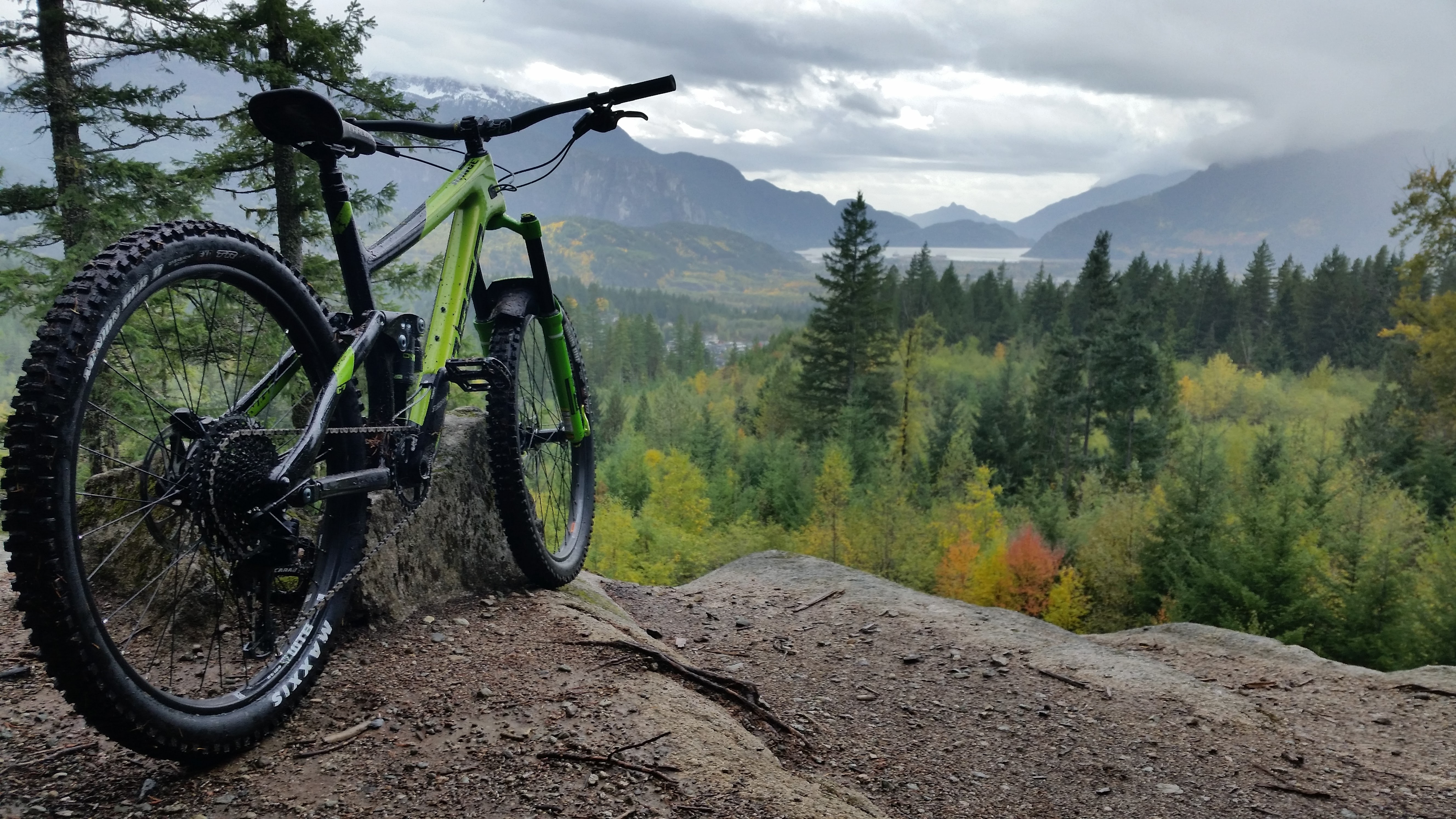
The 2018 assembly and setup document (https://www.norco.com/downloads/bike-tech-sheets/range-carbon-frame-assembly.pdf) recommends 27–33 percent rear suspension sag, depending on riding style and terrain. Its practical measurement for Range 7 and 9 is 16–20 mm between the shock's lip seal and o-ring after the described procedure. The detailed carbon specification table (https://www.norco.com/downloads/bike-spec-sheets/range-carbon-small-parts.pdf) gives 30 percent as its recommended baseline. Present these as the manufacturer's historical starting guidance, not a universal best setting.
The table lists a 60 mm shock stroke. Thirty percent of that figure is 18 mm by arithmetic, which sits within the document's measured range. This calculation concerns shock stroke. It is not 30 percent of the 150 or 160 mm rear-wheel travel, and the two measurements should not be substituted for one another.
Make repeat measurements comparable
Norco specifies full riding attire, including a helmet, hydration pack and body armour. Its sequence places the bike on a flat surface, puts the saddle halfway between pedalling and descending height, and opens the shock compression setting. The suspension is cycled before the o-ring is moved to the lip seal, and the rider then settles onto the bicycle without bouncing.
The document describes lifting the feet and carefully leaving the bicycle without disturbing the suspension before measuring the o-ring's displacement. If you cannot complete that sequence securely, obtain assistance rather than improvising a balancing exercise. The useful result is a controlled, repeatable reading, not a hurried number obtained while handling the bike unpredictably.
For the air-shock procedure described, a reading below 16 mm calls for less pressure and one above 20 mm calls for more. Norco says to disconnect the pump and cycle the suspension again when rechecking, so the positive and negative air chambers can equalize. It does not supply a rider-weight-to-pressure conversion or one pressure that applies to all replacement dampers.
Record the fitted shock, riding load, initial reading and result after adjustment. If the damper is not the documented type, first obtain its manufacturer's instructions and confirm compatibility. Rebound tuning belongs to the shock manufacturer's guidance or a Norco dealer; a sag measurement alone does not specify every damper control.
FAQ
What is 30 percent of the listed 60 mm stroke?
It is 18 mm by calculation, within the historical 16–20 mm measured guidance.
Should the shock pump remain attached for the recheck?
No. Norco says to disconnect it and cycle the suspension before measuring again.
Does the document give one pressure for my body weight?
No. It describes a measured adjustment process rather than a fixed weight-to-pressure formula.
Check the shock identification requirements if the installed unit is uncertain. Establishing that identity makes the historical setup information under Norco bicycles more useful than copying another rider's settings.
Photograph credits and permissions
Photograph 1
Original title: Norco Range.jpg
Creator: Walleater
Original source URI: https://commons.wikimedia.org/wiki/File:Norco_Range.jpg
License / permission: CC BY-SA 4.0
License / permission URI: https://creativecommons.org/licenses/by-sa/4.0/
Modification notice: Original JPEG bytes unchanged.