


Norco Range 2018 Cable Routing: Read the GIZMO Diagrams Carefully
Norco Range 2018 cable routing is best approached with the frame's GIZMO diagrams open beside the actual bicycle. The documents distinguish hose and cable functions, insert sizes and alternative control arrangements. They also change some guide labels between revisions, so copying one short description into a universal installation instruction would lose important context.
Identify the Norco Range 2018 cable routing functions
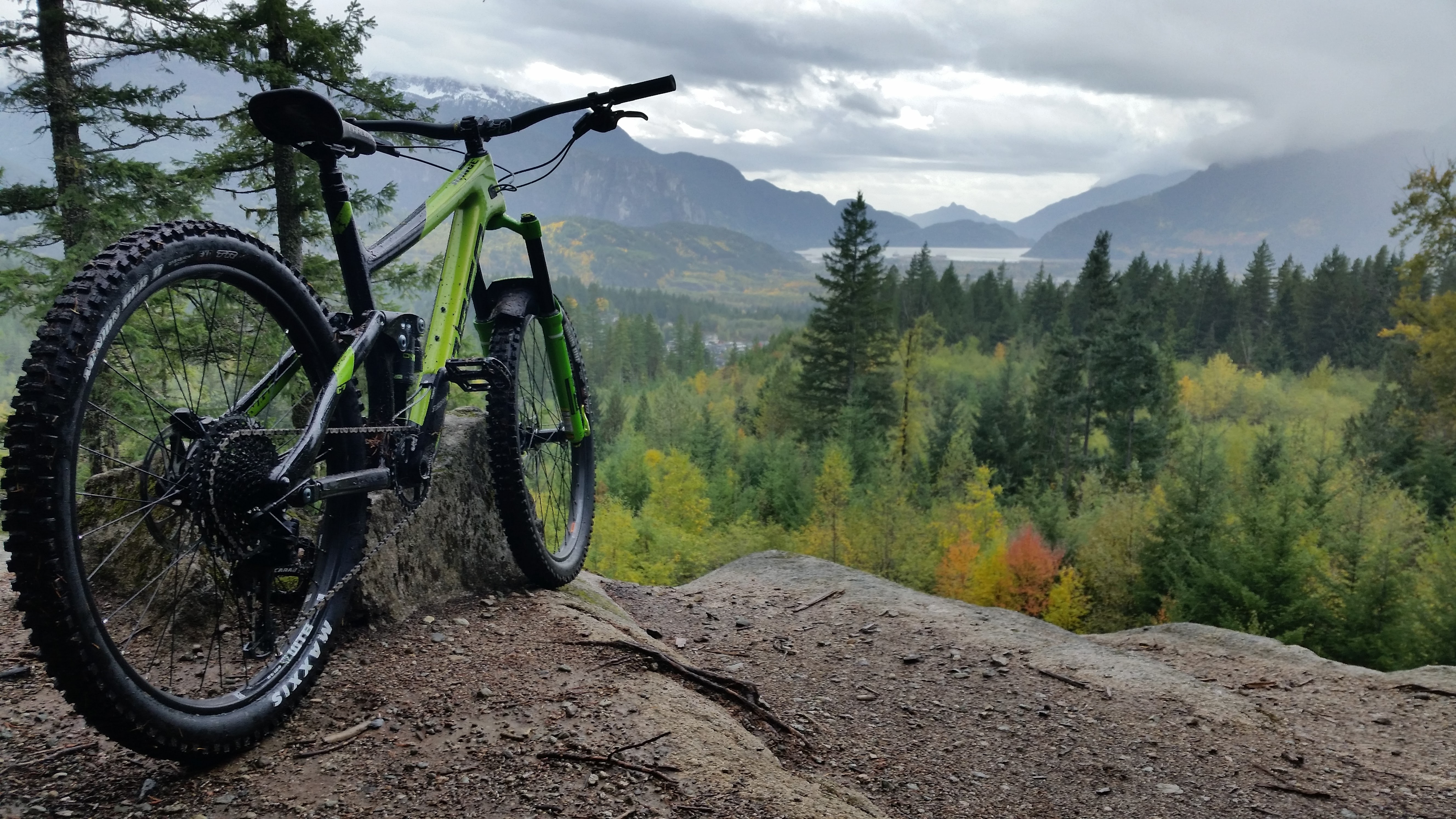
The 2018–2019 assembly document (https://www.norco.com/cmsb/uploads/bikes/bikes/range-carbon-tech-support_003.pdf) uses FB for front brake hose, RB for rear brake hose, RD for rear derailleur cable and SP for seatpost hose or cable. Printed page 6 draws two configurations, A and B, with the functions identified separately. Establish which control arrangement is present before treating a coloured line in the diagram as the route for your own hose.
The fitting page distinguishes 5 mm and 4 mm lines and shows inserts rather than assuming every port should remain open. The detailed carbon parts table (https://www.norco.com/downloads/bike-spec-sheets/range-carbon-small-parts.pdf) names double and triple internal ports, a 4 mm plug and a blank plug, with their respective part numbers. A useful parts request identifies the actual opening and the lines it needs to accommodate.
Retain the warning and the revision difference
Both the 2018 document (https://www.norco.com/downloads/bike-tech-sheets/range-carbon-frame-assembly.pdf) and the later revision warn that the head-tube bolt must be no longer than 12 mm because a longer bolt can damage the fork steerer. This is a maximum at that specific location, not a general bolt size for the bicycle. Do not replace a missing screw with a longer convenient one based only on its diameter.
The older fitting page labels the head-tube guide as triple and the down-tube guide as double. The 2018–2019 page reverses those labels. That discrepancy is not resolved by choosing the newer sentence automatically: inspect the actual port and refer the conflicting pages to a retailer before ordering or installing a guide.
The routing diagrams also distinguish which line sits above another at the head-tube entry and show retention points farther along the frame. Preserve that positional information with photographs of the current arrangement. An insert that appears to fit an opening does not, by itself, demonstrate that the complete routing is correct or that the moving lines are adequately accommodated.
Write down the control functions, line sizes, existing guides and missing inserts before requesting parts. Keep hydraulic brake work within the component manufacturer's procedures and the technician's competence; this frame-routing record is not a brake-bleeding guide. No drilling, enlarged ports or improvised frame modifications follow from the historical diagrams.
FAQ
What does SP mean in the routing key?
It identifies the seatpost hose or cable, rather than a brake or rear-derailleur line.
What head-tube bolt-length limit is stated?
The warning gives 12 mm maximum at the head tube, to avoid damage to the fork steerer.
Do the two fitting pages use identical guide labels?
No. Their head-tube and down-tube double/triple labels are reversed, so the actual ports require confirmation.
For a replacement post, the dropper dimensions guide addresses the separate fit questions. The Norco topic provides context while your service enquiry stays tied to the actual frame openings.
Photograph credits and permissions
Photograph 1
Original title: Norco Range.jpg
Creator: Walleater
Original source URI: https://commons.wikimedia.org/wiki/File:Norco_Range.jpg
License / permission: CC BY-SA 4.0
License / permission URI: https://creativecommons.org/licenses/by-sa/4.0/
Modification notice: Original JPEG bytes unchanged.