


Merida Silex 400 tyre clearance: separate 700c, 650B and frame material
Merida Silex 400 tyre clearance is not answered by copying the largest number on a Silex page. The historical range includes different wheel diameters and frame materials. Read all those qualifications together before ordering a tyre, particularly when a search result quotes a carbon-bike allowance beside an aluminium model's name.
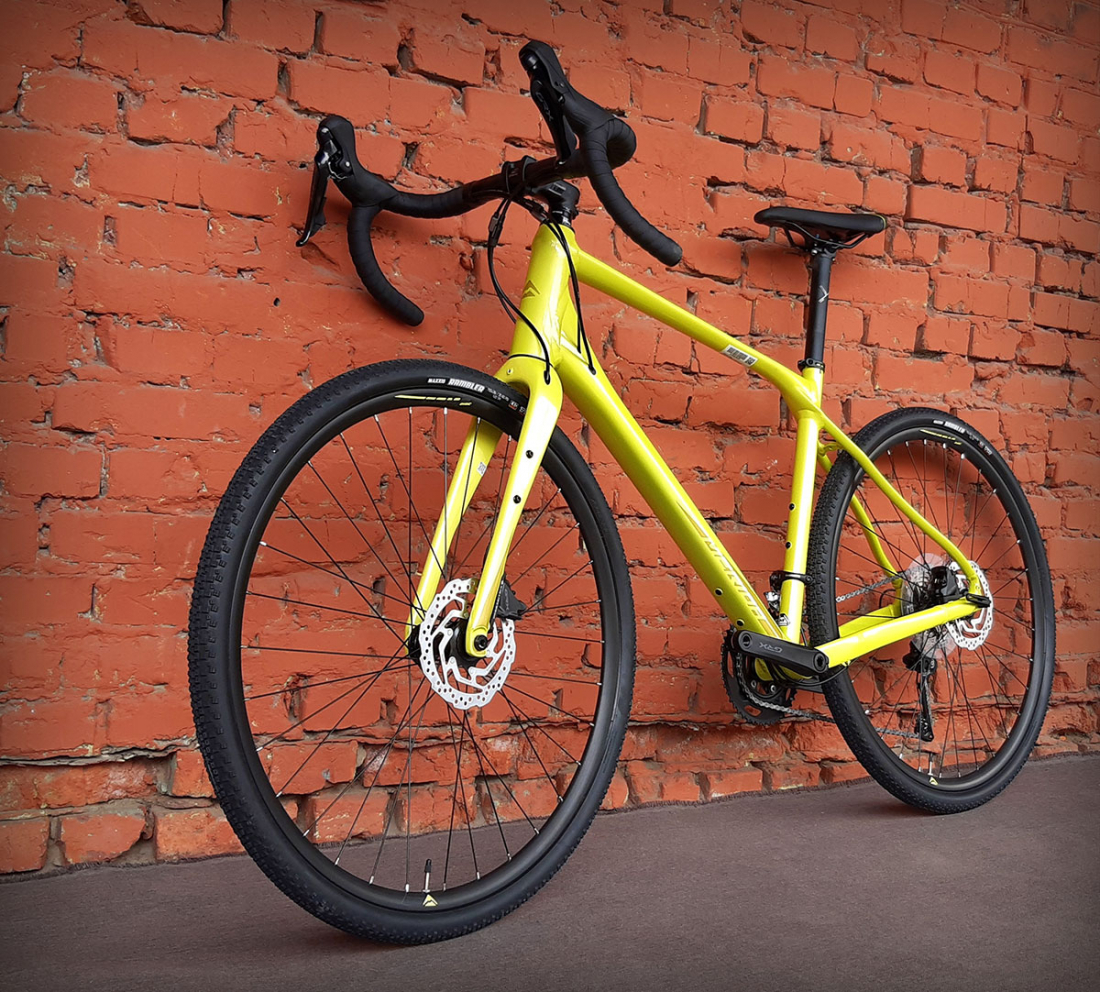
Read Merida Silex 400 tyre clearance with the material qualifier
The selected archive identifies the Silex 400 frame as aluminium SILEX LITE and its original tyres as Maxxis Rambler 700x38C. The accompanying historical range explanation gives a 42 mm maximum for road-profile tyres on 700c wheels. Its 650B discussion distinguishes up to 50 mm on carbon bikes from up to 42 mm on aluminium bikes. The carbon figure is not an aluminium-frame permission.
Keep the words road profile in your notes. A nominal width alone does not describe every tread or the actual envelope of a mounted tyre. The original 38C tyre entry records a supplied component; it is not the same statement as a maximum. Likewise, the wider 650B tyre mentioned for another range version should not override the aluminium-specific qualification.
Treat a wheel change as an assembly question
The frame specification mentions 700C or 650B, and the range text discusses the two wheel options. That establishes the context of the historical design. It does not identify the correct hub, rotor, axle, rim, tyre and other requirements for an arbitrary replacement wheel. A wheel purchase needs more information than its diameter and an appealing tyre width.
Ask the supplier to verify the exact frame and fork, proposed wheel assembly and intended tyre together. Retain the applicable documentation and any additional restrictions for accessories. If mudguards or other equipment reduce available space, the bare-frame tyre statement cannot settle the resulting clearance. Do not use a specification from a later Silex as a convenient substitute.
Compare the actual tyre before committing
The accompanying October 2021 photograph identifies a historical Silex 400, not a clearance test or a measurement of the blue archived build. It cannot show the complete working gap around a proposed new tyre. Ask for the current rim and tyre identifiers and record any changes from the original equipment before discussing replacement options.
A useful enquiry names the frame edition, wheel diameter, rim identity, proposed tyre and fitted accessories. Request confirmation of the complete permitted arrangement, including the necessary working clearances, rather than asking only whether a certain number fits. If the answer depends on an assumption about the frame's material or generation, resolve that assumption first. This reference does not approve a wheel conversion or supply a universal clearance gap.
FAQ
Can I apply the 50 mm carbon figure to this aluminium model?
No. The selected range text gives a separate aluminium qualification; retain the frame material and wheel-diameter conditions.
Does the original 700x38C tyre establish the maximum?
No. Original equipment and the manufacturer's qualified maximum are different entries.
Can the photograph verify clearance for a new tyre?
No. Assess the actual frame, fork, wheel, tyre and accessories with the appropriate supplier or workshop.
Continue with the Silex wheel and axle identification guide or browse the Merida topic.
Sources: Merida archived Silex 400 specification.