


Merida Big Nine 20-D geometry: use the SPEED N table rather than range headlines
Merida Big Nine 20-D geometry can be confused with numbers from higher-level Big Nine frames displayed on the same manufacturer page. The model-specific table is the useful starting point. Identify the SPEED N frame entry, retain its size headings and compare like dimensions instead of treating every range highlight as a specification for this bicycle.
Locate the Merida Big Nine 20-D geometry table
The selected archive identifies the frame as BIG.NINE SPEED N and gives a five-column geometry table from S through XXL. Its M column lists 398 mm reach, 628 mm stack and 739 mm standover. The L column lists 414 mm reach, 642 mm stack and 775 mm standover. Copy the model and column heading along with these figures.
From M to L, the listed reach increases by 16 mm, stack by 14 mm and standover by 36 mm. Those are calculations from the table, not measurements of a particular used bicycle. The same two columns have top-tube lengths of 590 and 610 mm. Keep reach and top-tube length separate; a seller's single tube measurement may not answer the chart question you intended.
Keep range descriptions outside the model column
Elsewhere on the page, a range highlight discusses carbon and LITE aluminium models with a different medium reach figure. Its stated frame-level scope matters. It is not a reason to overwrite the SPEED N table with the larger number. A page can contain both model data and broader range descriptions without every paragraph applying to every listed frame.
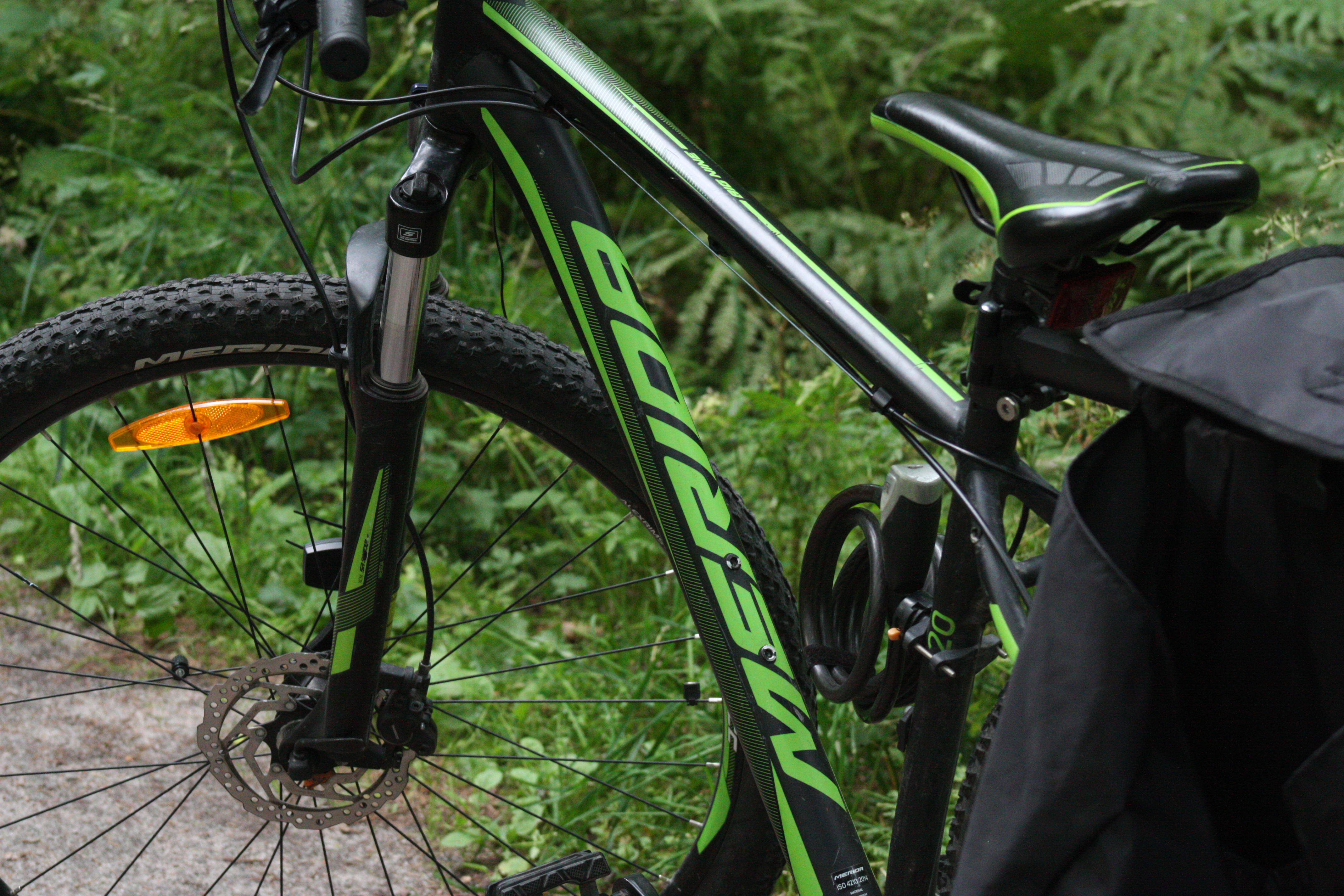
This distinction also prevents a size name from migrating between generations. Confirm the actual bicycle's frame and size markings before using the selected chart. The accompanying July 2020 photograph shows only part of a historical black-and-green Big Nine 20-D; it cannot verify the frame size or establish that it is the archive's blue edition. Its visible proportions are not a measuring scale.
Compare the complete bicycle for your fit question
The archive lists stem lengths by size, including 80 mm for M and 90 mm for L, while the stem diameter entry is 31.8 mm. A used cockpit may have been changed. Record the actual stem and handlebar beside the frame figures so a fit discussion does not mistake a contact-point change for a different frame measurement.
Bring measurements from a familiar bicycle and identify the specific concern: reach to the controls, handlebar height or standover space. The chart does not supply a guaranteed rider-height fit rule. If the candidate is uncertain, arrange a complete-bicycle assessment and a suitable test ride. Do not plan a fork or wheel conversion merely to make one chart dimension look closer to another bicycle.
FAQ
Should I use a carbon-frame range reach for SPEED N?
No. Keep the frame-level scope and use the selected model's actual size column.
How much listed reach separates M and L here?
The selected table gives 398 and 414 mm respectively, a difference of 16 mm.
Does the photograph establish the frame size?
No. Confirm the actual size marking and complete bicycle instead of estimating from a partial historical view.
Continue with the separate Silex geometry-table example or browse the Merida topic.