


Marin Four Corners geometry: compare the cockpit as well as the frame
Marin Four Corners geometry can look identical between two specification tables while the complete bicycles present different contact points. That matters when a rider already likes one build and is considering the other. Compare the current CUES Four Corners 1 reference with the separately listed Four Corners 2 as complete configurations, rather than assuming one frame label settles the fit.
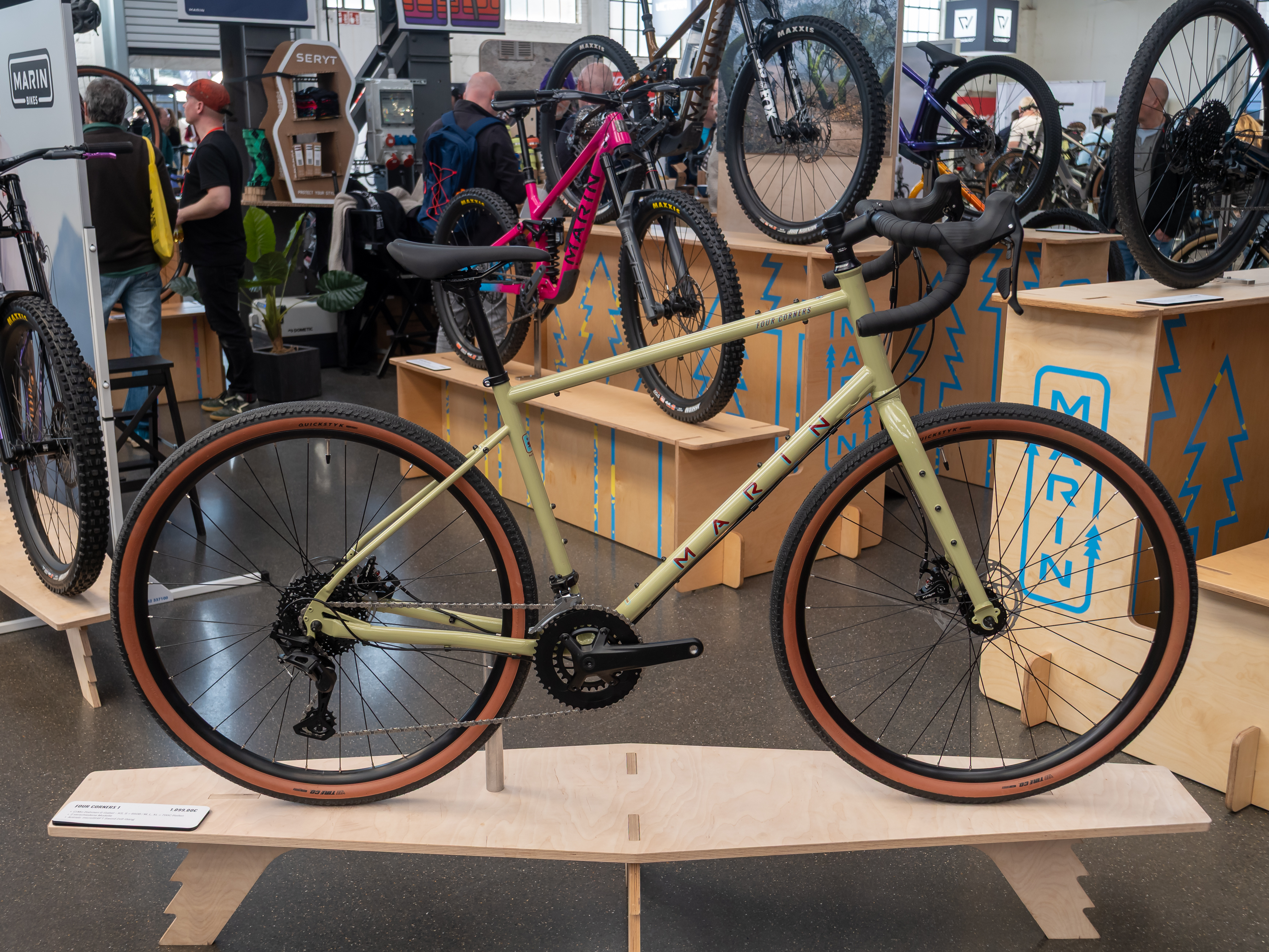
Separate Marin Four Corners geometry from its equipment
The current tables give the same stack and reach for each corresponding frame size. For M, both list 618 millimetres of stack and 403.3 millimetres of reach. Those are useful frame references, but they do not include every difference between the saddle, pedals, handlebar and controls on the assembled bicycle.
Keep the exact two references with the comparison. The Four Corners 1 page describes the current CUES build, while the Four Corners 2 content is labelled 2025 even though its address contains 2024. These particular tables should not be silently substituted for an older Four Corners generation simply because the size letters are familiar.
Read the bar and crank rows independently
Four Corners 1 lists handlebar widths of 400, 400, 420, 420 and 440 millimetres from XS to XL. Four Corners 2 lists 440, 440, 460, 460 and 480. Each corresponding nominal width is therefore forty millimetres different, while both tables list seventy-millimetre stems. That is a concrete equipment difference for a showroom comparison.
The medium crank entry differs too: 175 millimetres on the referenced Four Corners 1, compared with 170 on Four Corners 2. Do not infer a rider's ideal crank length from either factory list. Instead, identify what is fitted to the existing bicycle and describe which aspect of the current position the rider wishes to retain or change.
Compare an actual riding position before buying parts
Bring the existing bicycle's confirmed size and useful contact-point measurements to a fitting discussion. Ask to compare the intended complete build, including its brake and shift controls, rather than treating a frame-coordinate match as a promise about hand position. A stock stem length and bar-width label do not provide a complete measurement of the rider's reach to the controls.
If a change is proposed, have the compatible components and adjustment requirements confirmed before ordering. Keep the result separate from the frame size decision: replacing a bar cannot be assumed to correct every fit issue. A useful comparison finishes with identified equipment and an assessed position, not a general recommendation to choose the same letter in every year or model.
Frame and contact-point FAQ
Do equal stack and reach prove equal complete fit?
No. The bars, controls, saddle arrangement and crank selection still form part of the assembled riding position.
Is the listed medium crank the same on both builds?
No. These references give 175 millimetres for Four Corners 1 and 170 for Four Corners 2.
Does the forty-millimetre nominal bar difference prescribe a replacement?
No. It identifies a stock comparison point; actual fit, measurement convention and component compatibility still need assessment.
Compare the frame coordinates and the equipment the rider will actually use. To compare the drivetrain as well, read complete gearing comparison in the Marin collection.
- Primary reference: Marin current Four Corners 1 CUES build and geometry.
- Primary reference: Marin Four Corners 2 build and geometry; content labelled 2025.