


Intense Primer Drivetrain Compatibility: UDH, Chainline and 2026 Limits
Intense Primer drivetrain compatibility includes UDH and T-Type support on the 2026 frame, but those two labels do not describe an entire build. The same specification gives different chainlines for the named drivetrain families and a 34-tooth maximum chainring. Reading these entries together prevents a broad compatibility label from becoming an unsupported promise about every crank or transmission.
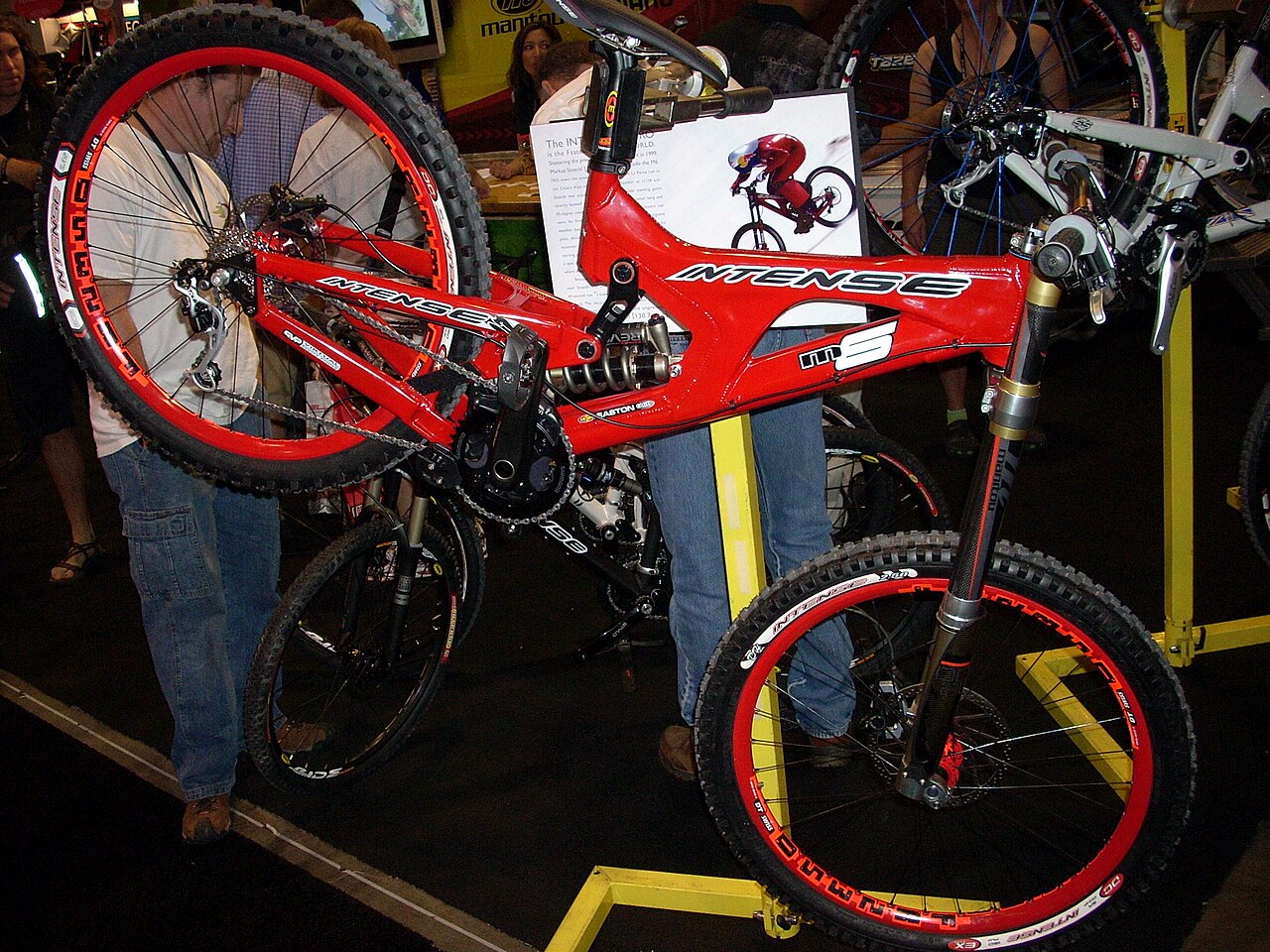
Intense Primer drivetrain compatibility by system
The frame table lists a 52 mm chainline for Shimano 12-speed and SRAM Eagle 12-speed, and a 55 mm chainline for SRAM T-Type 12-speed. Preserve the named system beside its number. The two SRAM entries are distinct; combining them into a single universal chainline would lose information that Intense deliberately separates.
The maximum chainring is 34T. This is a frame constraint, rather than a recommendation that every rider should choose that gearing. A desired gear range still needs to be assessed with the actual drivetrain and riding needs. Do not turn the maximum into an argument for fitting a larger ring because a similar-looking frame appears to have space.
Match the interfaces beyond the hanger
Other relevant entries are a BSA 73 mm bottom-bracket shell and a 12×148 mm Boost rear hub interface. These identify frame interfaces; they do not select the correct bottom bracket for every crank spindle or the correct freehub for every cassette. A complete parts proposal must identify those components instead of stopping at the word Boost.
The parts section lists a Universal Derailleur Hanger kit, IT150141, with component 130897. That is useful for describing the replacement hanger associated with this manual. UDH compatibility and the separate T-Type-compatible entry are both present, but replacing a hanger and changing a complete drivetrain are different jobs with different component requirements.
Build a coherent parts list
Start a drivetrain enquiry with the confirmed 2026 frame, then name the proposed crank, chainring, cassette and transmission. Include the wheel’s actual freehub identity. Ask the supplier to check the system-specific chainline and frame limits alongside the component manufacturer’s requirements. This produces an assessable proposal rather than a collection of parts selected by matching one label.
For a used bike, establish what is installed now before ordering a like-for-like replacement. A previous owner may have changed components, and a model-family name does not prove their identity. The manual’s torque table also does not replace installation instructions for components it does not cover. Keep the frame specifications and exact component instructions together during the work.
The Intense topic directory and brand introduction explain the range beyond this trail frame. Hanger and chainline specifications should stay with the exact generation under consideration.
FAQ
Which chainline is listed for SRAM T-Type?
The 2026 frame table lists a 55 mm chainline for SRAM T-Type 12-speed.
What maximum chainring size does the frame specify?
It specifies a maximum chainring of 34 teeth.
Does UDH support identify the freehub needed for any cassette?
No. The cassette and actual wheel freehub still require their own compatibility check.
Sources
Model-specific reference: printed pages 6, 16 of the 2026 Primer frame manual (https://cdn.shopify.com/s/files/1/2426/4557/files/2026_Primer_Frame_Manual.pdf?v=1775683549), retrieved 28 October 2026.
Photograph credits and permissions
Photograph 1
Original title: Intense M6.JPG
Creator: Keanu @ no:wp (author named on the source; uploaded to Wikimedia Commons by Keanu4)
Copyright notice: Copyright 2006
Original source URI: https://commons.wikimedia.org/wiki/File:Intense_M6.JPG
License / permission: CC BY-SA 3.0
License / permission URI: https://creativecommons.org/licenses/by-sa/3.0/
Modification notice: Wikimedia Commons-provided 1280×960 rendition of the 2560×1920 original; no further crop, retouching or re-encoding by this publisher. Photograph remains under CC BY-SA 3.0.