


Fuji Norcom Straight Saddle Travel: Keep the 70 and 50 mm Claims Separate
A fit plan can fail if it relies on adjustment that has not been established. Fuji Norcom Straight saddle travel has a documentation issue in the 2021 Japanese catalogue: its overview mentions 70 mm of fore-and-aft adjustment, while the numbered seatpost detail says 50 mm. Keep that difference visible before choosing a used frameset around either figure.
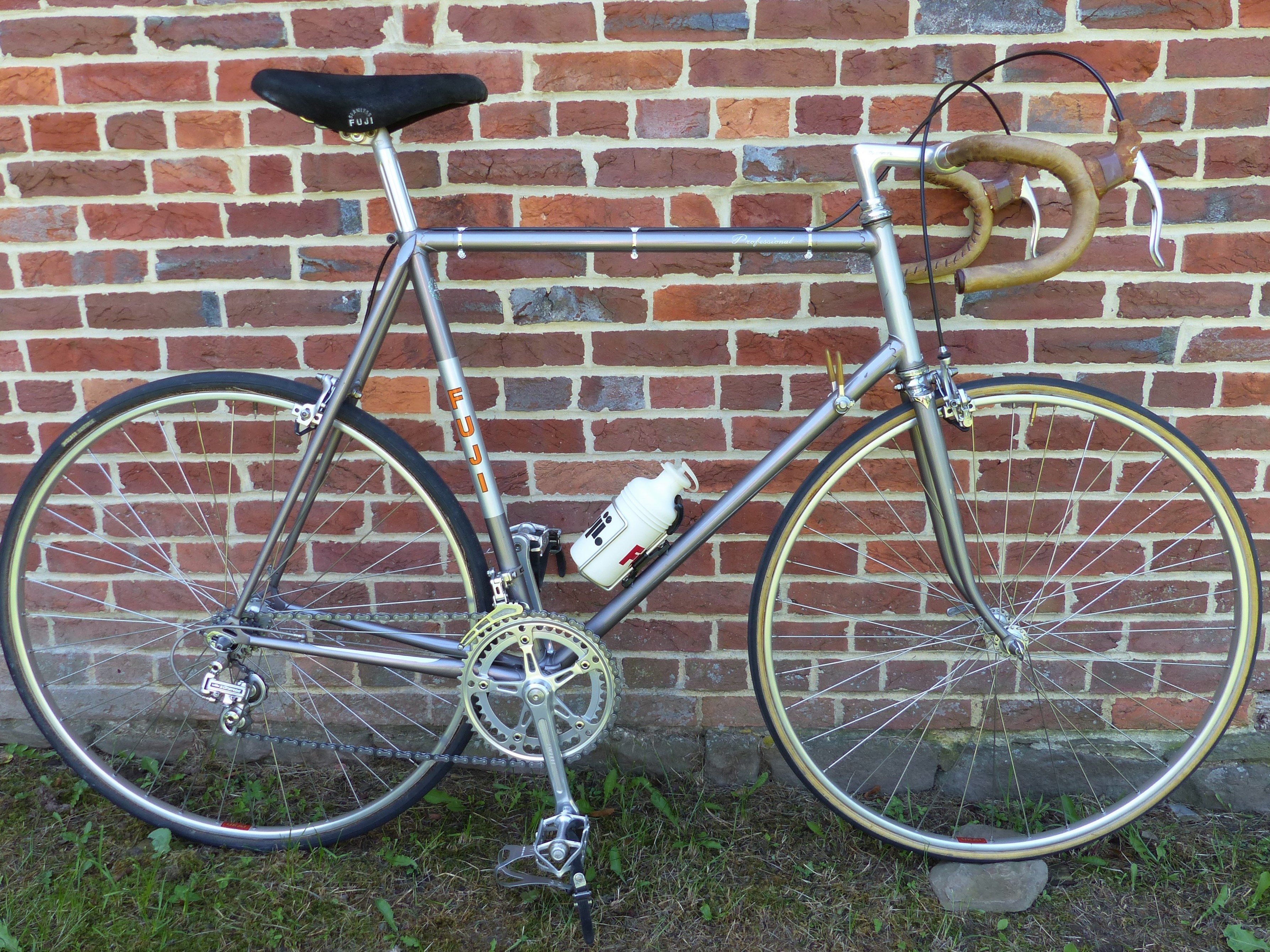
Fuji Norcom Straight saddle travel in the two descriptions
The discrepancy appears within the same Norcom spread, printed pages 16–17. The introduction describes a seatpost with up to 70 mm fore-and-aft adjustment. Detail 03, beside the seatpost photograph, describes 50 mm of saddle fore-and-aft adjustment. The text does not clearly explain how those two figures relate.
Do not silently label one as the corrected value or invent separate measurement endpoints to make both agree. The available catalogue evidence does not establish that explanation. Retain both passages when asking Fuji or a qualified fitter to clarify the actual post and complete saddle assembly.
State the required position instead of shopping for the larger number
For an existing fit target, provide the fitter’s relevant saddle-position record and identify the actual post being offered. Ask whether that assembly can achieve the required position within its permitted limits. A claim of 70 mm somewhere in a catalogue is not proof that an unknown used post has that movement available.
Separate fore-and-aft movement from saddle height and tilt. They describe different adjustments. Moving the saddle beyond a permitted position to compensate for another fit concern is not a way to resolve the conflicting source numbers.
Assess the fitted hardware as well as the archive
A used frameset may contain a different post, saddle head or other replacement equipment. Request clear photographs and readable identifiers, and disclose any known alterations. The historical catalogue remains a reference for the documented version, while the actual assembly needs its own identification and condition assessment.
If the proposed purchase depends on a position near the edge of the alleged range, arrange confirmation before buying. This is not an adjustment procedure and it supplies no rail-clamp torque or cutting instruction. The practical outcome is a verified achievable fit position, with the unresolved 70-versus-50 statement preserved rather than hidden.
Fuji Norcom Straight saddle travel FAQ
Does this guide declare 70 mm the correct usable range?
No. The same catalogue also says 50 mm, and the text does not clearly reconcile the two descriptions.
Can saddle height be used to explain the discrepancy automatically?
No. Both cited passages concern fore-and-aft movement. Do not invent a different axis to reconcile them.
What should a buyer confirm before relying on either number?
The identity of the actual post and saddle assembly, its permitted adjustment and whether it can achieve the intended fit position.
Keep the documented saddle-travel question with your actual fit record. The Fuji topic and range introduction offer separate model context.
Confirm Fuji Norcom Straight saddle travel on the identified assembly before relying on a catalogue maximum to make a purchase fit.
References: official source 1 (https://www.fujibikes.jp/mg/wp-content/uploads/2020/11/fuji_2021_lite.pdf).
Photograph credits and permissions
Photograph 1
Original title: P1170510 (Commons filename: Fuji Professional bicycle, 1979 01.jpg)
Creator: ktk17028; creator URI: https://www.flickr.com/photos/40402003@N05/
Original source URI: https://commons.wikimedia.org/wiki/File:Fuji_Professional_bicycle,_1979_01.jpg
License / permission: CC BY 2.0 Generic
License / permission URI: https://creativecommons.org/licenses/by/2.0/
Modification notice: Original JPEG retained unchanged.
Source disclaimer: Original Flickr source: https://www.flickr.com/photos/40402003@N05/41855408145/