


Electra Amsterdam Brakes: Identify Levers and Coaster Systems First
Electra Amsterdam brakes should be identified from the fitted bicycle before you follow a braking instruction. A broad style label does not tell you which lever operates which brake or whether the pedals operate a coaster brake. Those controls are central to using the bicycle, so clarify them before comparing cosmetic details.
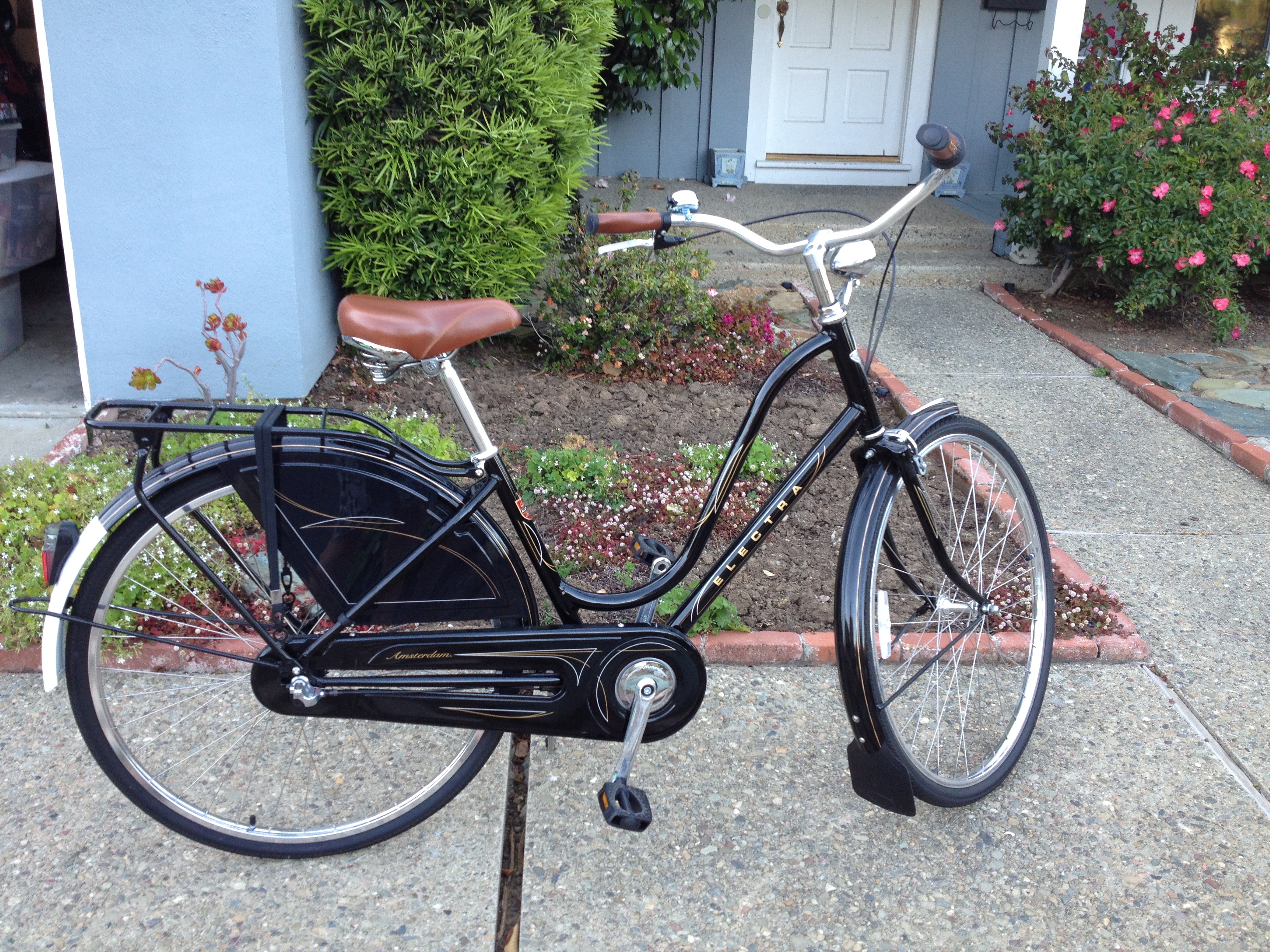
Electra Amsterdam: Identify the operating controls
The April 2026 Electra owner's manual discusses both hand-operated brakes and coaster brakes. Its coaster section describes a brake activated by pedalling backwards. That is a system description, not evidence that every Electra with an internal gear hub has a coaster brake.
Look for the actual controls and ask the shop to explain what each operates. A model suffix, the number of gears or a photograph of a hub is not a complete brake identification. A used bicycle may also have changed components while retaining its original frame name.
Keep the photograph in its proper role
The historical Amsterdam image records a specific older Electra with visible controls and cables. The photographed bicycle is a historical example, without a confirmed subvariant or model year. Its visible details cannot certify the condition of a current or used Amsterdam, and no unseen brake internals are identified from it.
Distinguish identification from a service adjustment
Ask for the applicable brake and bicycle instructions at handover. If you do not understand a control or the bicycle behaves unexpectedly, arrange an assessment before riding. This article contains no pad-clearance settings, cable-tension procedure or instruction to disconnect a brake.
An operating control should be explained as part of the complete setup. Access to a lever can change with a different handlebar arrangement, and an accessory can interfere with a cable or wheel. A description of how a brake is activated cannot establish that the installed system is correctly adjusted.
Read a relevant recall by exact model
Safety notices concern identified products and time periods. If considering an older or rental bicycle, record its precise model and ask whether an applicable notice or service action remains unresolved. Do not treat a general observation that a wheel turns or a lever moves as proof of an unaffected bicycle.
This is also why the words coaster brake should not become a blanket warning about every Electra. Establish the actual system and any notice that applies to that bicycle. Manufacturer or authorised-retailer guidance for the identified product is more useful than guessing from its colour or visual style.
The Electra brand guide describes the range's different equipment approaches, while the Electra topic collects other practical questions. This article reports no stopping-distance test or claim that one brake type is universally superior. Its goal is a rider who can identify the actual controls and find the right instructions.
FAQ
Does an internal gear hub automatically mean coaster braking?
No. Gear arrangement and brake operation need separate identification.
Can a photograph certify the condition of a brake?
No. Condition and adjustment require an assessment of the actual bicycle.
Is this a brake-adjustment tutorial?
No. It identifies the questions and documents needed before use or servicing.
Sources
Brake identification follows the April 2026 Electra Owner’s Manual sections on hand controls and coaster operation. The Amsterdam photograph supplies a historical bicycle example, not evidence of unseen hub internals or a brake-condition assessment. Documents checked 26 October 2026: Electra Owner’s Manual, April 2026 (https://media.trekbikes.com/image/upload/v1777059479/ELectra_OwnersManual_April2026.pdf).
Photograph credits and permissions
Photograph 1
Original title: Electra Amsterdam
Creator: Esperluette
Original source URI: https://www.flickr.com/photos/esperbot/8037332305/
License / permission: CC BY 2.0 Generic
License / permission URI: https://creativecommons.org/licenses/by/2.0/
Modification notice: Original downloaded JPEG unchanged; no crop, colour change, re-encoding or metadata removal.