


Early Rider Between Bike Sizes: Preserve the Brand’s Exception and Skill Caveat
Early Rider between bike sizes advice contains an exception as well as a general preference. The saved sizing page usually favours the smaller option, then discusses a child right on the cusp of the larger size. Read those statements together; selecting one sentence alone would create a firmer rule than the manufacturer actually gives.
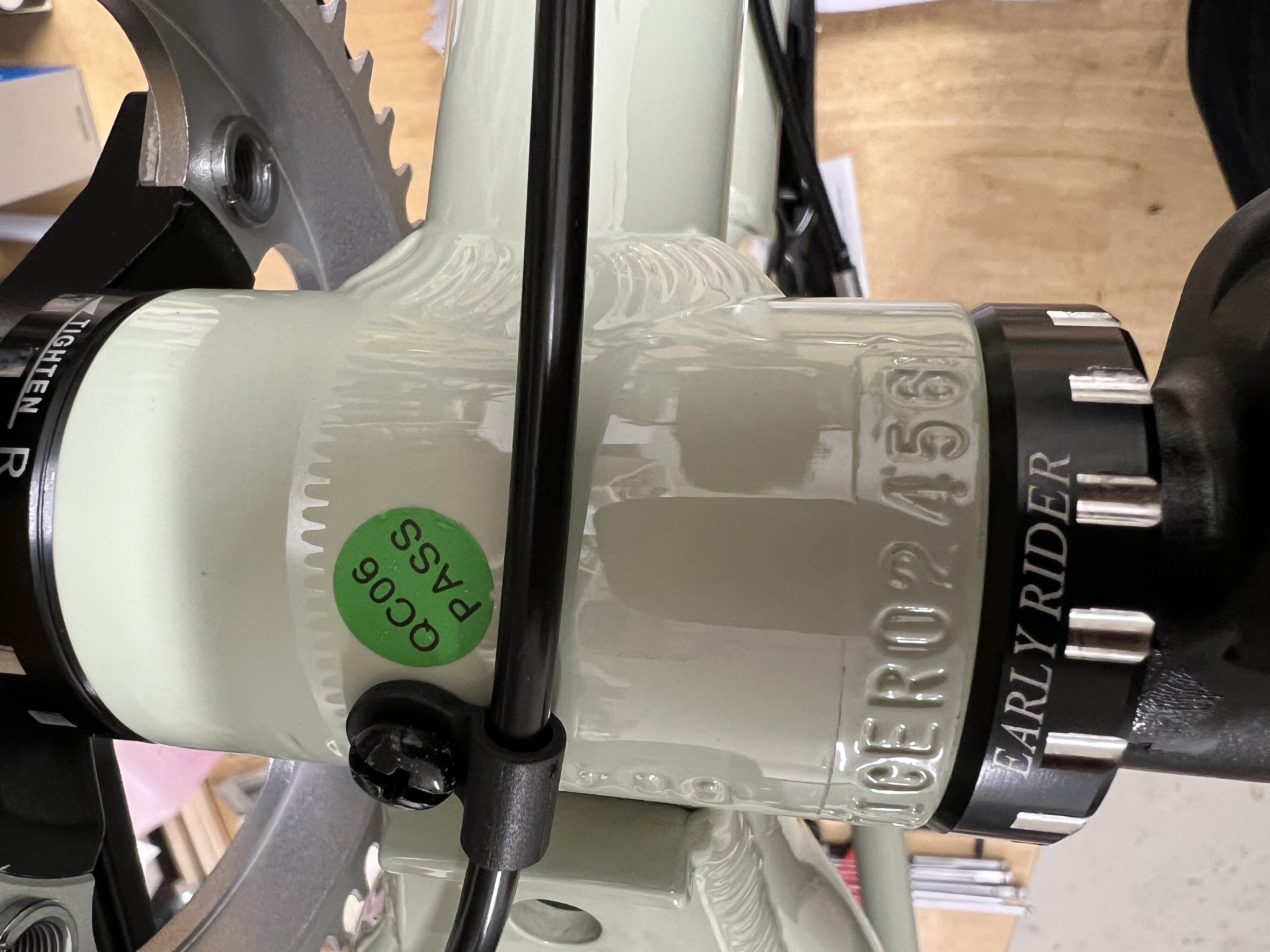
Early Rider between bike sizes: preserve the usual preference
The source explains its smaller-size preference through the difficulty a larger bike can present when steering, stopping and starting. It specifically mentions a child needing to stand on tiptoes to reach the floor. That explanation concerns control and confidence, rather than a rule derived solely from a birthday or nominal wheel size.
It is still conditional wording. The page does not say that every overlap requires the smaller model irrespective of the rider and bicycle. Keep the reason alongside the preference when discussing a choice with a dealer, so the enquiry concerns the child's actual situation.
Keep the cusp exception in the same discussion
The manufacturer's exception concerns a child really close to the larger size. Its discussion connects that possibility with longer use and a more efficient pedal stroke. Those are reasons given in the source, not outcomes demonstrated for an individual child by this article.
The separate skill paragraph says a less confident or less skilled child might benefit from a slightly smaller, lighter bicycle. It also returns to getting the basic fit right for the child's physical size. A simple “always buy larger for growth” instruction would omit those qualifications, while “always smaller” would omit the explicit exception.
Give a fitting enquiry a precise model identity
The local record named Early Rider Belter 16 Bike — Brushed Aluminium provides one Belter reference. Its title does not establish whether a particular child is between that model and another, or which generation's measurements apply. Clarify those identities before asking someone to resolve an overlap.
Describe the child's current measurements and experience, and state which two identified bicycles are being compared. Ask how the manufacturer's preference, cusp exception and skill qualification apply in an assessment of those actual options. The published prose does not supply a numerical definition of “cusp” that can be calculated from the table.
The Early Rider topic groups the model records; the brand introduction explains their wider context. A useful answer preserves the source's conditions while leaving the individual fitting decision with an appropriate assessment.
FAQ
Does Early Rider always recommend the smaller size?
No. The saved guidance states a usual preference and then provides an explicit exception.
Does the source give a numerical cusp threshold?
No such threshold is supplied in the inspected sizing prose.
Can buying bigger guarantee longer useful riding?
No. The discussion is conditional, and it does not establish present fit or predict an individual child's growth.
Sources
Manufacturer reference: model-labelled sizing records (https://earlyrider.com/pages/sizing).
Photograph credits and permissions
Photograph 1
Original title: IMG_9426
Creator: N1K081; creator URI: https://www.flickr.com/people/nikolaj-kuebler/
Copyright notice: Embedded Display P3 colour-profile notice: Copyright Apple Inc., 2022. This is profile copyright, not photographic authorship.
Original source URI: https://www.flickr.com/photos/nikolaj-kuebler/54454764043/
License / permission: CC BY-SA 2.0 Generic
License / permission URI: https://creativecommons.org/licenses/by-sa/2.0/
Modification notice: Original JPEG retained without crop, recompression or colour edits. Original EXIF/GPS, orientation, Display P3 profile and secondary JPEG HDR gain-map/XMP bytes remain; EXIF identifies iPhone 13 Pro, software 18.4 and CompositeImage 2. Earlier computational processing is unassessed.
Source disclaimer: Historical source-tagged Belter/Early Rider workshop photograph from 15 April 2025; that date does not establish bicycle production year. Exact model and size are unverified. Brand context only, not the linked current model, configuration, dimensions, fit, condition or repair approval. Photograph remains under CC BY-SA 2.0; no endorsement or warranty implied, and other rights may apply.